Mickey Mouse coloring pages
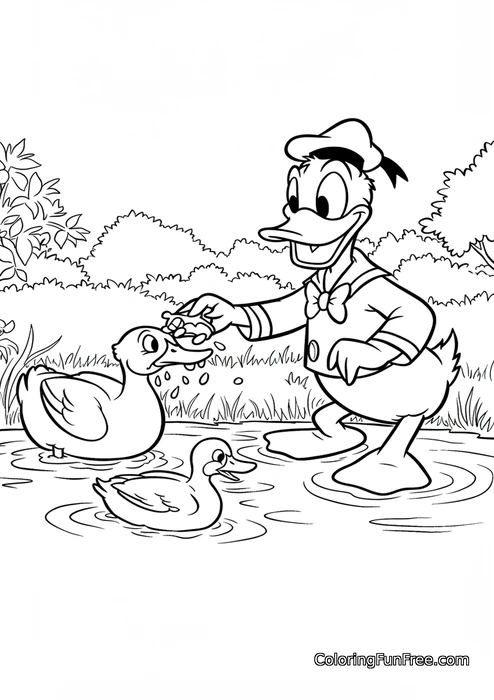
Donald duck
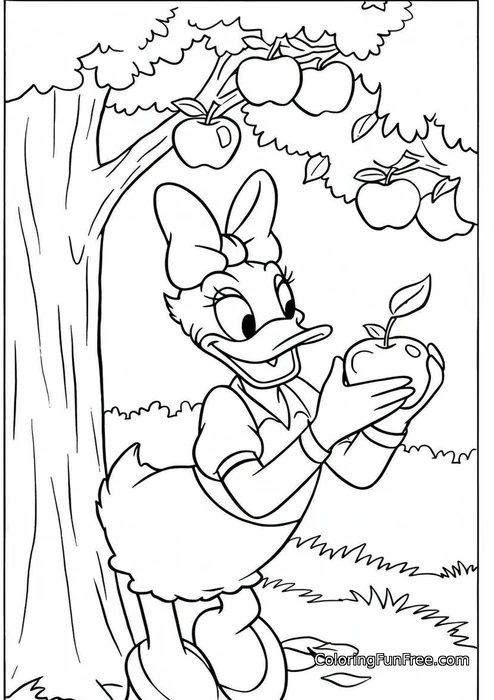
Daisy duck picking an apple
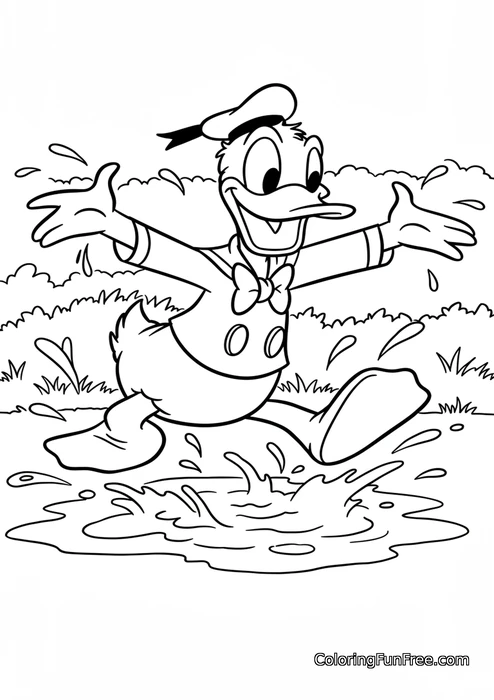
Donald duck splashing in water
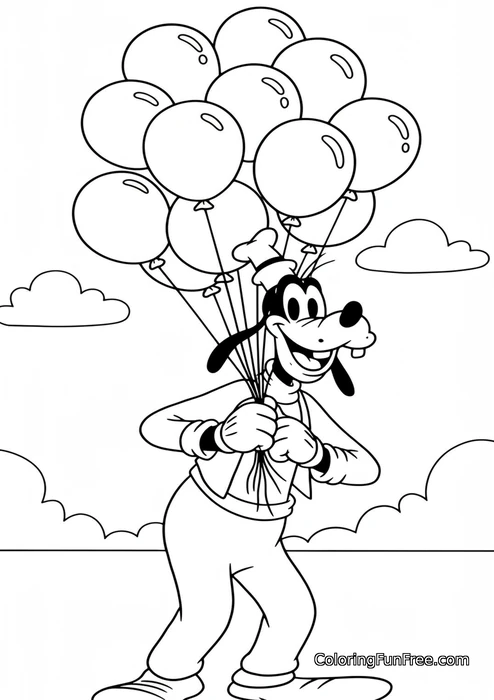
Goofy with balloons
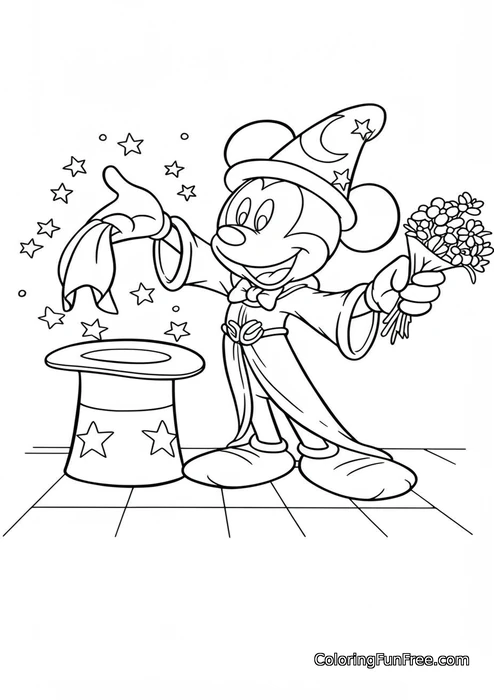
Mickey Mouse magic
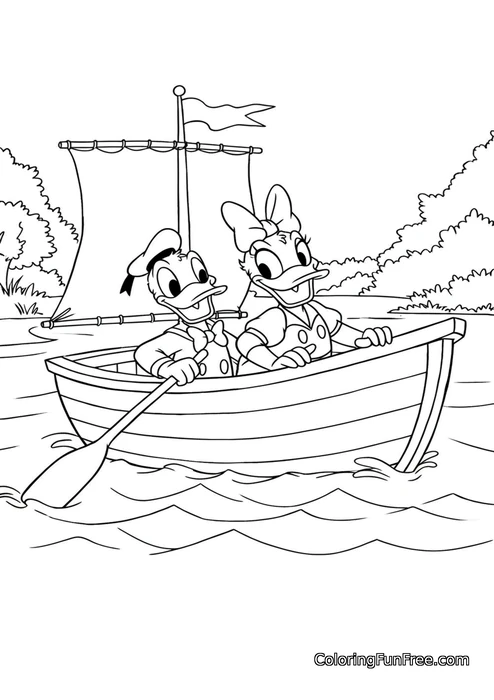
Donald and Daisy in boat
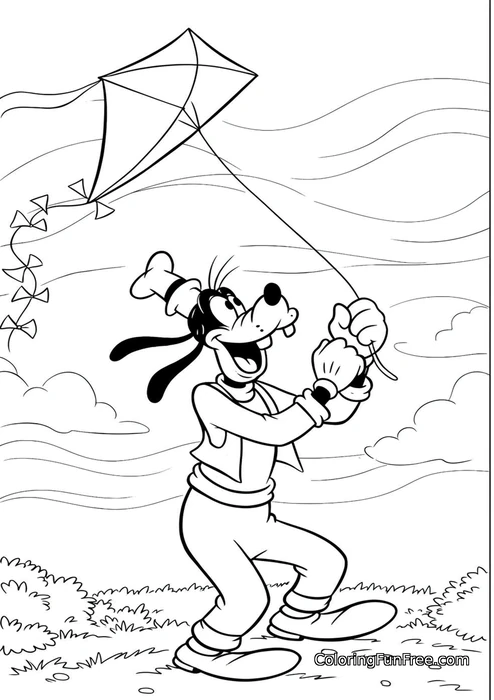
Goofy flying a kite
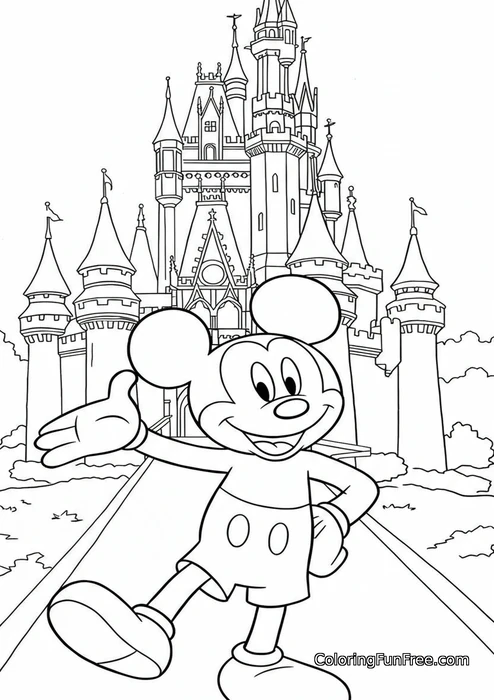
Mickey Mouse in front of castle
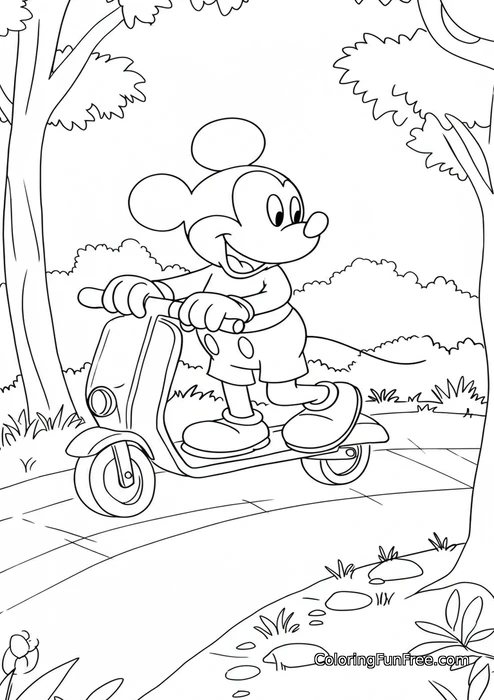
Mickey Mouse on a scooter
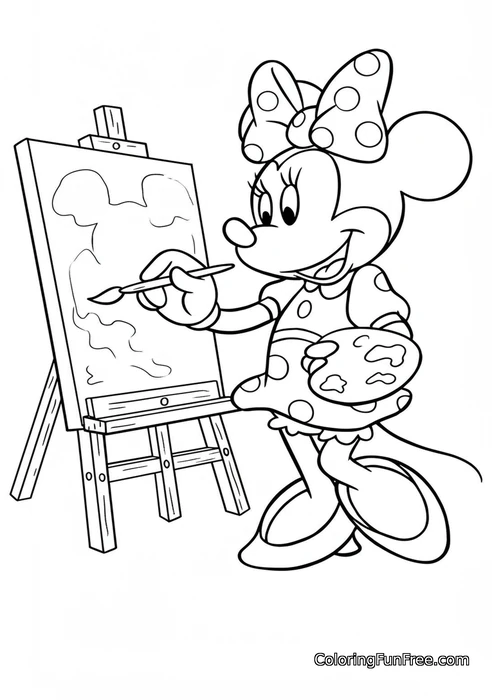
Minnie Mouse painting
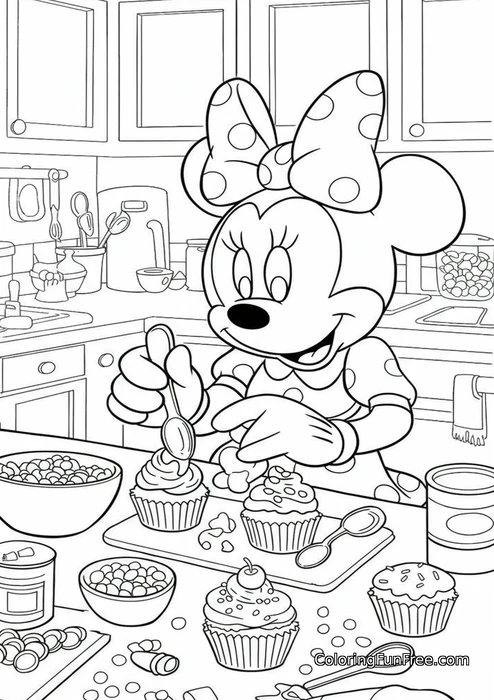
Minnie Mouse baking
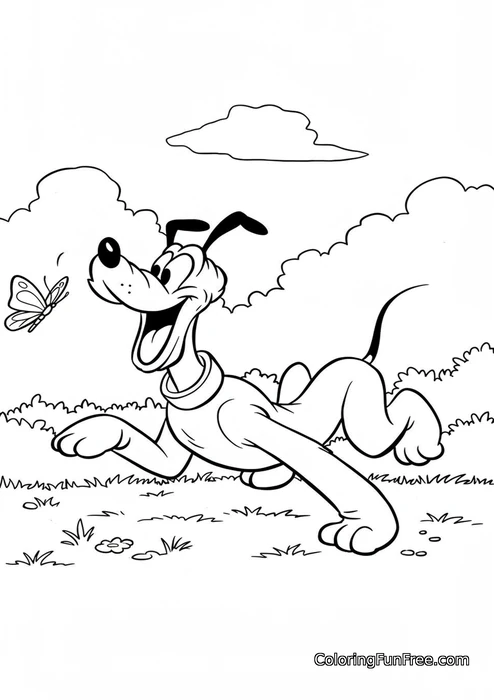
Pluto running
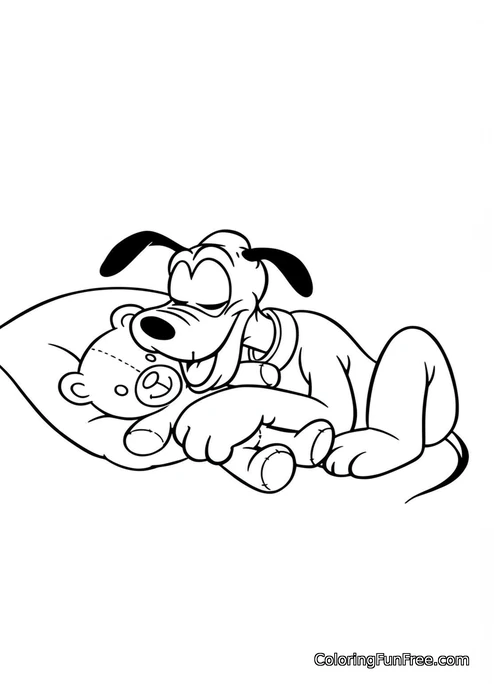
Pluto sleeping with a teddy
Mickey Mouse has exactly three colors. Red, black and white. He has had those three colors since 1928, and none of them have changed. Most kids sitting at a fresh sheet of paper don't know that. They just know Mickey - the ears, the gloves, the shorts, the shoes. What seems like the easiest coloring task in the room turns out to be one of the most interesting. This page contains a complete collection of Mickey Mouse coloring pages that you can print for free, from classic single Mickey to holiday versions, Minnie pages, outlines for toddlers, and full scenes. More variety than you'd expect from a character who hasn't changed his closet in nearly a century.
Mickey Mouse has three colors. That's not a mistake. Here's what really happens when a kid sits down for one of these pages.
Steamboat Willie premiered on November 18, 1928, at New York's Colony Theatre. This date is documented by the Library of Congress. The movie was black and white - technically, it was supposed to be - but the character designs already included red shorts, yellow boots, and white gloves. These options were fixed almost immediately after the movie came out, and Disney kept them the same for 96 years. When you hand a child a Mickey Mouse coloring page, you're handing them a design that predates television, interstate highways, and commercial air travel. It's not a publicity stunt. It's just a weird and real thing worth knowing.
The reason history matters for the coloring page is this: Mickey's design was created to be readable at any size, on any medium, under any conditions. Three colors. Round shapes. Maximum contrast. It was designed to be instantly recognizable. Paradoxically, this design makes it a more difficult subject to color than it appears at first glance - because there's nowhere to hide. Every choice the child makes is visible. There's no background noise to absorb a wandering crayon.
A three-year-old and an eight-year-old will sit down at the same Mickey outline and have very different experiences. The toddler is not coloring Mickey. The toddler is making marks inside the shape, learning that the pencil goes here and not there, that the ear border is a real line. The fine motor control needed to stay inside Mickey's rounded shapes is exactly the kind of work that develops the hand strength needed for writing. A study published on the ResearchGate website found that after coloring tasks, 75.9% of 22 preschoolers between the ages of 4 and 6 showed fine motor development consistent with normal developmental milestones. Statistical testing confirmed a significant effect of coloring on fine motor development (p = 0.000). Source: Stimulating fine motor skills in children through coloring, ResearchGate. Mickey's blank outlines are not too easy for this purpose. They're appropriate for it.
An eight-year-old child is doing something very different. This child has seen Mickey enough to have an opinion. They may purposely color their shorts purple. They may jokingly give Mickey green ears. They might try to exactly replicate the red color of the Disney logo, because at this age, accuracy seems nice. The simplicity of the design becomes a kind of pressure - there are only a few decisions to make, so each one seems more meaningful. It's a very different learning and creative experience than coloring a rich, detailed scene where individual choices get lost in the crowd.
The gloves deserve a special mention because kids notice them almost immediately, and that creates a bit of a puzzle. Mickey's gloves are white. The paper is also white. Where does the glove end and the background begin? Some children draw a faint outline with a pencil first. Some leave the gloves blank and move on. Some color them in light gray or pale yellow to separate them from the page. It's not a problem we specifically put in front of the kids - it just arises with the character. And working on it, whichever way the child chooses, is a real small act of problem solving.
Minnie changes the dynamic considerably. Mickey and Minnie coloring pages are among the most printable at coloringfunfree.com, and the reason is not only because kids love both characters, but because Minnie brings something that Mickey lacks: pattern. Her polka-dot dress and bow create a repetitive coloring task that many children find deeply satisfying. Polka dots of any scale require some patience and coordination to color them individually. A bow requires a decision about color, something Mickey's closet does not require. Minnie looks easier than Mickey because she's more familiar to some kids, but technically she's more demanding to color neatly.
When Mickey and Minnie appear on the same page, the difficulty increases again - not because one of the characters is more difficult, but because the page now requires consistency. If you color Mickey's shorts red, how does that affect the rest of the color story? If Minnie's bow is pink, does something else have to be pink? Kids rarely articulate these questions, but they're still guided by them. It's a low-cost version of the same problem that graphic designers face every day.
Seasonal versions - Christmas coloring books with Mickey, Halloween coloring books - work differently because they add costume elements to an established design. Mickey's Halloween vampire costume still has the same three basic colors, but now there's a cape, maybe a collar, maybe a background with a moon or bats. These additions give older kids more to work with while keeping the character recognizable. Christmas versions often include props: wrapped presents, a Santa Claus hat, snow. Each prop is a new color scheme. The main character stays the same, but the page becomes richer.
On coloringfunfree.com, we've noticed that in the last two weeks of October, Halloween print volume increases in a way that Christmas sheets do not - Christmas pages take longer to print, while Halloween pages tend to appear in one concentrated stream. Parents are looking for quick solutions for activities before a party or school event. This pattern tells us something about how these pages are actually used: not always leisurely, not always planned. Sometimes it's ten minutes before some event starts, and a printout is the quickest answer.
According to market research cited by Fast Company, Mickey Mouse has 97% name recognition in the U.S. - a figure reportedly higher than Santa Claus. Source: Regency Centers - How Mickey Mouse Became a $3 Billion Household Name. A recognizable character carries some weight at a coloring session. Kids come in already relating to the subject matter. This is different from coloring, say, coloring with Aquaman or an animal they've seen once. Mickey is endowed with meaning beforehand, making the coloring session more personal, even if the page is simple.
Simplicity, after all, is the point. A page that reduces everything to three colors and clean shapes doesn't give the child less to work with. It gives him a cleaner canvas. The choices stand out. The finished result belongs to them in a way that a highly detailed page does not. That's what we've observed. Perhaps that's why Mickey has gone 96 years without a redesign.
What's actually included in this collection is every type of sheet, without the usual vague summary
Seasonal sheets are a separate category, and should be treated as such
The Mickey Mouse coloring pages on this site cover a wider range than most parents expect. The seasonal sheets - particularly the Christmas and Halloween ones - are worth downloading separately from the everyday collection, because they are designed for different occasions. The Mickey Mouse Halloween coloring page used at a party in October is not interchangeable with the classic Mickey page used on a Tuesday afternoon. The context changes what the child brings to it. Below is a clear list of what the collection actually contains.
Here's a clear list of what the collection actually contains.
- The classic Mickey Mouse solo outline - a simple version for toddlers, slightly more detailed for school-aged children
- Mickey and Minnie coloring pages - pair on one sheet, different poses
- Christmas coloring pages with Mickey Mouse - Santa's hat, presents, holiday background elements
- Mickey Mouse Halloween coloring - costume options, themed backgrounds
- Sheets with Mickey for kids - very thick outlines, minimal details inside
- Mickey in full scenes - multiple characters, backgrounds, large coloring area overall
- Mickey Mouse coloring sheets with emphasis on expressions - sheets with close-up faces for toddlers
The age question no one asks, but everyone should - a three-year-old and a nine-year-old will not color the same Mickey
When the ears go wrong (and why it's always the ears)
Mickey's ears are two identical black circles attached to a round head. They are one of the most recognizable shapes in the history of fine art. In terms of coloring, they are also almost nothing. They have no interior lines, no texture, no variation. A toddler fills them in and moves on without giving them a second thought. But children between the ages of 6 and 9 sometimes stop there. The ears are too simple. You can't do anything with them except make them black, and making something black when you have a full set of colors in front of you is a waste of time. We've seen this happen many times - a detailed, meticulously colored Mickey body with hastily scratched ears at the end because the child has run out of patience for shapes that give nothing in return.
Children engage with Mickey's outline as a boundary-setting exercise. The specific character is less important than the process of filling a specific space without going beyond its boundaries. For kids this age, our toddler format sheets with thicker lines are appropriate - less frustration, more success. Older kids, from about age 7, respond better to sheets with story pictures or coloring sheets with Mickey and Minnie, where there is simply more decision making. If you're printing for a 9-year-old and choose a basic Mickey outline, don't be surprised if they finish in two minutes and want something else. That's not boredom. It's not boredom, it's that the page is really too short for their age.
Some kids the same age as Sonic coloring pages find it interesting to cross characters - coloring both in one sitting, comparing each character's color logic. Mickey's limitations make Sonic's palette feel almost overwhelming in comparison. That contrast can be its own little lesson.
Before Print, three decisions that take less than a minute and change what ends up on the table
The one setting that matters more than paper type
The printer settings are the part that most parents skip, and this is where most coloring lessons quietly fall flat. A sheet printed in draft quality has faint, thin lines that show through when coloring with markers. If the kid presses hard with a crayon on regular copy paper, it will tear if the paper is too light. All of these are not hard to fix and will take less time than finding the right page. Three solutions, in descending order of importance.
- First, the complexity of the sheet - match the page to your child's age and patience level before you even open the print dialog. A toddler needs the thickest outlines. A nine-year-old needs a scene, not a close-up of a face.
- Set the print quality - set your printer to standard or high quality, not draft quality. The weight of the lines on the printed page changes significantly. The thin lines of a rough print make it difficult to see the figures, especially for young children.
- Paper weight - for crayons and colored pencils, regular copy paper is fine. If your child uses markers, switch to heavier cardstock or at least 90gsm paper to prevent drafts and tears.
Kids who enjoy working with details and want something more challenging might also like our Captain America coloring books or free panda coloring books for a change between Mickey activities.
Where to start at coloringfunfree.com if you have a kid, a printer and about three minutes
- For kids ages 2 to 4: Start with classic Mickey in toddler format - thick outlines, one character, no background. One page, five crayons, done.
- For a school-aged child 6 to 9 years old: go straight to a sheet with Mickey and Minnie or one of the full script pages. Give them more decision-making power and they'll stay at the table longer.
- For the holiday season in December: Mickey Christmas coloring sheets are an obvious choice, but don't overlook them in November either - they work as an early seasonal activity when the anticipation of the holiday has already begun, but the official countdown hasn't started yet.
- For Halloween: print out the Mickey Mouse Halloween coloring page a few days before the holiday, not the morning of the holiday. Kids color better when they're not pressed for time.
- For a group or party: full-screen pages with multiple characters give each child something different to focus on, even if they have the same design sheet.
In most cases, after the first Mickey page is printed and colored, someone asks for another. That's what usually happens.