
Mermaids coloring pages
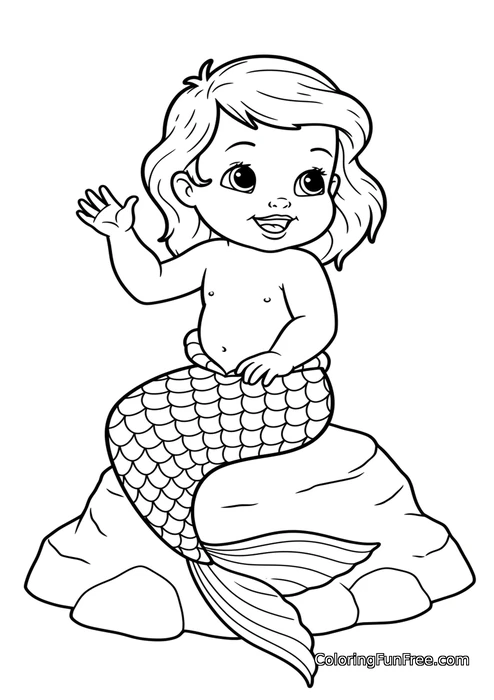
Baby mermaid waving on rock
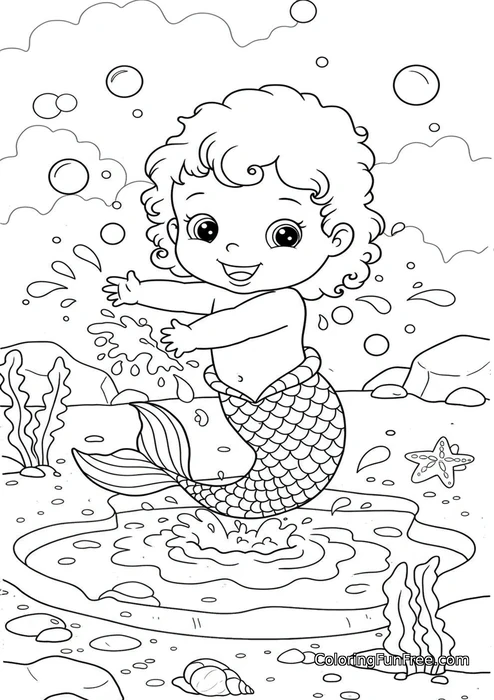
Baby mermaid splashing in tide pool
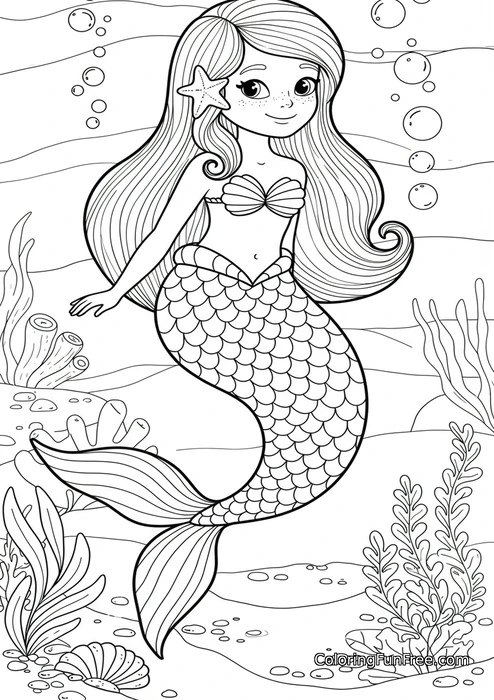
Cute mermaid underwater scene
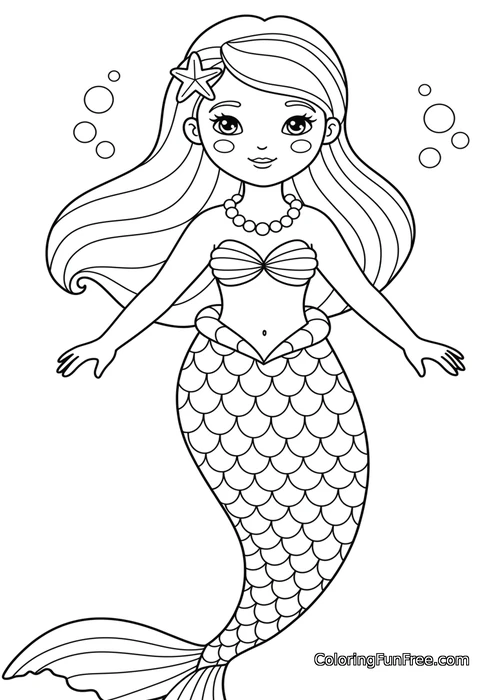
Elegant mermaid with pearl necklace
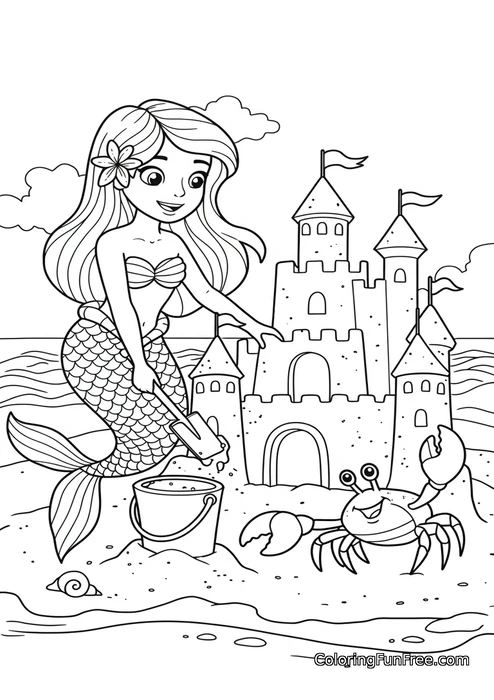
Mermaid building sandcastle with crab
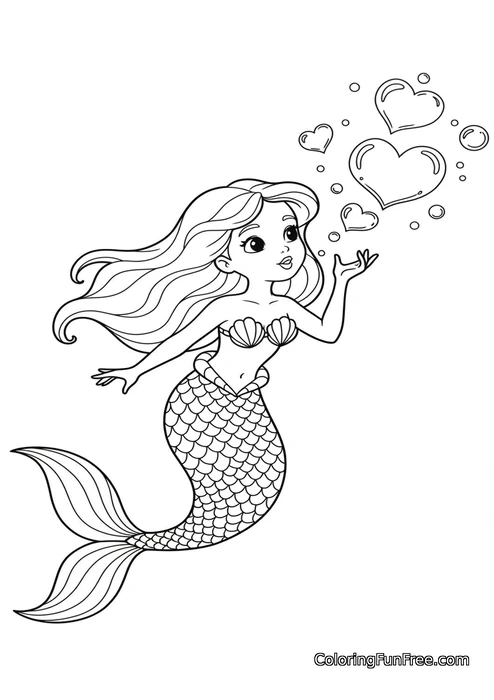
Mermaid blowing heart bubbles
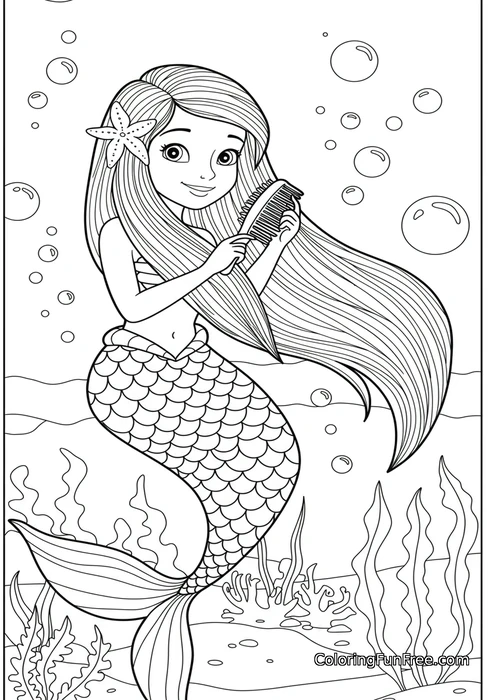
Mermaid combing hair
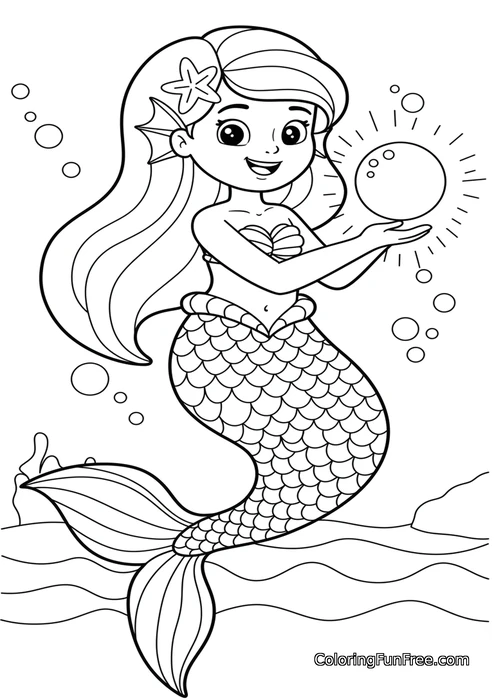
Mermaid holding glowing pearl
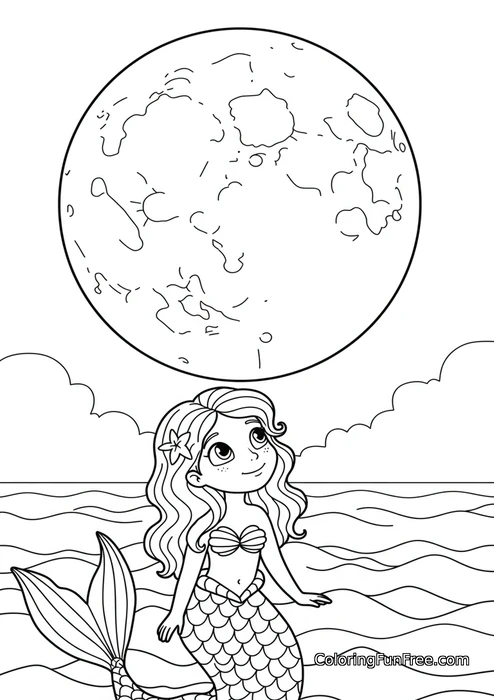
Mermaid looking at full moon
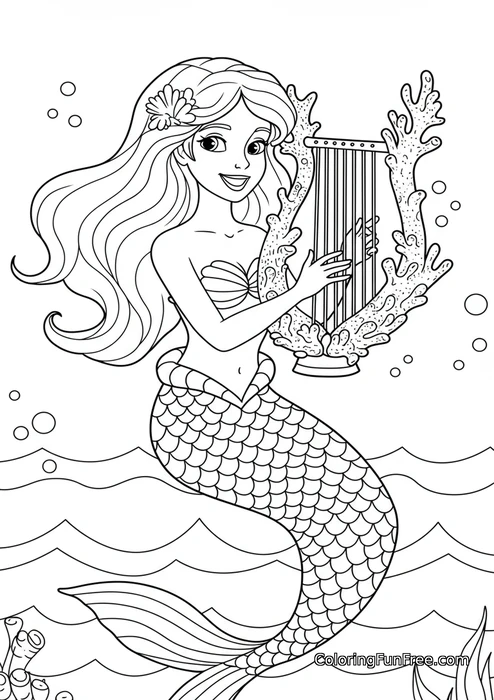
Mermaid playing coral harp
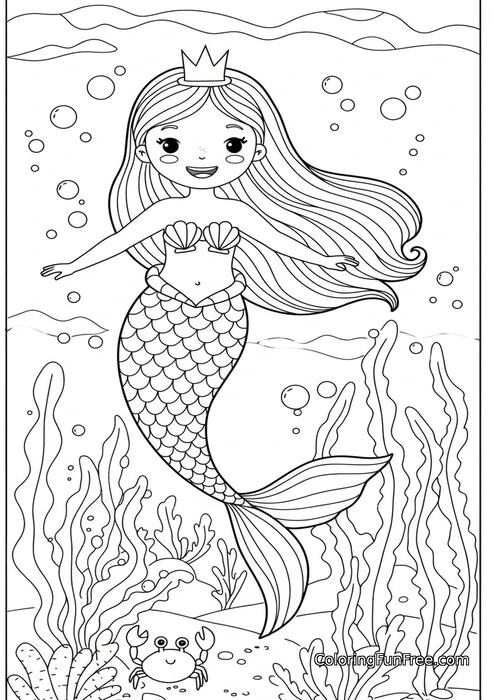
Mermaid princess with crown underwater
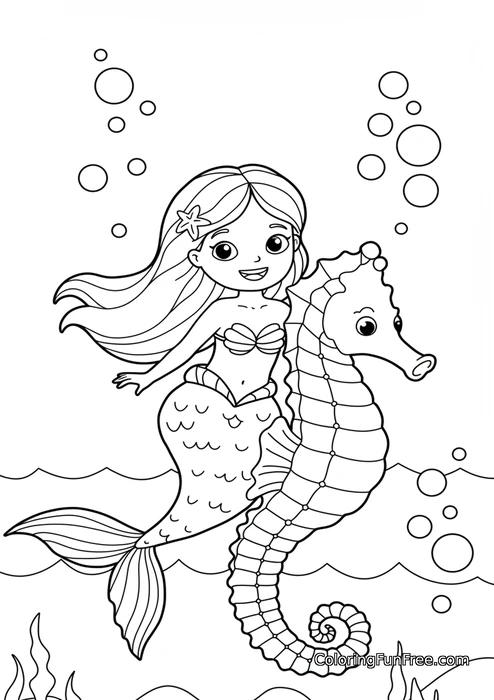
Mermaid riding seahorse
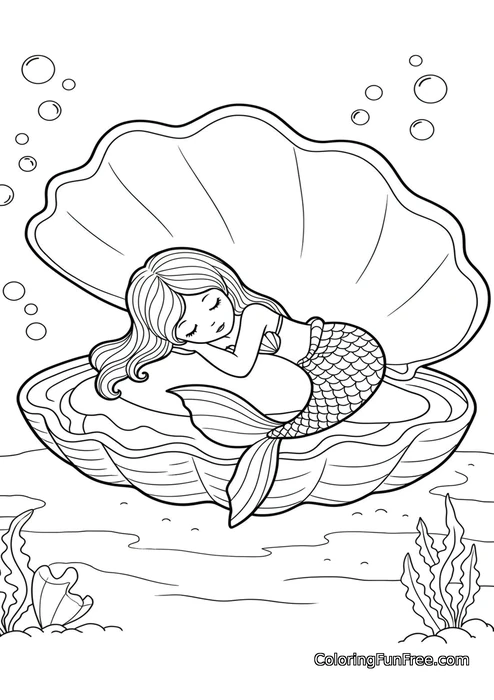
Mermaid sleeping in clamshell
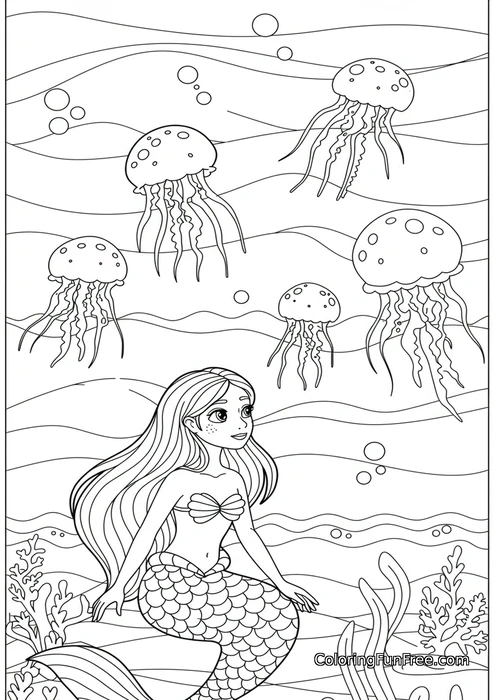
Mermaid watching jellyfish
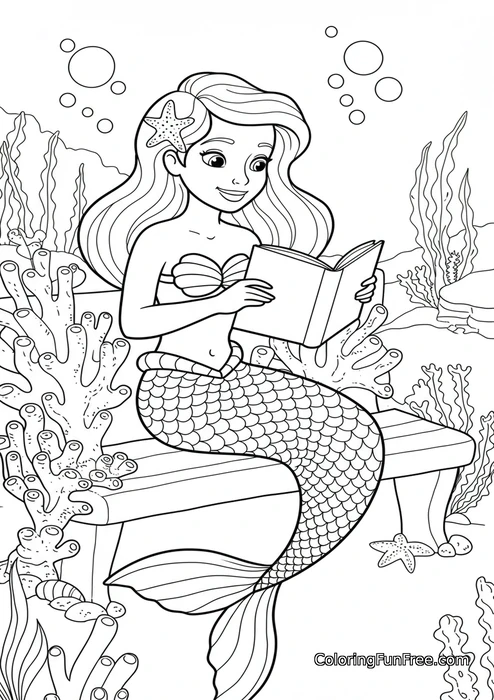
Mermaid reading book on underwater bench
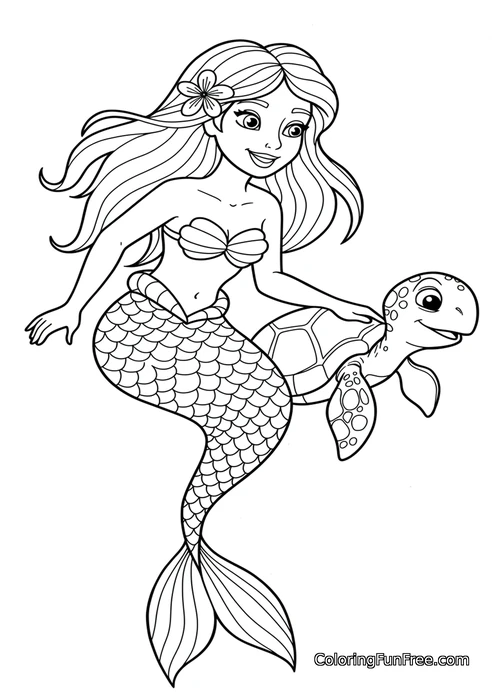
Mermaid riding sea turtle
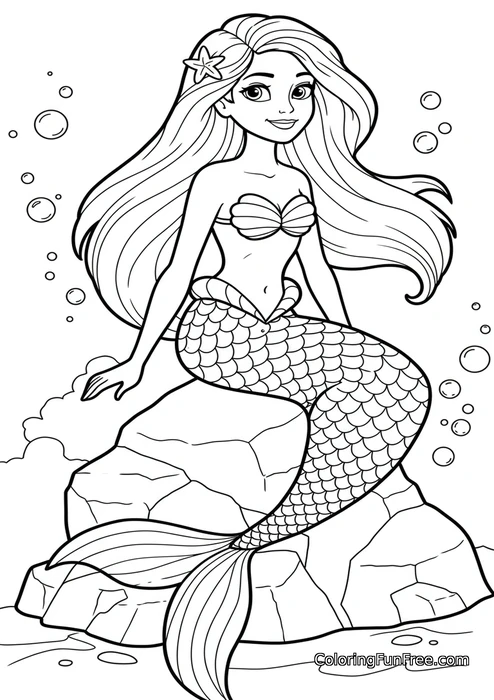
Mermaid sitting on rock
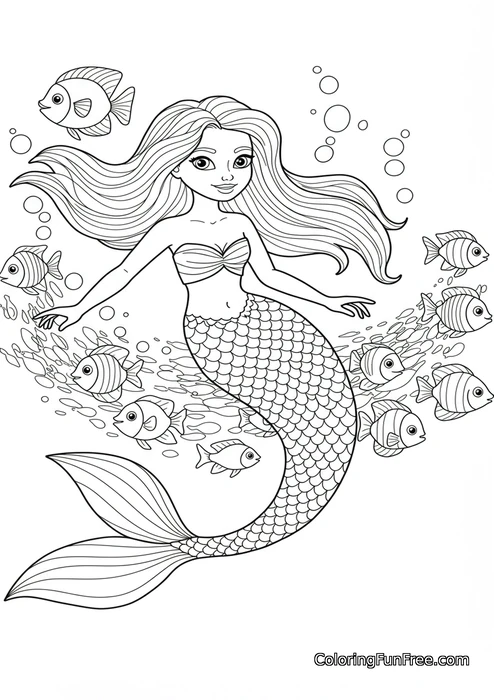
Mermaid swimming with fish
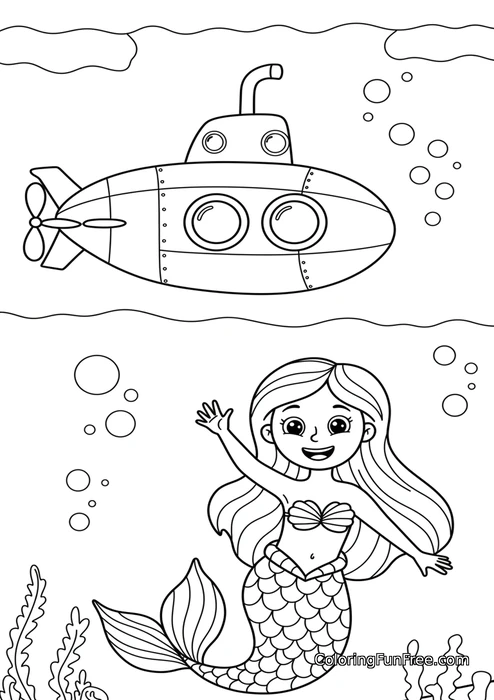
Mermaid waving at submarine
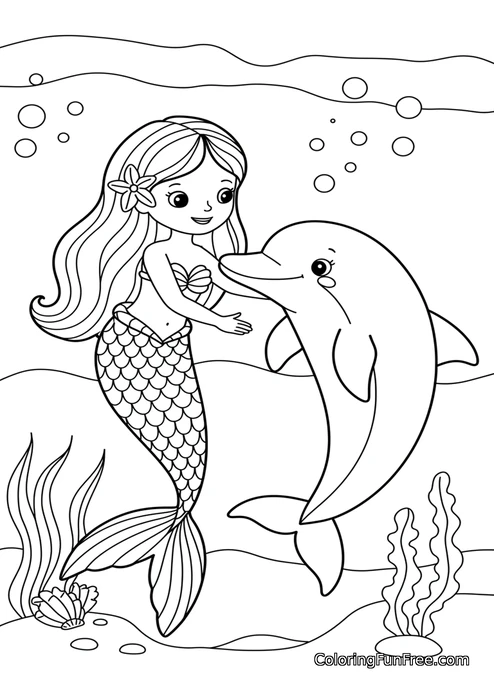
Mermaid with dolphin friend
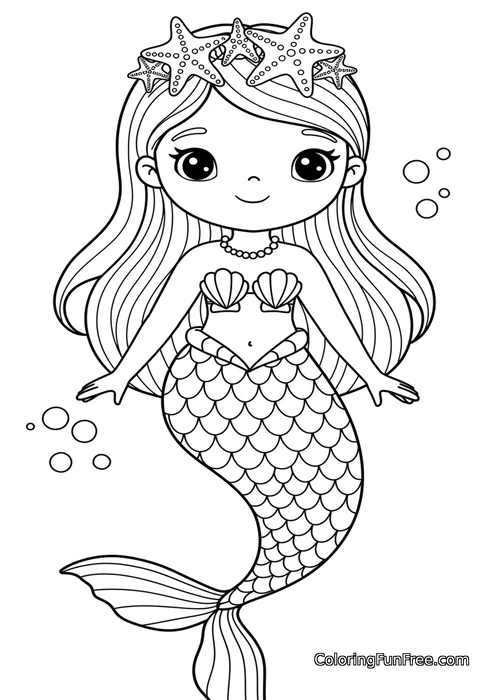
Mermaid with starfish tiara
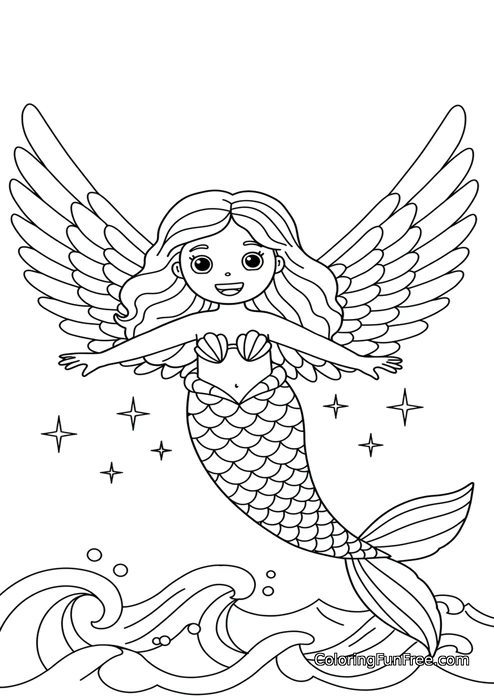
Winged mermaid flying over waves
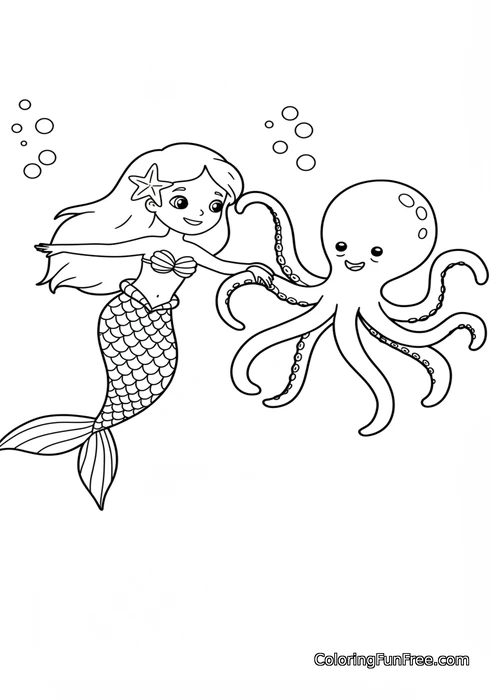
Mermaid with octopus friend
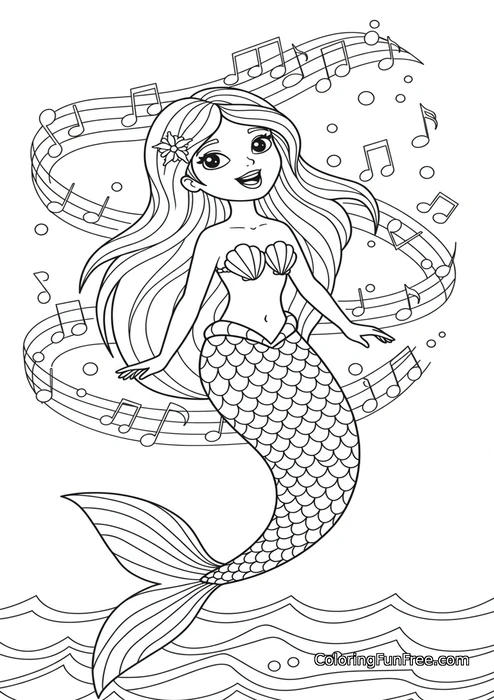
Singing mermaid with musical notes
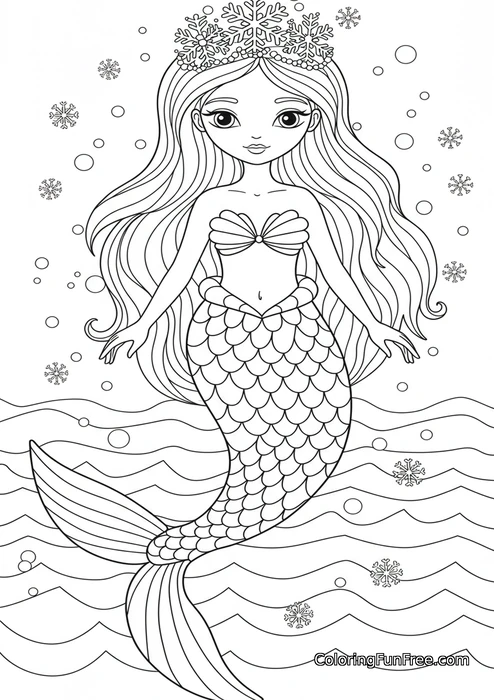
Mermaid with snowflake crown

Small mermaid riding large turtle
Mermaid coloring pages hold a truly unique place in the world of printable coloring pages. Unlike a dog, a fire truck, or even a butterfly—things a child has already seen, drawn, and knows the “right” colors for—a mermaid does not have a clearly defined appearance. There is no photograph to compare it to. No parent has ever looked at a child’s finished coloring page and said, “Actually, mermaids have brown tails.” The absence of a “correct” answer is no small matter. It completely changes how children interact with the coloring page.
Why a mermaid’s tail can be purple, turquoise, orange, or all three colors at once—and why it actually matters
Most scenes in coloring books come with built-in expectations. Grass is green. The sun is yellow. A cat is orange, gray, or black. Children quickly pick up on these conventions—sometimes from adults, sometimes from other children, sometimes from books where the illustrations have already decided this for them. By the age of five or six, many children have already formed a mental list of “correct” colors for the most common objects.
There is no canonical color palette for a mermaid that a child must adhere to. The tail can be any shade imaginable. The hair can flow in three directions and change color from copper to silver with a single wave of the hand. The water around her can be dark blue, mint green, lavender, or completely white if the child prefers a sharp contrast. Every decision on the page belongs entirely to the child, and there is no reference point an adult could use to suggest that she has done something wrong. This happens less often than it seems in games for young children.
Hans Christian Andersen published “The Little Mermaid” in 1837, and, as Britannica notes, it remains one of the most famous fairy tales in the world. Nearly two centuries of retellings, films, and illustrated editions have created wildly different images of the mermaid—red hair, dark skin, pale green scales, golden fins, shimmering tails. There is no single, agreed-upon visual image. This is not a flaw in the mythology. For children picking up a pencil, it opens up possibilities.
On the coloringfunfree.com website, observing which pages are downloaded most often, we noticed that mermaid coloring pages stand out among almost all other categories. Parents return to them across a wide age range—from toddlers who fill the page with bold, single-color swaths to eleven-year-olds who use colored pencils to create a gradient effect on the scales. The same core theme continues to resonate throughout nearly a decade of childhood. And this is no accident.
Part of it has to do with development. A three- or four-year-old looking at a page with mermaids isn’t thinking about what mermaids look like “in real life.” They’re practicing their grip, developing hand-eye coordination, and learning to understand where a line ends and where to stop the pencil. The National Association for the Education of Young Children notes that coloring books help children develop fine motor skills, hand-eye coordination, and pencil control—fundamental skills that directly contribute to early writing. At this age, the subject on the page is less important than the process of working within a defined space, the ability to make marks, and controlling pencil pressure.
By the age of six or seven, something changes. Children begin to use coloring books as a form of self-expression, rather than purely as a motor skills exercise. It is then that the mermaid’s openness becomes truly important. At this stage, a child given a coloring page with a realistic lion may feel a quiet urge toward the “correct” version—toward golden fur, a dark mane, a brown nose. The same child, given a coloring page with a mermaid, does not feel such an urge. The creative decision belongs entirely to them, and they know it. There is a noticeable difference in how children interact with these two types of coloring pages. The mermaid encourages longer sessions, more thoughtful color choices, and more conversations about what they are doing and why.
The underwater setting complements this freedom in a way that is easy to overlook. Not only does the mermaid herself have no fixed appearance—everything around her is just as open-ended. The corals can be red, orange, or bright pink. The fish can have stripes of colors found on no reef. Bubbles can be left white or filled with a pale blue color. Treasure chests can glisten with gold or be dull, while everything else shines. The entire setting of the mermaid scene is mythological, which means that the child is creating a world rather than filling in facts.
The American Academy of Pediatrics has documented the role of imagination and creative play in a child’s healthy development, noting in published pediatric article that imaginative play promotes cognitive flexibility, emotional development, and creativity in children. Mermaids occupy a central place in this imaginative space. When a child colors a page featuring mermaids, they are doing something that more closely resembles world-building than the obedient matching of colors to an object, which is characteristic of more realistic coloring books.
There is also an emotional aspect that we have noticed in the fact that the same families reprint the coloring pages over and over again. The mermaid pages keep coming back. Parents sometimes write that a particular page was colored three or four times—once with chalk, once with markers, once with watercolors—because the child wanted to try something different. Such returns rarely happen with pages depicting, say, farm animals or geometric shapes. The openness of the theme makes every attempt truly unique.
Children aged eight to twelve approach these pages in different ways. At this age, many children begin to develop their own preferences regarding artistic style—they may be drawn to anime-influenced character designs, realistic details, or bold graphic outlines with bright colors. Mermaid coloring pages can satisfy all these preferences. A detailed fantasy mermaid with complex, intricate patterns will satisfy a child looking for a real technical challenge. A clean, cartoon-style outline is perfect for a child who prefers bold, graphic coloring pages without the burden of fine details. The theme is broad enough to accommodate a wide variety of stylistic approaches without losing its appeal.
One thing we find truly interesting, observing this from the perspective of launching the coloringfunfree.com website: mermaid coloring pages work equally well at birthday parties, in classrooms, and as standalone activities on a rainy day. Most coloring themes are heavily tied to a specific context. Mermaids are flexible enough to work in all three—this is one of the reasons why they are one of the most popular categories on the site year-round, rather than being grouped around a specific season or holiday.
If you like coloring pages featuring fantastical creatures from across the ocean, fox coloring pages on our site offer a similar balance between a familiar form and open creative interpretation—this is yet another animal that invites children to make real color choices without significant external pressure regarding what is “correct”
What’s actually in the mermaid coloring collection on this site
The collection on coloringfunfree.com is organized with practical realities in mind: you can’t give a three-year-old and a ten-year-old exactly the same page. Simpler outlines—large shapes, minimal internal details, clear, distinct lines—are suitable for children aged three to five, who are still developing the fine motor skills needed to stay within the lines. These pages have fewer elements in the composition, leaving plenty of free space for broad, confident coloring.
More detailed sheets are designed for children aged eight and older. They feature mermaids with individually drawn scales on their tails, wavy hair with layered strands, textured coral in the background, as well as background elements such as fish or sea plants that fill out the composition without overwhelming it. These pages require patience and a steady hand, and are best drawn with colored pencils or fine-tip markers rather than thick crayons.
In terms of stylistic variety, the collection ranges from classic fairy-tale mermaids with delicate, rounded facial features; cartoon-style illustrations reminiscent of animated films; as well as more detailed fantastical interpretations featuring scale-like armor, dramatic poses, or intricate tail fins. The collection also features elements of the marine environment: seahorses, jellyfish, tropical fish, treasure chests, shells, and various coral formations—all printed in black-and-white outlines on a white background.
All pages are formatted for standard Letter-size paper (8.5 x 11 inches) and print clearly without the use of color ink—the printer must operate in black-and-white mode only. In our experience, simpler pages are usually printed in batches for group use, such as in classrooms or at parties, while more detailed sheets are often printed individually for personal use at home.
If your family also loves ocean-themed coloring pages, our Batman coloring pages and sheep coloring pages are among our most popular categories—both offer a completely different visual experience than mermaids, making them great for adding variety.
Before printing — a few things to know
Most printing problems people encounter can be easily avoided with a little preparation. Here are some practical tips that make a big difference:
Preparing to print
- Use paper with a weight of at least 75 g/m² (standard printer paper is usually 80 g/m² and works well). On paper weighing less than 60 g/m², markers and watercolors may bleed through to the back.
- In your browser’s print settings, set the scale to “Fit to page width” or 100%—this will prevent the image from printing too small or having its edges cut off.
- If you are printing multiple copies for a group, print one test page first to ensure the line thickness looks correct on your printer before printing the entire batch.
- Choose the complexity of the page according to the child’s age—detailed, large-scale patterns on sheets featuring fantastical mermaids may frustrate younger children who do not yet have sufficient fine motor control to color small areas.
- Grayscale printing (using only black ink) is perfectly sufficient—you don’t need color ink to print these pages, and the print quality will be the same.
- For children who use markers instead of colored pencils, placing a blank sheet of paper under the coloring page will protect the surface underneath from bleeding.
This is the practical side. Print out a page that suits the child sitting in front of you, and let them continue coloring. And if you’re looking for something completely different from seascapes, for a change, drag racing coloring pages on the site are as far removed from the world of mermaids as possible—and just as popular among a certain group of children who love speed more than sea creatures.