Super Mario coloring pages
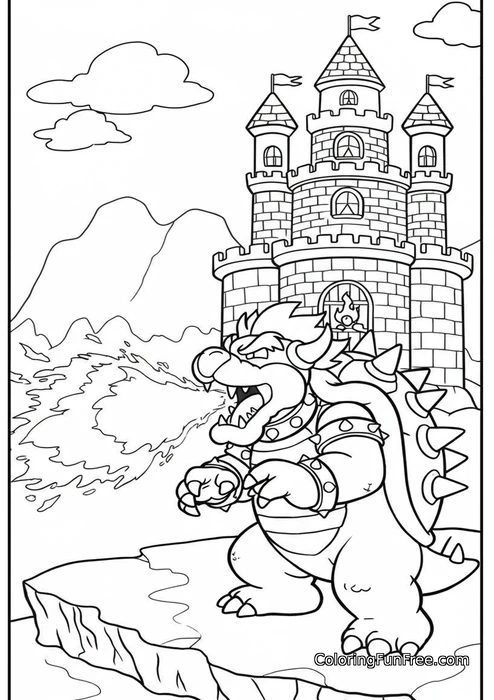
Bowser breathing fire castle
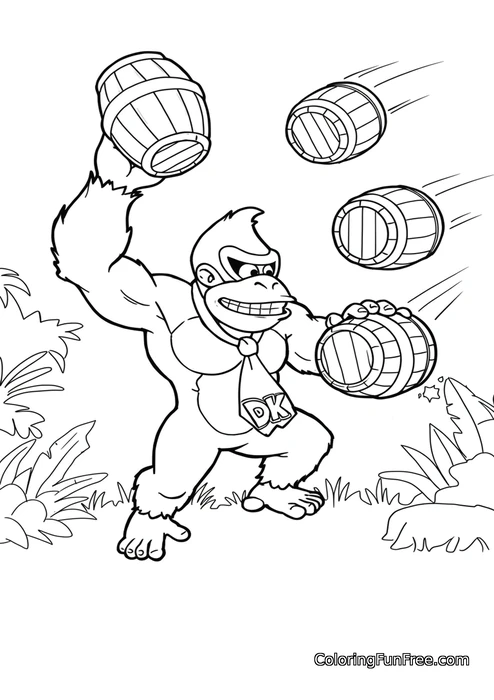
Donkey Kong throwing barrels
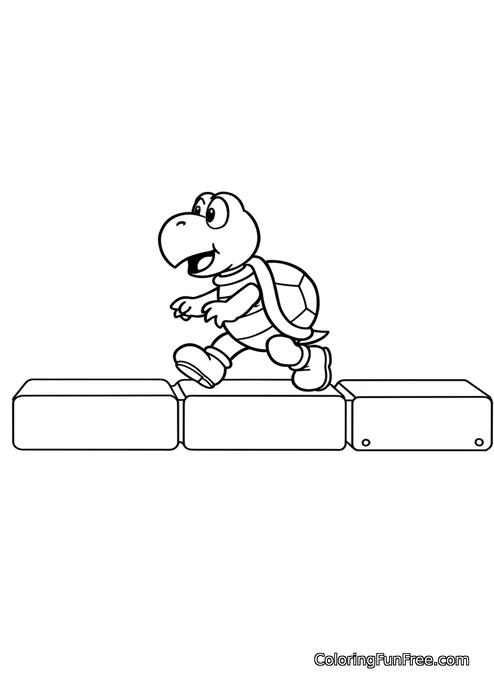
Koopa Troopa walking on blocks
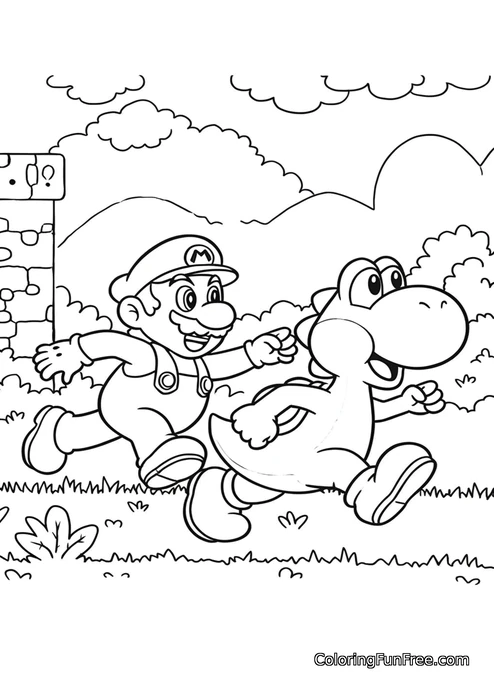
Mario and Yoshi running
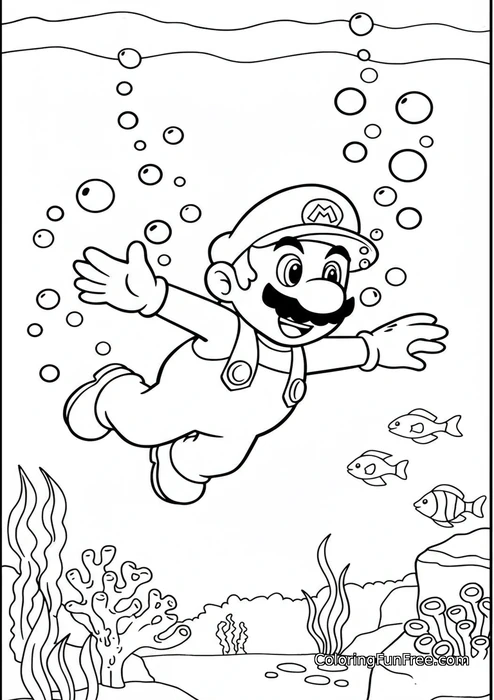
Mario swimming underwater
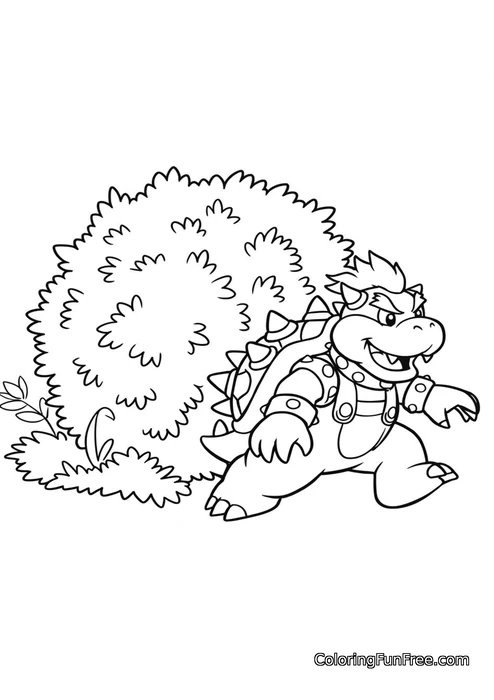
Bowser running past bush
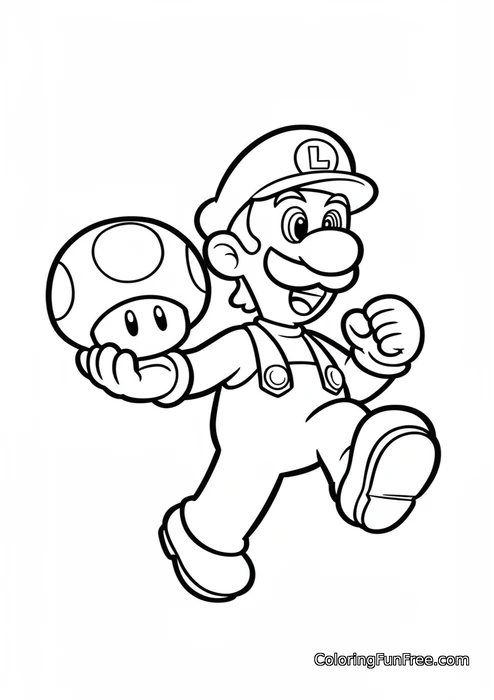
Luigi holding super mushroom
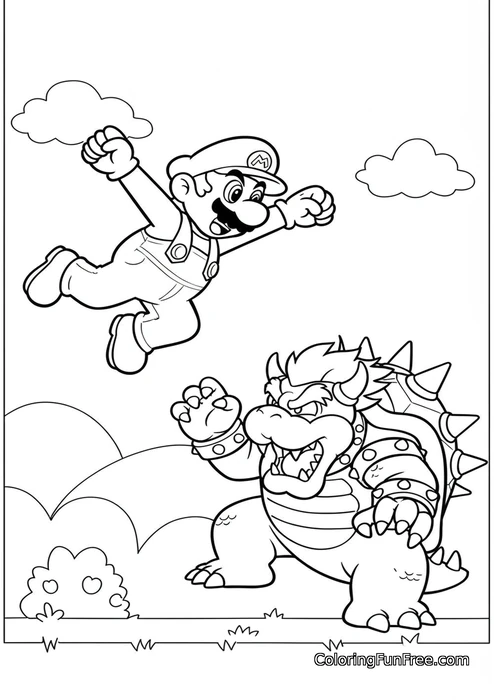
Mario flying towards Bowser
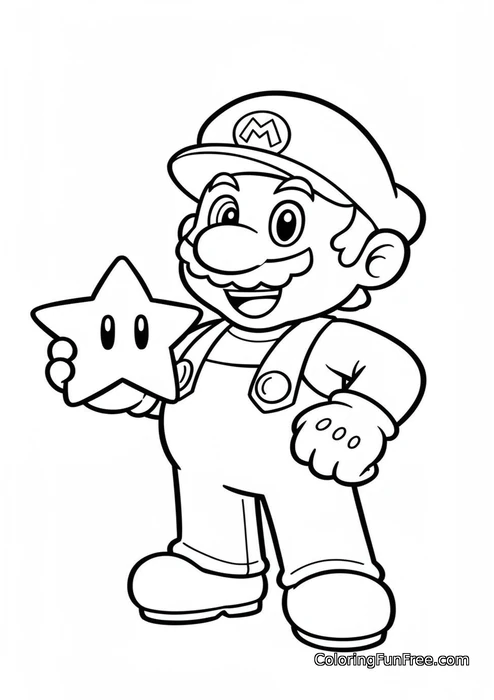
Mario holding super star
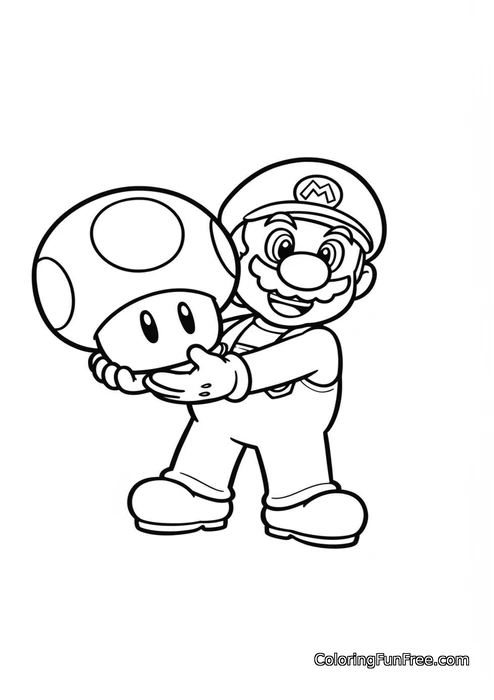
Mario holding super mushroom
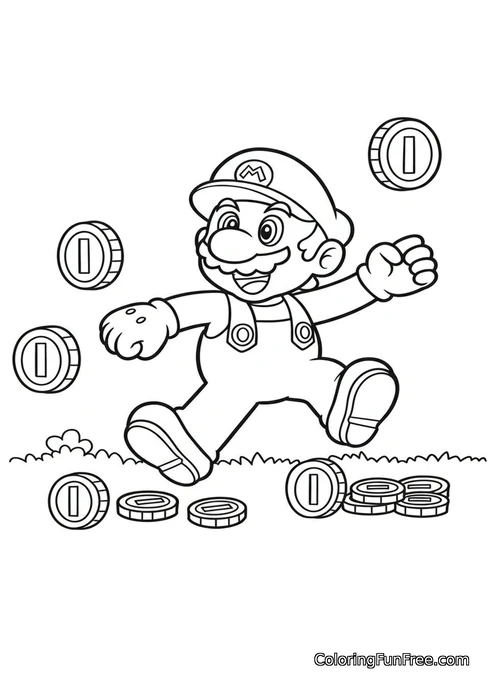
Mario jumping collecting coins
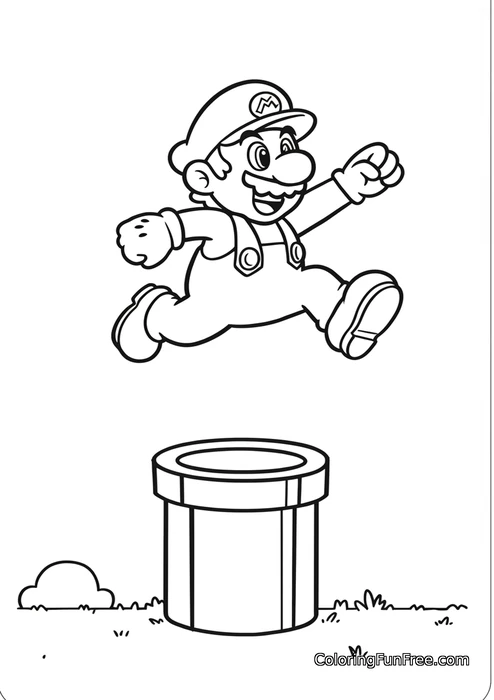
Mario jumping over pipe
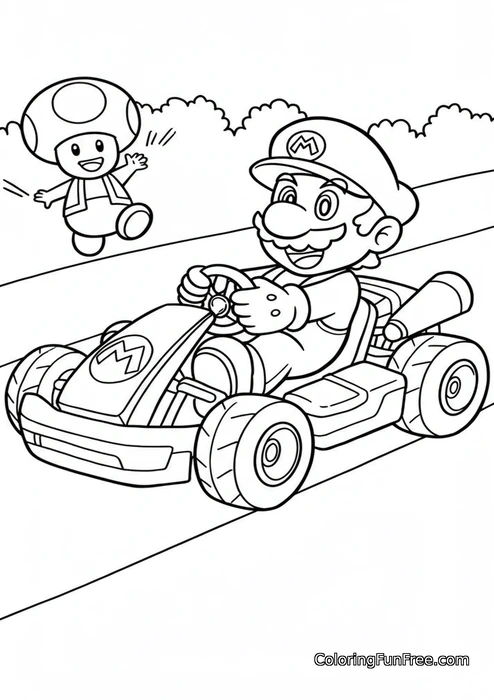
Mario Kart Toad waving
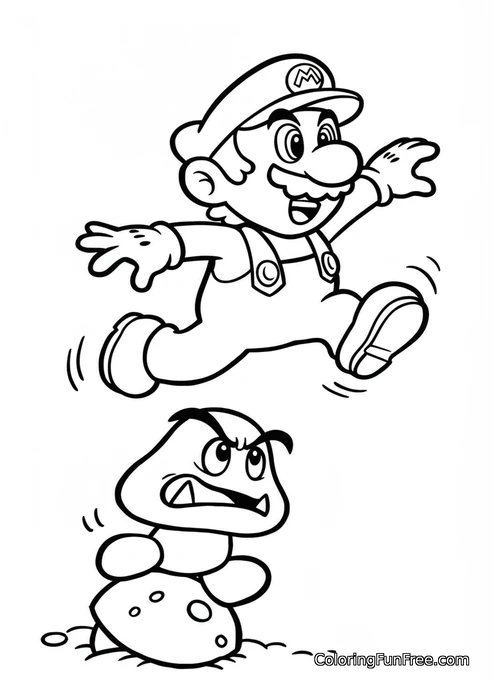
Mario jumping over Goomba
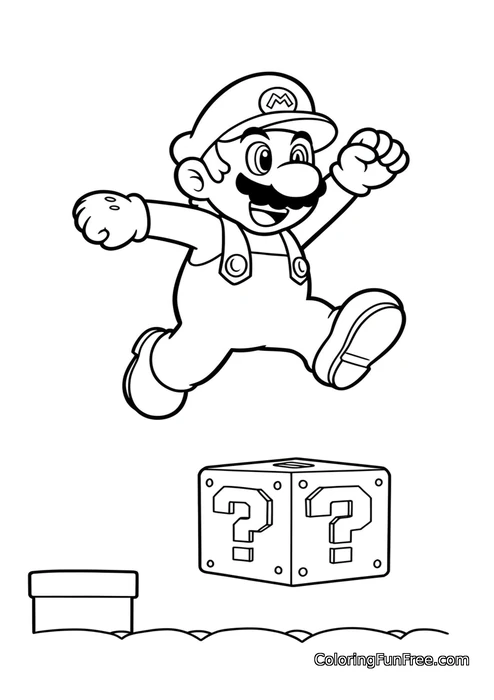
Mario jumping over question block

Princess Peach
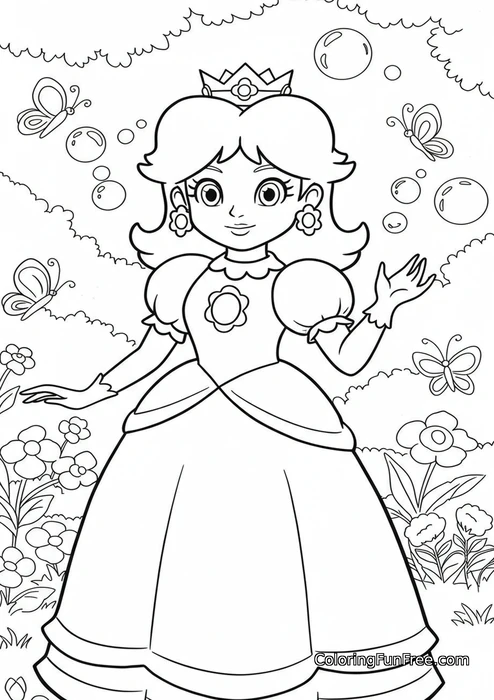
Princess Peach flower field
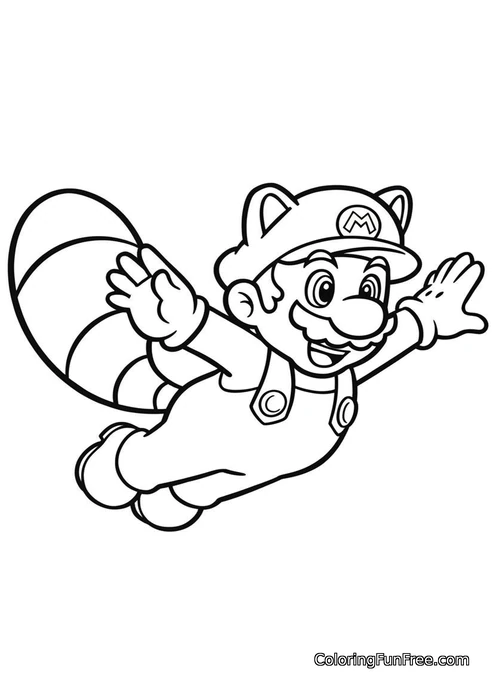
Raccoon Mario flying
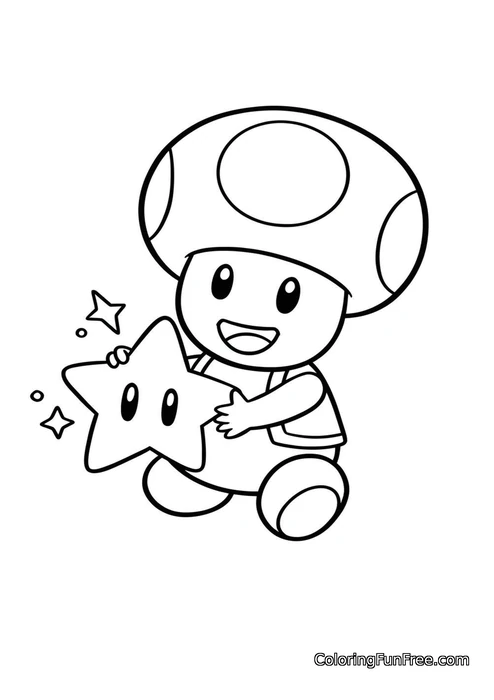
Toad holding super star
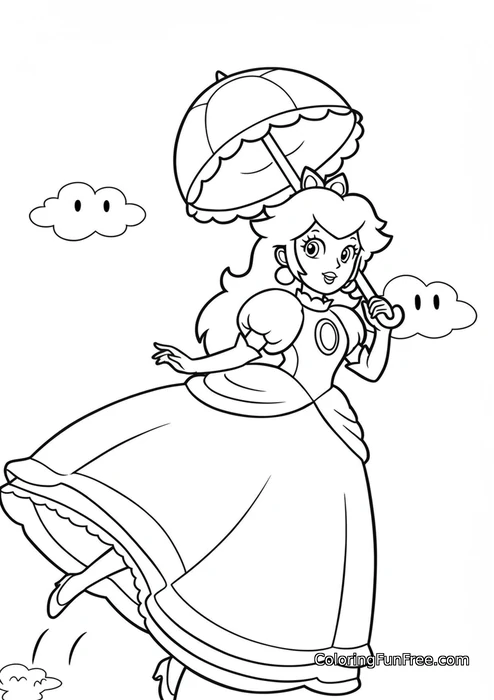
Princess Peach floating with parasol
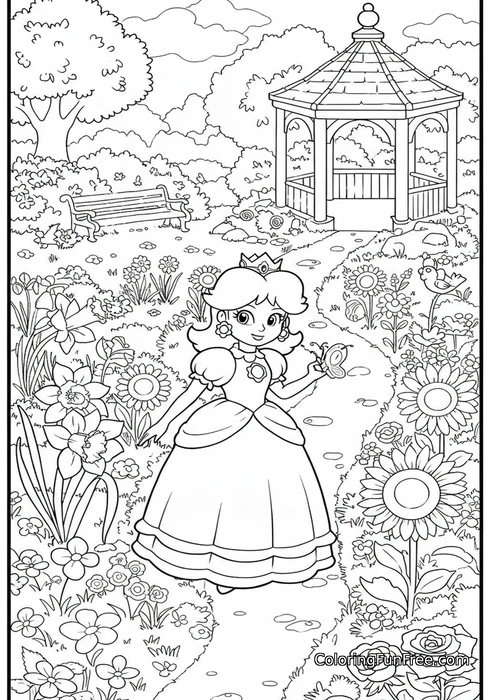
Princess Peach garden
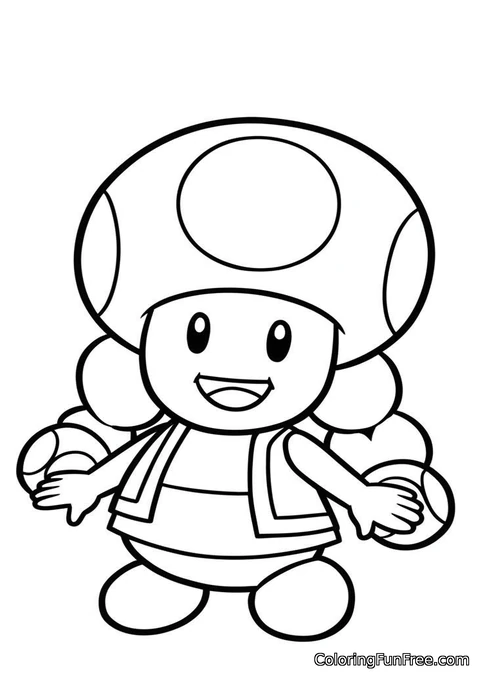
Toad standing waving
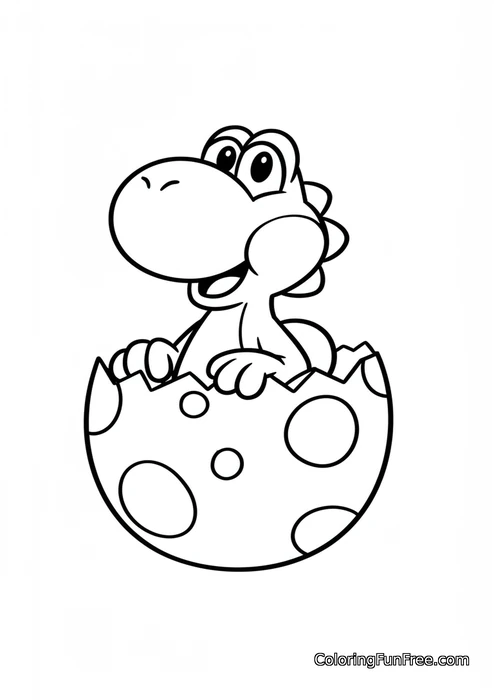
Yoshi hatching from egg
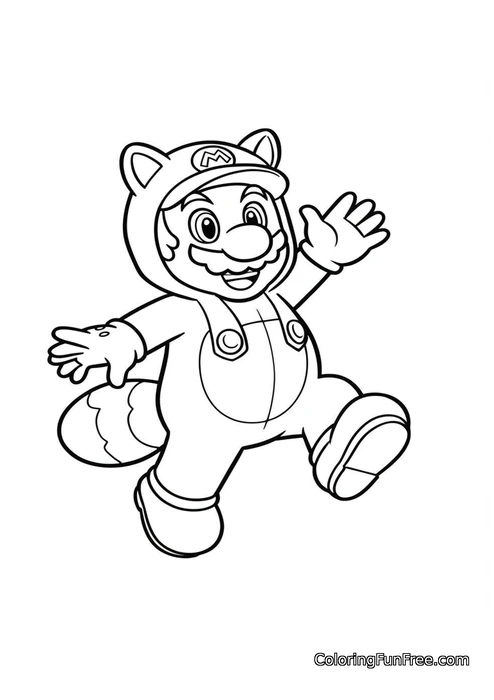
Tanooki Mario waving
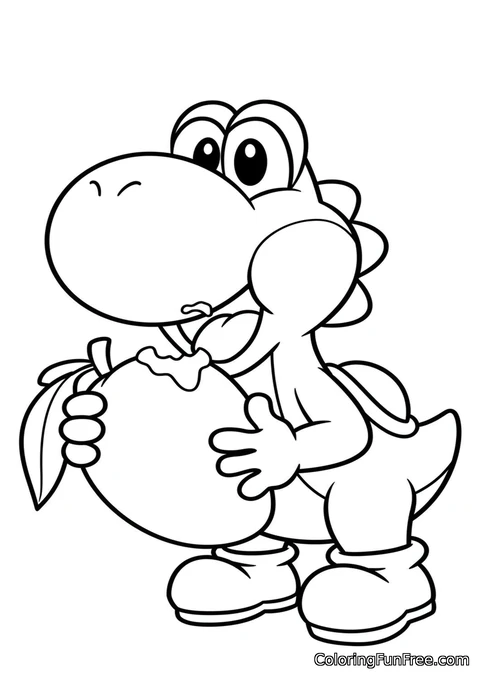
Yoshi eating fruit
Mario coloring books occupy a special category on coloringfunfree.com - not because the character is simply popular, but because Super Mario is one of the few franchises where kids come to the table already knowing the color scheme. Red beanie. Blue jumpsuit. Green shells. Yellow coins. This prior knowledge changes what happens during coloring in a way that is worth understanding before you even print a single sheet.
A little fact before we get to the collection: according to an analysis of Nintendo franchise data by Statista, "Super Mario," with more than 650 million copies sold, became a Guinness World Record holder as the world's best-selling video game series. This isn't niche interest. It's one of the most recognizable visual systems on the planet - which means that when a child sits down at a Mario coloring page, they're working with a character whose appearance is already part of their visual memory.
Mario was designed around color before coloring books were even part of the blueprint - and that makes all the difference
Mario's red-and-blue color scheme wasn't a creative choice in the usual sense of the word. In the early 1980s, Nintendo designers were working under severe hardware constraints - the original arcade hardware could only display a limited palette, and character colors had to be crisp enough to be clearly readable against low-resolution backgrounds. Mario got a red cap in part because animating hair on a moving sprite was technically difficult, and a solid-colored cap was easier to render. His jumpsuit was blue to contrast with the red. His skin tone was distinct from both.
The result was accidental genius. Each color zone on Mario's body is visually separate from all other zones. There is no ambiguity about where the hat ends and the face begins. No mixing, no gradient, no "what color should it be." That's exactly what makes for a good coloring subject - and Mario has it embedded in his DNA at the pixel level.
What color as a personality means when a six-year-old picks up a red crayon
When a child already knows the "correct" color of Mario's hat, something interesting happens from a developmental perspective. They're not coloring blindly. They have a reference point - and that gives them a choice they can feel. They can follow a familiar pattern and feel competent and accurate. Or they can deviate - purple hat, orange jumpsuit - and feel a slight thrill that they did it differently on purpose. Neither is wrong. Both are more cognitively active than coloring a generic figure without context.
This is important because the emotional experience of coloring is directly related to confidence. A child who doesn't know what color a fictional creature "should" be sometimes freezes. Mario eliminates that freeze. The answer is available if it is needed. The freedom to ignore it is also available. It's a more comfortable creative space than most coloring books offer.
The 2022 study on stimulating fine motor skills with coloring books found that after a structured session with preschoolers ages 4 to 6, 75.9% of 22 participants showed fine motor development in line with developmental expectations - confirming that coloring books featuring familiar characters like Mario, Luigi, and Princess Peach aren't just fun, they're actually beneficial for developing pencil grip and hand control. The full study can be found at ResearchGate.
The characters featured in our collection of Mario coloring pages span the entire cast of the franchise:
- Mario - classic single pose, options for running, jumping and power-ups
- Luigi - taller, greener and consistently underrated as a coloring subject
- Princess Peach - the detailed dress and crown make her sheets more demanding and more rewarding
- Bowser - spiked carapace, claws, and fire breath; visual complexity is higher than most parents expect
- Toad - compact design, high contrast, great for toddlers
- Yoshi - rounded shapes, smooth surfaces, natural coloring option for toddlers
- Donkey Kong - appears in crossover style sheets alongside characters from the Mario franchise
- Koopa Troopa - the geometry of the shell presents a fun challenge for coloring at any age
What is actually included in the Mario coloring collection on this site - every character, every sheet type, no vague promises
The collection at coloringfunfree.com consists of both single characters and story compositions. The single character sheets are most often downloaded - they give the child one clear subject, defined outlines, and no visual competition for attention. Mario's solo sheets are presented in several poses: standing, mid-jump, holding Superstar, emerging from the pipe. Each pose changes the difficulty slightly. For example, the sheet with the pipe adds a green cylindrical structure that requires some spatial reasoning to convincingly color.
The Mario and Luigi coloring pages deserve a special mention because they work differently than the single sheets. When both characters appear on the same page, kids naturally start comparing and making decisions - red vs. green, M vs. L on the caps, height difference. We've noticed that coloring these sheets takes longer. There are more questions to solve, more little decisions to make. For siblings coloring together, a sheet with Mario and Luigi also creates a natural division of labor - one child takes Mario, the other takes Luigi, and they end up with a shared picture without having to divide the page.
A separate category is Princess Peach and Mario's collaborative coloring pages. The visual contrast between Peach's formal dress and Mario's work clothes creates an interesting compositional balance on the page. Peach's design - with its layered skirt, gloves, and crown - is considerably more detailed than Mario's, so these sheets are often enjoyed by children willing to spend more time on a single image. The color palette is also broader, with pink, gold, white, and skin tone colors alongside Mario's familiar red and blue.
Bowser mario coloring books are getting more use than many parents realize. It's a pattern we see all the time among the villain characters at coloringfunfree.com - a child who gravitates toward the antagonist doesn't do anything out of the ordinary. Bowser is visually complex in a way that's really engaging: the spiky shell requires decisions about how to handle each individual spike, the fire element adds an orange and yellow area that contrasts with the green and brown body, and the sheer size of the character on the page gives the child more room to work with. We don't recommend skipping the Bowser sheets just because they look intimidating. Kids who try them tend to come back to them.
Yoshi's sheets occupy a separate subcategory on the site and are noticeably younger in feel. Yoshi's design - large rounded head, sleek body, simple saddle shape - includes fewer small sections and thicker outlines than most other Mario characters. A three-year-old working with Yoshi's sheet is dealing with large, simple areas that don't require precise crayon control. This was intentional on our part. Yoshi is simplified in outline style to make it accessible to the youngest users.
The coloring pages for all Super Mario characters - sheets where multiple characters appear together - are worth using strategically rather than by default. A sheet with Mario, Luigi, Peach, Bowser, Toad, and Koopa on one page is visually intense and potentially overwhelming for a child under 6. For older kids, especially those who are familiar with the franchise, these sheets work almost like a reference book - they know who each character is, they know what colors are where, and the challenge is more about execution than identification. These multi-character sheets are also good for parties, where kids can each claim their own section of characters.
If you're looking for other franchise characters with equally strong color identities, we also offer free printouts of Batman - another character whose design is almost entirely defined by two or three colors - and free printouts of Maleficent for kids who prefer more dramatic coloring sessions. For seasonal use, the printable holiday coloring pages on this site can be combined with Mario sheets into themed party or classroom sets.
One thing we intentionally avoid in the collection description is blurry superlatives. The sheets have clean vector outlines, are printed in a standard 8.5 x 11 inch format with no cropping, and are formatted so that the character fills most of the page rather than being in a small frame surrounded by white space. This last point matters more than it seems - a character that takes up the entire page gives the child something that is worth the effort.
Age-appropriateness of the sheet - after all, a three-year-old and a ten-year-old will not color the same Mario
On most coloring sites, each sheet is presented in a single gallery with no distinction. We think this is a problem for parents trying to quickly find something age-appropriate. Here's a practical breakdown by age group, based on the complexity of the outline and the number of separate color zones:
- Age 3 to 5 - sheets with Yoshi, single Toad poses, basic standing Mario with minimal background detail. Look for sheets where the outlines are thick and the color zones are large. At this age, the challenge is to stay roughly inside the lines, not accuracy.
- Ages 6 to 8 - separate sheets with Mario and Luigi, Princess Peach's solo, Bowser's basic poses. These kids can work with medium thickness outlines and more than 5 separate color zones. Story sheets with simple backgrounds (pipe, platform, coin) work well here.
- Age 9 to 12 - sheets with multiple characters, detailed compositions of Bowser, Princess Peach and Mario together, Donkey Kong crossover sheets. At this age, coloring is often slower and more deliberate. Children this age sometimes pick up colored pencils or felt-tip pens with a fine tip rather than crayons, and the detailing of these sheets encourages this approach.
The Mario coloring pages for kids at coloringfunfree.com aren't labeled by age on the sheet itself - but this guide should speed up the selection. If you're not sure, start one level easier than you think you need. A seven-year-old who finishes the worksheet easily will ask for another. A seven-year-old who feels stuck may give up on the activity altogether.
For fans of the franchise's other detailed characters, the free hobbit printouts on this site follow a similar difficulty curve - simpler character studies at one end, fully realized scene compositions at the other.
Before printing, two decisions that will take less than a minute and actually change what ends up on the table
The first decision is the type of paper. Regular 20lb printer paper is great for crayons and most colored pencils. If your child plans to use markers, especially with a wide tip, regular paper will spread out and the colors will look muddy on the back of the sheet. Cardstock with a density of 65 lb. or higher does a great job with markers, dries faster, and gives the finished page a more solid look. If you're printing a sheet with a few characters for coloring at a party, cardstock is well worth the extra money.
Print settings are the second decision most parents skip. All of the free Mario coloring pages on this site are designed to print in black and white - no color ink is needed. Set your printer to "fit to page" mode rather than "actual size" so that the character fills the sheet correctly, rather than printing at 72% with empty white space. If your printer has a "draft" mode, use it - the ink quality is good enough to color the outlines, and it greatly reduces the cost per page if you print multiple sheets.
That's pretty much all the settings you need. Match the sheets by age, choose the paper based on the medium your child prefers, and print. The collection is available now at coloringfunfree.com - no account, no download restrictions, no registration required.