Paw Patrol coloring pages
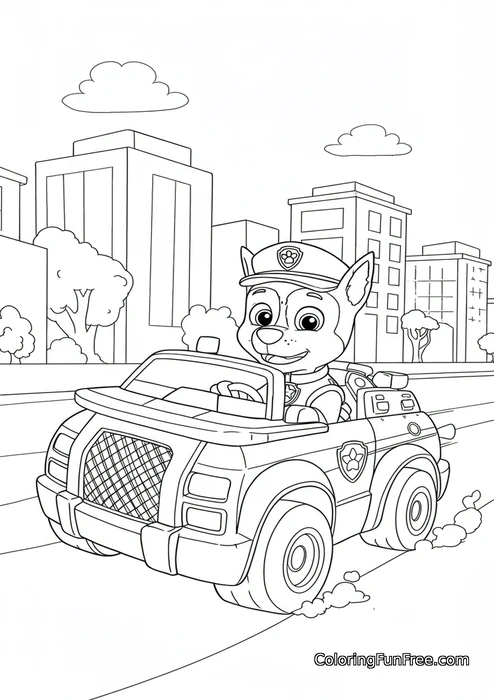
Paw Patrol Chase driving police car city
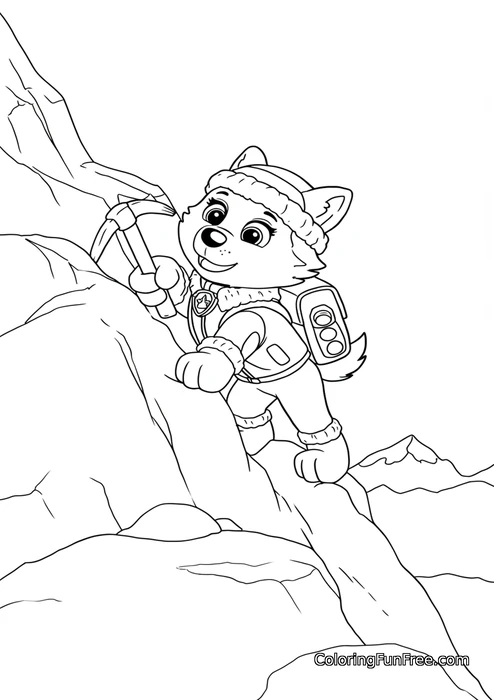
Paw Patrol Everest mountain climbing
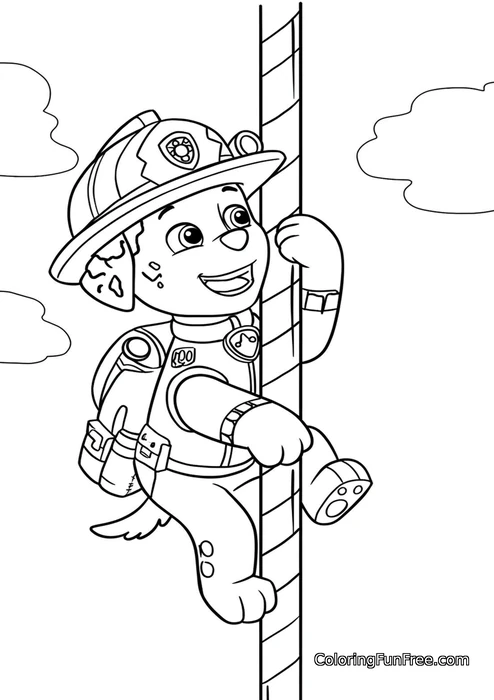
Paw Patrol Marshall sliding down fire pole
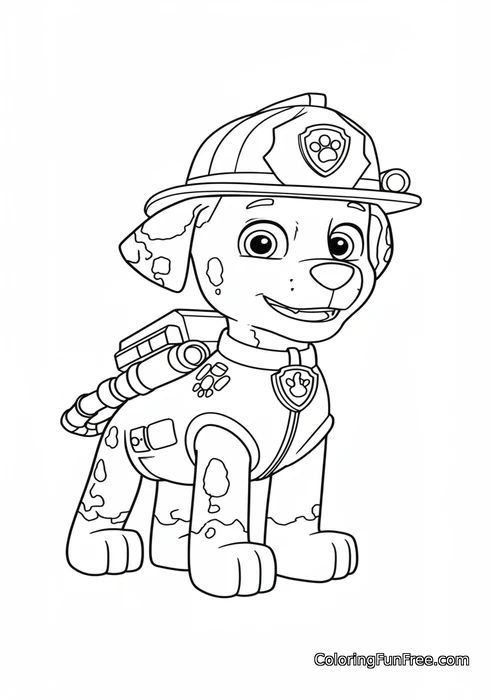
Paw Patrol Marshall firefighter gear sitting
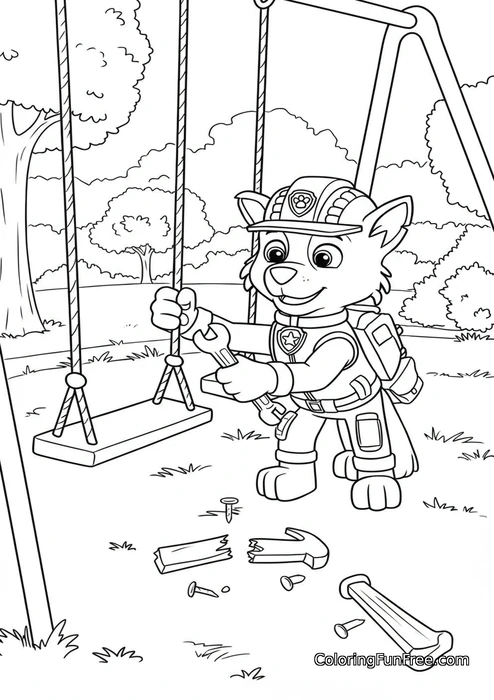
Paw Patrol Rubble fixing swing set
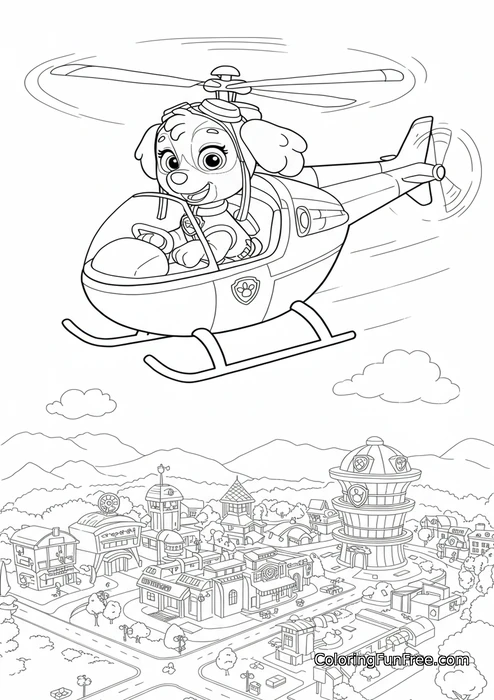
Paw Patrol Skye helicopter over adventure bay
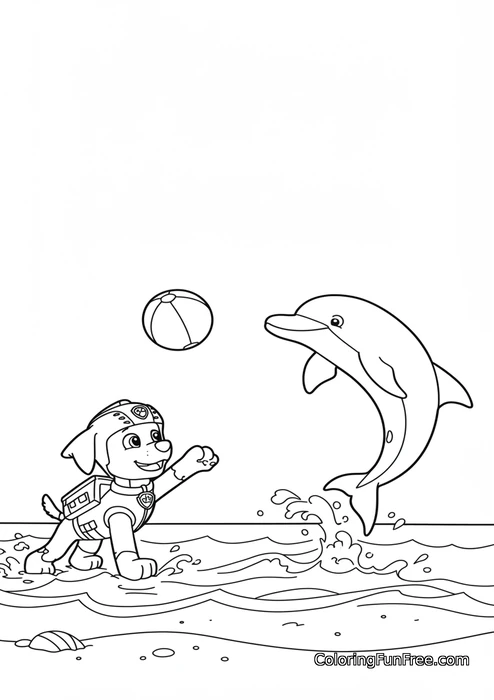
Paw Patrol Zuma playing with dolphin beach ball
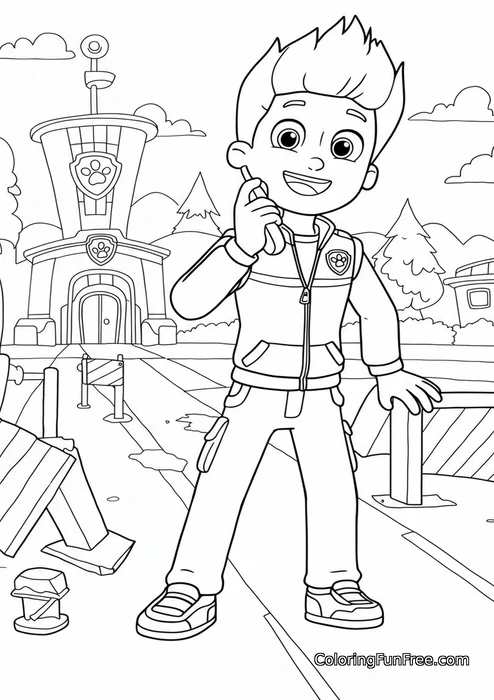
Paw Patrol Ryder lookout tower pup pad
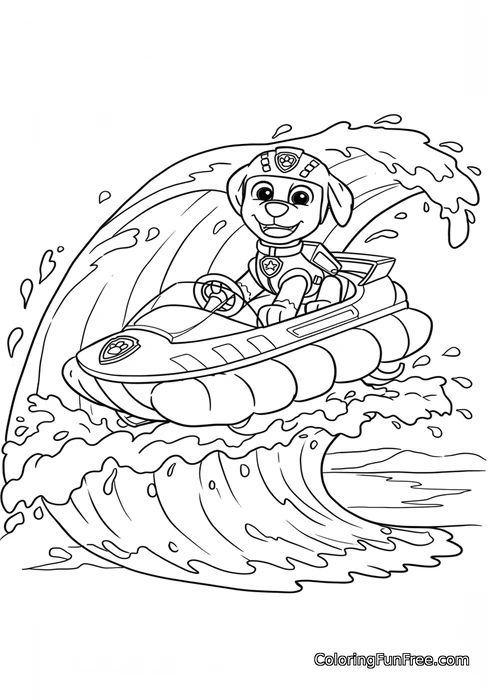
Paw Patrol Zuma hovercraft riding wave
PAW Patrol was created around color-coded roles - which sets these coloring pages apart from almost everything else we publish
PAW Patrol solved a problem that most kids’ shows have never even considered: it gave each character their own color. A limited color palette is a tough challenge. Chase is blue. Marshall is red. Skye is pink. Rubble is yellow. This decision, made during the show’s development before its premiere on Nickelodeon on August 12, 2013 (source), turns out to be of immense importance when a child sits down to color.
Most coloring book scenes - a dragon, a castle, a random dog - are approached by a child with complete freedom. They can make it green, orange, or seven colors at once, and nothing will be wrong. With “Paw Patrol,” it’s different. A child who watches the show regularly already knows what Chase looks like. They’ve seen the blue uniform, the police badge, and the blue car - probably hundreds of times. When they pick up a pencil, they aren’t inventing anything. They are recalling. This is a fundamentally different psychological connection to the page, and it changes how children engage with the activity - something worth understanding before printing anything.
This isn’t really a problem. It’s more of a design constraint. The show’s color logic gives the child a certain framework - and that framework can be liberating or restrictive, depending on the child’s age and personality. A three-year-old will likely color Chase blue without thinking twice, because at that age, precision comes naturally. A six-year-old might deliberately make Chase purple to see what happens or what someone will say. This tension between “correct” and “creative” is real, and we’ve seen it time and again in feedback from parents who use our free PAW Patrol coloring pages with children of various age groups.
The show’s color scheme also has a practical side. When a child is learning color names, PAW Patrol coloring pages provide six clear, consistent examples. Marshall is always red. Zuma is always orange. Rocky is green. If you’re working on color recognition with a four-year-old, a sheet featuring Marshall from the PAW Patrol coloring book and a box of colored pencils nearby is actually a useful tool, not just entertainment. Repetition across different series builds a kind of color literacy that transfers surprisingly well to other activities.
According to a study published on ResearchGate by researchers who examined the impact of coloring books on preschool-aged children, 75.9% of the 29 child respondents demonstrated fine motor skill development consistent with expected age-appropriate developmental milestones following structured coloring activities, with a statistically significant result, confirmed by the Wilcoxon test (source). This study focused on children aged 4–6, which almost exactly matches the primary audience for “PAW Patrol.” The physical act of stepping inside Chase’s police badge or tracing Skye’s glasses is a genuinely beneficial motor skill practice - not incidental, but essential.
On coloringfunfree.com, we publish many animal-themed coloring pages - from puppy coloring pages to free bear coloring pages - and the PAW Patrol pages are in their own category because the characters carry pre-existing visual expectations that purely fictional animals do not have. This is neither good nor bad. It simply means that the pages work differently, and parents should be aware of this.
The six main puppies and what each brings to the coloring page
Not all six puppies make equally useful coloring pages for every child. The differences in character design are real, and they affect how easy or enjoyable it is to color a page, depending on the child’s age and level of patience.
- Chase (blue/police): By far the most popular character on our site. His shape has clean, high-contrast edges and relatively few small internal details on simple pages. A great first page for most age groups. The story behind the blue character is simple - even very young children can fill in a page about Chase with a sense of accomplishment.
- Marshall (red/fire truck): A high-contrast, recognizable silhouette. The red shape is clearly visible even when the child colors outside the lines. Marshall coloring pages from the “Paw Patrol” series are particularly well-suited for children aged 3 - 5, as the bright shapes remain recognizable even with imprecise motor control. His Dalmatian spots are a small bonus detail that older children often enjoy carefully coloring in.
- Skye (pink/purple/helicopter): Slightly more complex than Chase or Marshall. Her helmet, goggles, and flight suit cover more areas, making the “Sky Paw Patrol” coloring pages more suitable for children aged 4 - 7 than for younger kids. Children who are particularly fond of Skye will often try to draw more details than they would for a character they feel neutral about - motivation clearly outweighs skill level.
- Rubble (yellow/construction): Large, rounded shapes. Very accessible for younger children. The requirements for the yellow color are simple, and his bulldog-like proportions are quite broad, so the precision of the lines matters less than with the other puppies.
- Rocky (green / garbage truck): Less frequently requested than Chase or Marshall, but his green color makes him truly useful for color-matching exercises. Rocky’s pages featuring vehicle details are well-suited for children who are particularly interested in trucks and machinery.
- Zuma (orange/hovercraft): The color orange is underused in many children’s coloring books, and Zuma’s pages give children a real reason to find and use it. His water rescue gear features interesting textural details on the more complex pages, making it better suited for the 5–8 age range.
First and foremost, the character a child asks for tells you what interests them, and we usually recommend following these preferences rather than overriding them. If a child specifically asks for a page about Skye, starting with Chase because he is “easier” typically leads to less interest, not more. The emotional investment a child puts into their favorite character is worth more than the technical simplicity of another page.
It’s worth honestly acknowledging one dynamic: some children color Chase orange or make Marshall’s uniform green, especially after they’ve finished the “correct” version and want to experiment. This isn’t a problem that needs to be solved. In fact, it’s a sign that the child has internalized the “real” colors well enough to consciously deviate from them - which is a more complex act than it seems at first glance. The framework offered by the exhibition isn’t a cage. It’s a starting point, and some children use it as a launchpad.
What’s actually in this collection - no vague promises
On coloringfunfree.com, the PAW Patrol collection includes individual character sheets for all six main pups, pages featuring vehicles where a pup’s truck or plane takes up most of the composition, as well as pages with group scenes depicting several characters together. We also have themed sheets dedicated to specific types of missions—sea patrol, jungle patrol, and several episodes that will be instantly recognizable to kids who have watched these episodes more than once, and that’s the majority of them.
What we don’t include: in-depth pages listing minor one-season characters or highly detailed fan-art-style sheets that go beyond what a child under 10 can reasonably complete. This is a conscious choice on our part. We’ve found that pages that look impressive as sketches but require adult-level patience usually disappoint children more than they satisfy them, and disappointed children don’t return to the coloring book. Every sheet in this collection is free, printable, and requires no account creation or registration to access. Click, print, and give it to your child.
The “Paw Patrol” coloring pages on this page are formatted for standard printer paper, though we’ll cover paper options in the next section. If you’re looking for animal-themed coloring pages other than these, our free hamster coloring pages are worth checking out for younger children who crave variety.
Age matters more than parents usually expect
What changes between printables for toddlers and printables for school-age children
The character remains the same. Only the line work changes—specifically, how many sections the page divides the character into, and how many interior details appear within those sections. A Chase page for a three-year-old might simply be an outline of his body and helmet, with two or three large colored areas. A Chase page for a seven-year-old includes badge details, a car in the background, paw prints on the uniform, and ground scenery. The same character, but a completely different experience.
PAW Patrol’s primary target audience was originally designed for children aged 2 to 5, according to Spin Master’s product development documentation, and the show has been the most popular program for children aged 2 to 5 in the U.S. since 2016, broadcast in more than 170 countries and reaching 350 million households worldwide (source). Our collection intentionally goes beyond this age range because these pages are also used by siblings and slightly older children - often with a younger child sitting next to them, drawing a simpler version of the same character.
For children ages 3–4, we would recommend using sheets with a single character, no background, and thick outlines. Children ages 5–7 can work with pages featuring vehicles and simple background details. Children 8 years and older often prefer group scenes or more detailed single-character pages - something that takes real time to complete and feels like an accomplishment upon finishing. Matching the sheet to the child’s age is far more important than which character you choose.
Printing these pages takes less than two minutes - here’s one setting that actually makes a difference
Set your printer to black-and-white mode. Not grayscale - black-and-white. Grayscale mode adds gray tones to the outlines, blurring the lines and making a clean coloring page look like an underexposed photograph. Clean black lines on white paper are what you need, and this setting is usually found in the “color mode” section of your printer settings. It takes five seconds to check and noticeably improves the result every time.
Paper weight matters more than many people realize. Standard printer paper has a weight of about 75 g/m², which is fine for colored pencils but starts to curl when using markers. If your child uses felt-tip pens - which is often the case with older children working on detailed Sky equipment or a drawing of Marshall the Dalmatian - print on 90 g/m² paper or lightweight cardstock. The lines stay crisp, the paper doesn’t wrinkle, and the finished page looks like it’s worth keeping.
Sometimes we get asked: can you laminate the page first and then use dry-erase markers? You can, but it significantly changes the activity - most colored pencils and crayons won’t work on laminate, so you’re limited to a single coloring tool. For repeated use, this is the right choice. For a one-time creative activity, just print on regular paper and let them get to work.
Where to start if you have a child, a printer, and about four minutes
The first page you should print - and it’s probably not the one you’d guess
Most parents instinctively want to print a group scene first - the whole team, everyone together, something that will look impressive on the table. In fact, we wouldn’t recommend starting with this for children under 6. Group scenes have many small sections, several color schemes happening at once, and lack a single focal point. They tend to overwhelm young children rather than engage them, and a bad first experience usually turns children off coloring for a while.
Start with Chase. He is the most recognizable character, his color scheme is the simplest, and he appears in more free coloring pages in our collection than any other puppy - which means you have plenty of options for making the task more challenging once your child gets used to him. If your child clearly and loudly prefers Skye or Marshall, start with them. Don’t dismiss a strong preference in favor of theoretical simplicity. Your child’s investment in their favorite character will lead them to add more detail than you might expect.
For children who also like characters not belonging to Paw Patrol, The Lion King coloring pages on our site follow a similar logic - ted to color accurately.
All Paw Patrol coloring pages on coloringfunfree.com are free. All are printable. None require an account. If you need free Paw Patrol coloring pages right now, you’re already in the right place - scroll up, choose a character, and print. Your child probably already knows exactly what colors everything should be. That’s the whole point.