
Flowers coloring pages
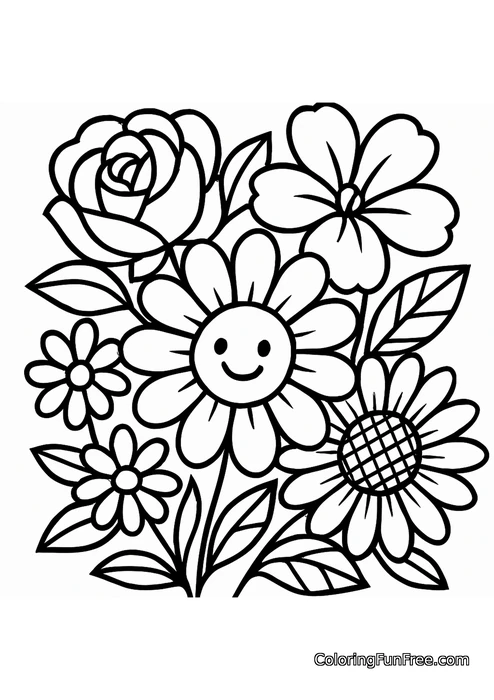
Bouquet of flowers with smiley daisy
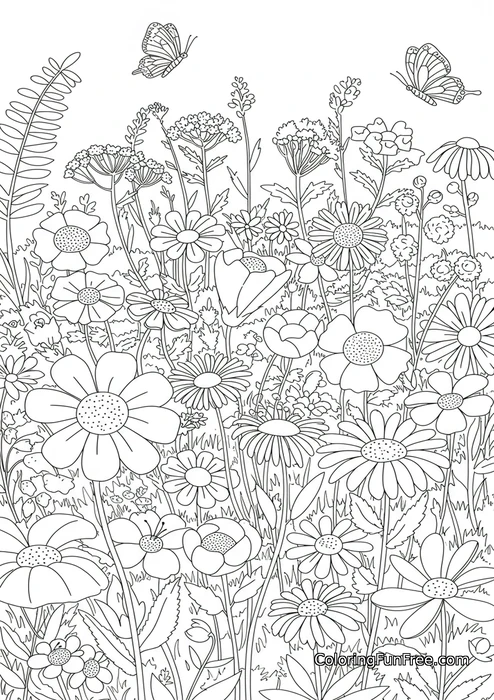
Butterflies over wild flower field
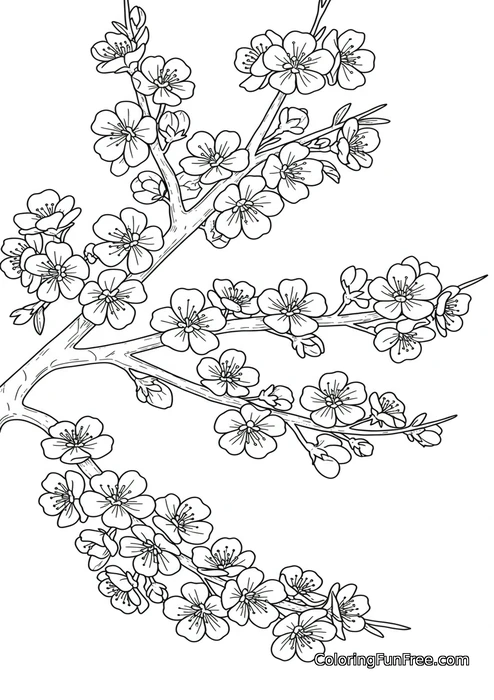
Cherry blossom branches
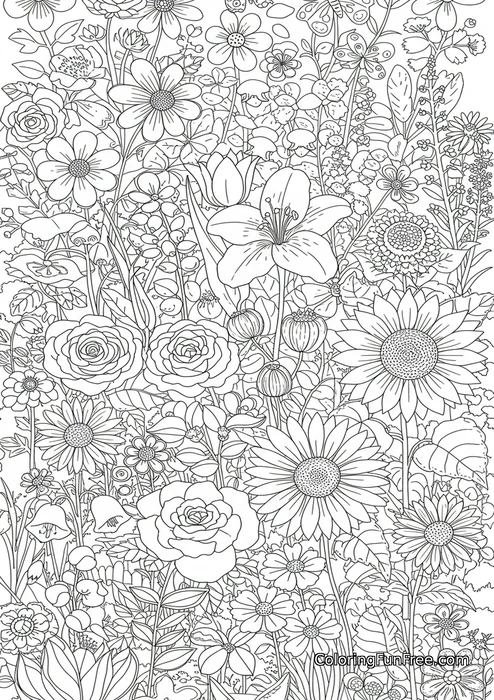
Dense wildflower garden
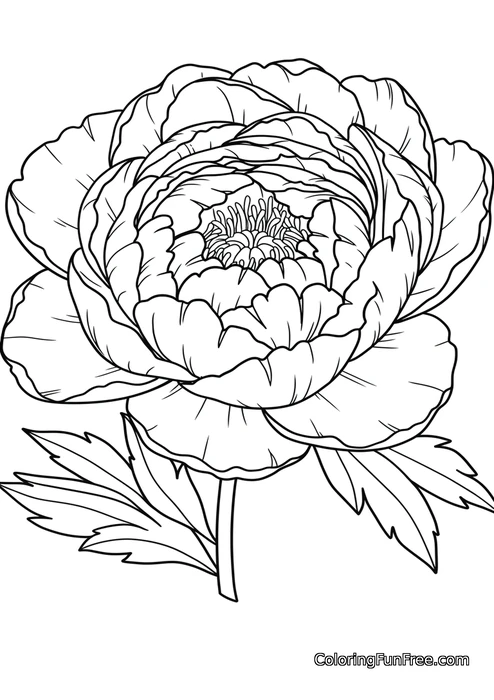
Detailed peony flower
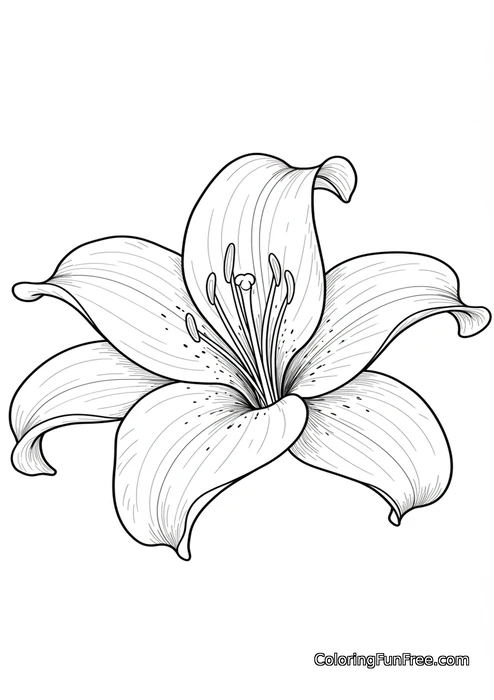
Elegant lily flower
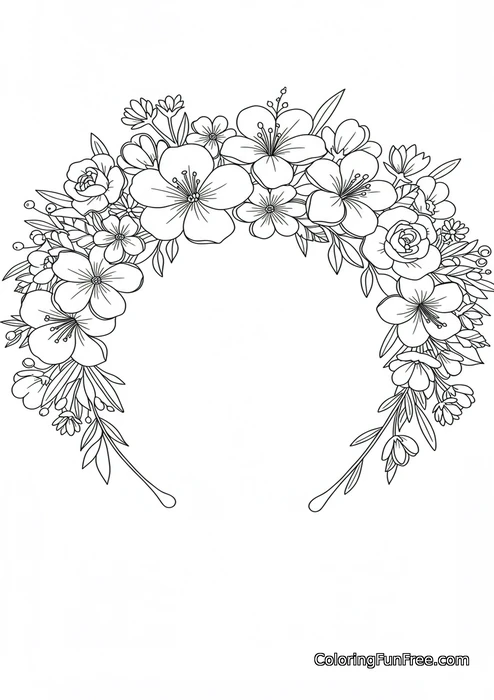
Floral headband or tiara
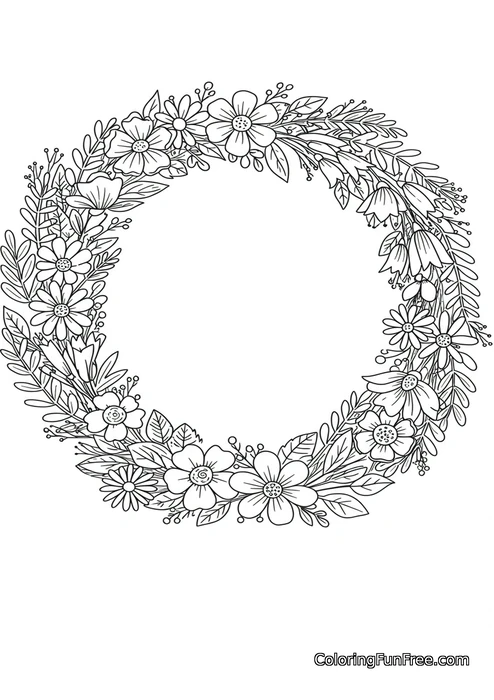
Flower wreath design
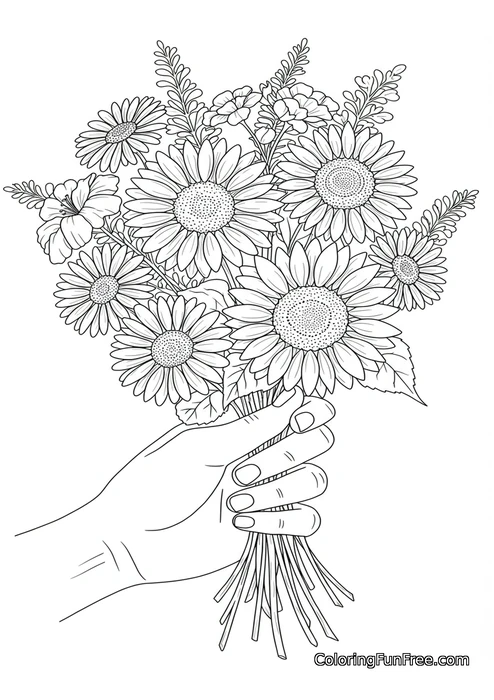
Hand holding daisy bouquet
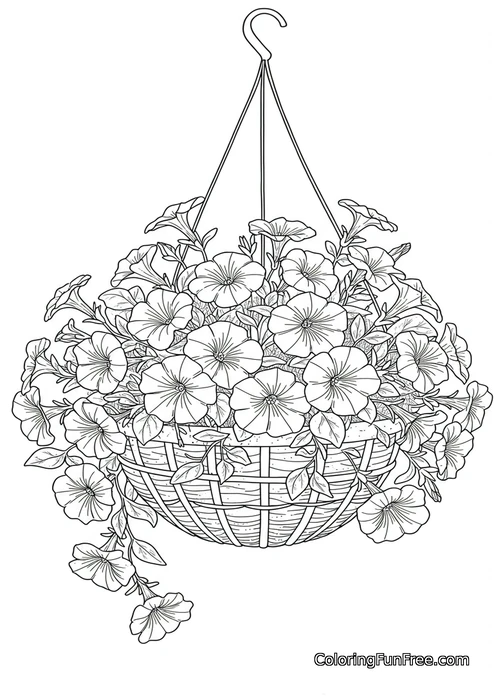
Hanging basket of petunias
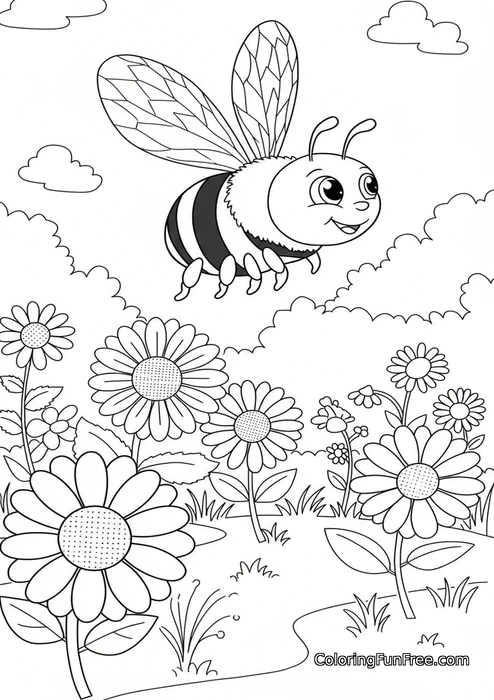
Happy bee flying over flowers
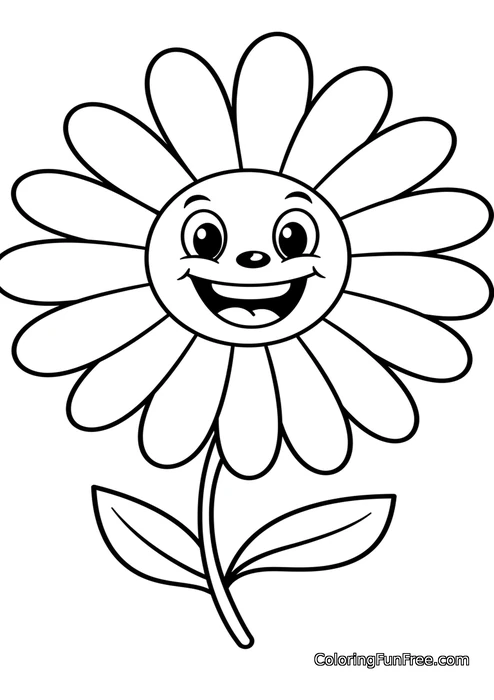
Happy smiling daisy flower
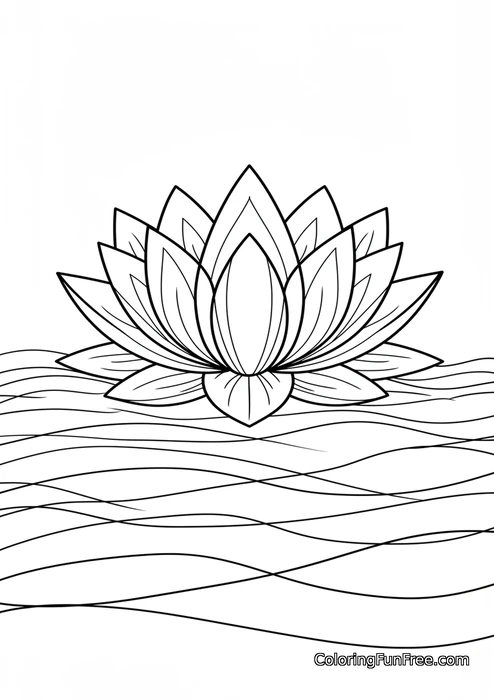
Lotus flower on water
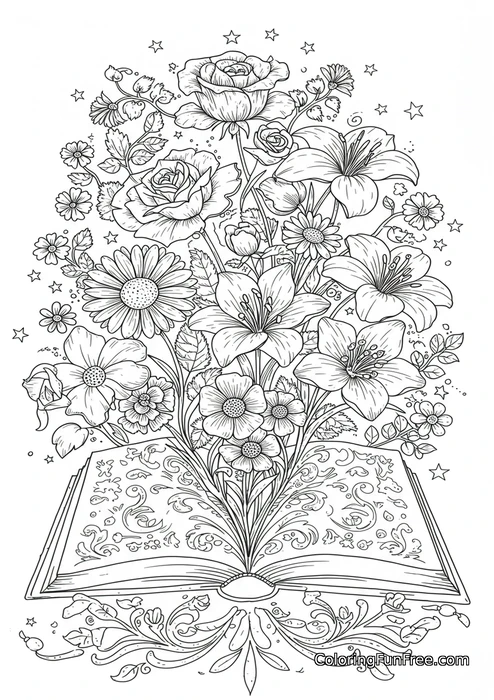
Magical flowers emerging from book
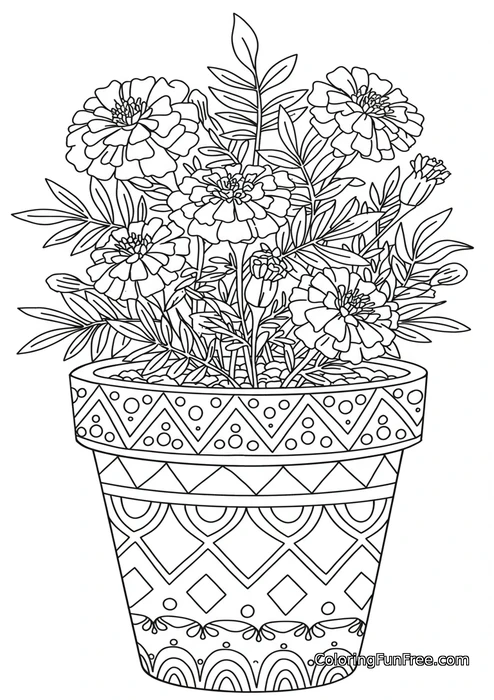
Marigolds in patterned pot
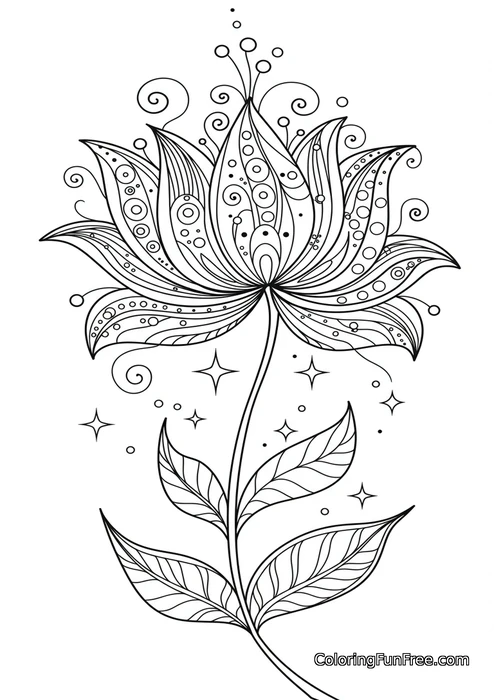
Ornate fantasy flower
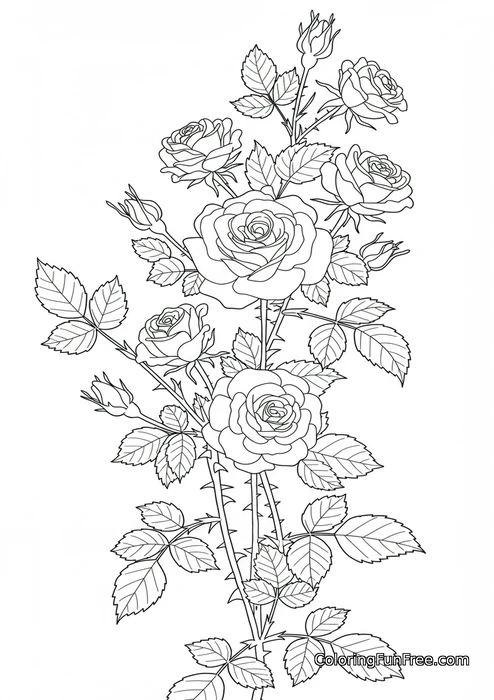
Rose stem with leaves and thorns
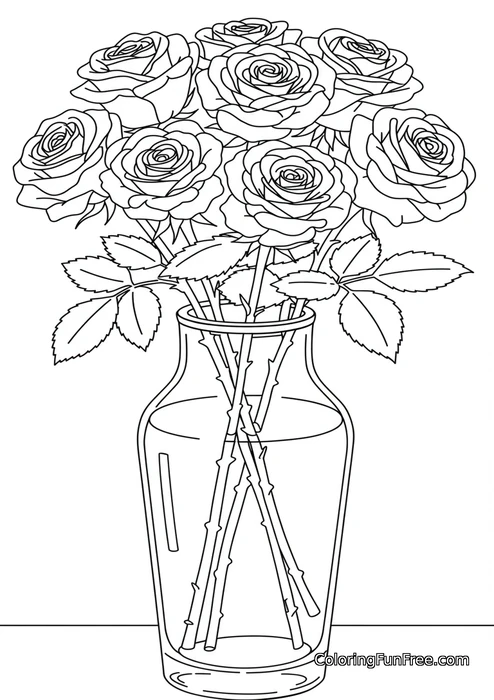
Roses in glass vase
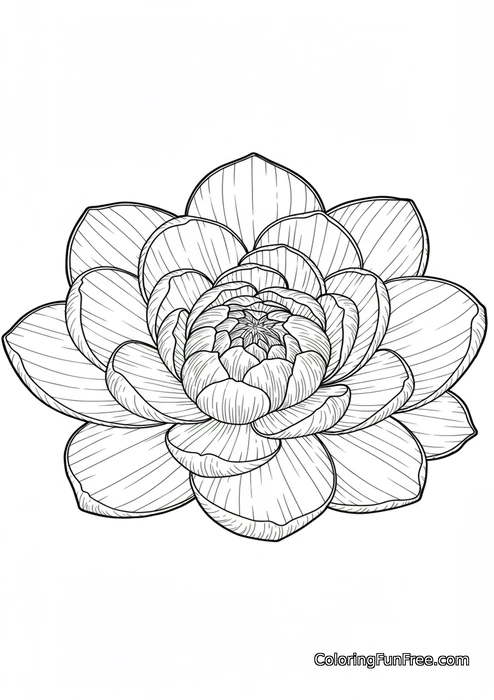
Succulent plant top view
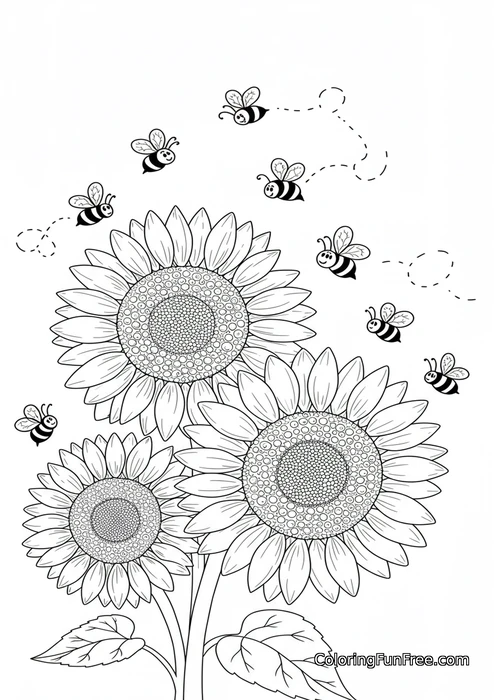
Sunflowers and bees
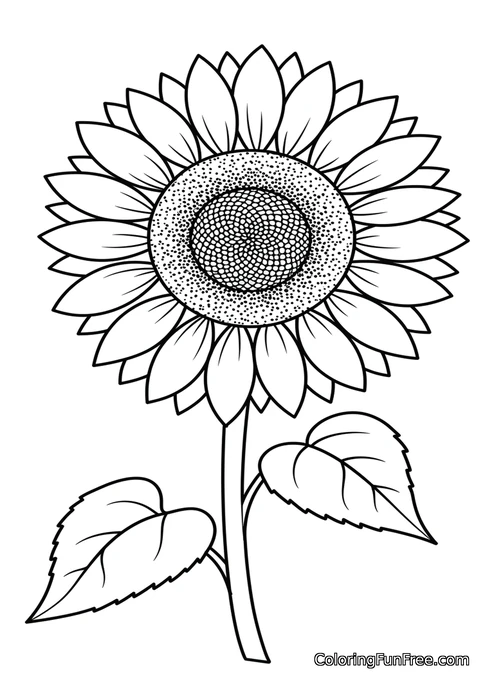
Tall sunflower with leaves
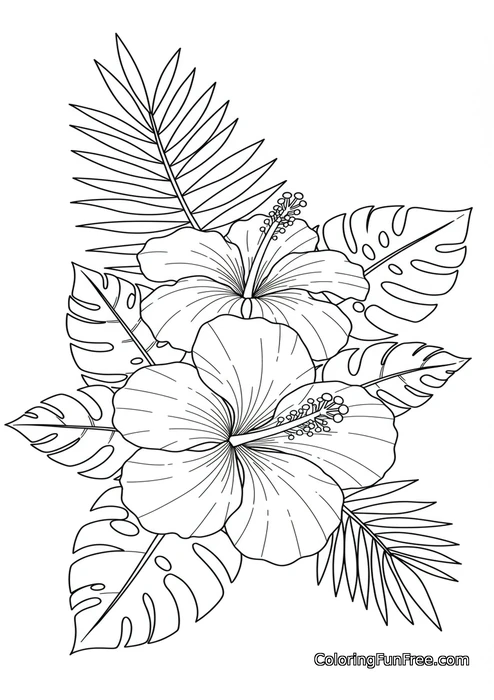
Tropical hibiscus and palm leaves
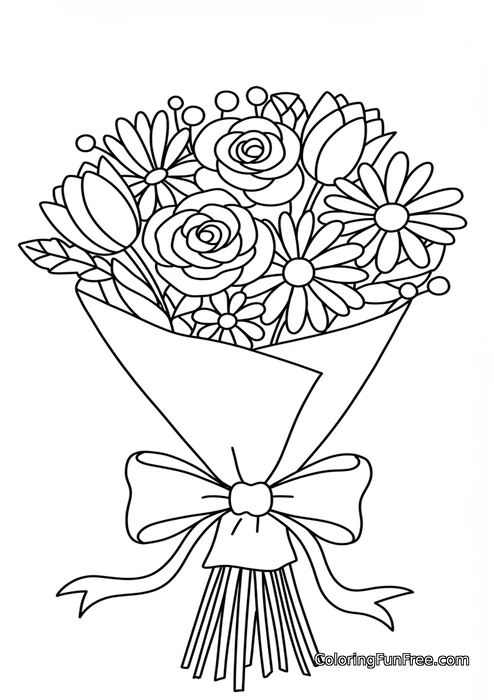
Wrapped flower bouquet with bow
Why flowers turn out to be one of the most useful items for coloring is not obvious until you see it happen
The child asks for a coloring page with flowers not because they love flowers. They ask because they have colored everything on the table and there is nothing left. This is usually how it starts. The sheet is picked up without enthusiasm, maybe with a slight sigh - and then something quiet happens. Five minutes later, they're still working. Ten minutes later, they are adding a second color to the petals already filled. It's this moment that catches parents off guard, and it's the moment around which the collection of flower coloring pages at coloringfunfree.com is built.
Flowers work for a reason that has nothing to do with aesthetics. Unlike almost all other coloring subjects, a flower has no rules. A cat is supposed to look like a cat - four paws, two ears, a tail. If any of this is done incorrectly, the child will notice right away. A flower? It can be bright orange, with purple stripes on each petal and a lime green center, and no living person will tell you it's wrong. This lack of constraint is unusual for coloring books, and kids feel it even if they can't articulate it. The page becomes a release, not a test.
There's a structural side to it that's worth understanding, too. Most flowers in nature are built on radial symmetry - the petals are arranged from a central point in a repeating pattern. It turns out that this structure is not only visually pleasing. It creates a predictable rhythm for a child's hand and eye. As soon as a child colors one petal, the next one starts the same way. There is no problem solving between strokes. The pattern leads them forward. Compare this to coloring a castle or a forest landscape, where each section is a separate figure requiring a separate solution. Flowers reduce cognitive load during the activity itself, which is partly why sessions tend to last longer than parents expect.
That's why pages with flowers occupy a very different place in our collection than, say, coloring pages with dinosaur eggs or printout sheets with wolves. These categories have narrative weight - the child brings expectations and backstory to the page. Flowers carry almost none. As a result, the child fills in the expectation gap on their own, and that's where the most surprising creativity tends to emerge.
What petals actually give the child that other shapes don't
A four-year-old coloring a daisy with five petals is doing something physically concrete: they're practicing enclosing the shape, staying within the curved border, and returning to the center point several times in a row. These are not trivial skills. A Springer Nature article on a study of coloring books for children ages 4-8 found that children who colored pictures regularly had improved fine motor coordination and grip stability, and, importantly, structured coloring books may enhance divergent thinking rather than inhibit it: children who colored first created more new drawings later in life than those who did not. Source here: communities.springernature.com.
The shapes of the petals are especially useful here because they are closed but curved - not a box with straight edges, not an open line. Coloring inside a curved border requires a bit more wrist control than coloring inside a rectangle. This difficulty is calibrated, but not excessive. For a 4-year-old, the wide three-petal flower is on the edge of what they can comfortably handle. For a 7-year-old working on a detailed rose with layered petals, the difficulty will be spatial - they will understand that one petal is placed behind another and choose colors that reflect that. Same type of subject, very different skill requirements, and the printable flower coloring sheets on this site are designed with this range in mind.
At an older age - 8 to 10 years old - flowers become interesting for a different reason. Children at this age often become concerned about the realism of their coloring, which leads to frustration when working with objects that require accurate anatomy. Flowers bypass this problem. Even botanical illustration, which is technically rigorous, works within a forgiving subject matter. There is no incorrect number of petals on a fictional flower. A child who spends twenty minutes inventing a non-existent type of flower is engaging in real creativity, not cutting corners. Simple flower coloring pages for younger kids and more complex botanical-style pages for older kids both serve specific developmental purposes, and both are in this collection.
It's worth noting that the calming effect of repetitive, time-limited coloring is not something invented by coloringfunfree.com as a marketing ploy. A randomized, controlled study published in the journal PMC involving 88 patients examined coloring therapy in combination with traditional anxiety treatment, and found that the combination was more effective at reducing anxiety levels than traditional treatment alone. Although the study involved adults with generalized anxiety disorder, the underlying mechanism is the same - repetitive fine motor activity with visual feedback - that causes a child at a table with a coloring sheet to be noticeably calmer after two minutes than before. The study is available at pmc.ncbi.nlm.nih.gov.
What's really in this collection of flower coloring pages - without the vague promises
The free flower coloring pages at coloringfunfree.com cover a wider range than the category name suggests. Here's honest information about what's actually here, grouped by type rather than by how attractive the thumbnails are.
- Single-flower sheets with 3-5 petals and minimal detail inside - geared toward ages 3 to 5 and a starting point for kids who are still developing pencil control
- Pages with medium complexity flowers with defined layers of petals, leaf structure and stem details - suitable for ages 5 to 8, they introduce spatial challenges without overwhelming the child
- Botanical-style pages with realistic proportions, inner petal lines and hatching guides - suitable for ages 8 and up, they encourage patience and benefit from colored pencils rather than markers
- Mandala-style flower pages using radial symmetry at a higher level of difficulty - popular with older children and adults, especially useful for longer coloring sessions
- Garden scene pages featuring several types of flowers, stems, leaves, and background elements - these are the most compositionally challenging pages in the set and are best suited for children who have already spent time coloring individual flowers
- Floral bouquet coloring pages - discussed separately below, as they behave differently from the rest of the collection
All pages are formatted for standard printing, and the PDF versions are sized to fit a single sheet without scaling. No registration or account is required for access.
Note about the bouquet pages - they are more complicated than they look
The floral bouquet coloring page looks easy in its scaled-down form. A few flowers grouped together, maybe a ribbon, a blank background. But parents don't always notice until the page is already on the table that bouquets include overlapping elements - one petal sits in front of another stem, the head of one flower partially covering the leaf behind it. This layering is a visual leap of complexity that takes some children by surprise, especially those used to single-flower pages where each section has a clear boundary.
Our recommendation: if a child is under 6 years old and hasn't spent much time on medium complexity pages yet, start with single flowers and set aside the bouquet sheets for a few weeks later. For children ages 7 and up who are already comfortable navigating layered scenes, the bouquet pages are a real pleasure, and the overlapping sections create natural opportunities for thinking about color contrast - dark petals in front of lighter ones in the background, for example. This is a real design concept, and some children arrive at it entirely on their own.
Before you print a single page - decisions that affect what ends up on the table
Age appropriateness matters more for flower pages than parents usually assume, and it works both ways. A job that is too simple for a seven year old is done in ninety seconds, which isn't relaxing or engaging - it just gets done. A page that is too complex for a four-year-old turns into a source of frustration rather than something useful. The general guideline used for this collection: ages 3 to 4 do best with pages that have 3 to 4 large petals and no inner line details. Ages 5 to 6 can work with 6 to 8 petals with simple inner lines. Age 7 and up can use full garden scenes, botanical style pages and mandala formats. These aren't strict limits - a practiced five-year-old can handle more. But as an initial calibration, it's more reliable than guessing.
The choice of paper changes the experience more than most people realize. Regular copy paper is fine for markers and crayons. For colored pencils, you need thicker paper - 90gsm or higher - so the pencil has something to hold on to. On very thin paper, colored pencil strokes slide around without absorbing the pigment, making filling in large petal areas slow and unsatisfying. If a child seems to give up quickly when working with pencil pages, the problem is often the paper, not the page or the child's concentration.
There's one print setting that almost no one changes: the contrast or darkness level in the printer settings. Most home printers default to a slightly lighter output for line drawings, so outlines on flower pages may turn out gray rather than black. For a single flower page for a toddler, this isn't a problem - the outlines are thick enough to withstand it. On botanical-style pages with thin interior lines, faint outlines make the page genuinely hard to use. Go into your printer settings and set the contrast to maximum before printing detailed pages - this takes about ten seconds and makes a real difference to how the finished page reads on paper. It's the most consistently underused setting in home printing, and worth mentioning because most coloring sites never bring it up.
Flowers also solve the seasonal problem that other coloring categories create. The Halloween page is relevant for two weeks. Christmas pages have a window. Flower pages can be used in January or July without any inconvenience, and they carry no cultural or holiday associations that might limit their use in some families. A spring day, a birthday party, a rainy afternoon, a quiet hour before bed - all of these contexts accommodate a floral page without any thematic inconsistency. This flexibility is part of why this is the category that parents return to most often after novelty categories run out.
The same logic applies when thinking about how to extend an activity beyond a single session. The flower coloring pages here are formatted so that the same sheet can be printed multiple times. This sounds obvious, but it matters: a child who colors one version in red and yellow, then comes back two days later and colors an identical sheet in blue and black, is demonstrating something real. They're not repeating themselves. They're treating the structure as a frame and filling it with completely different solutions. Very few coloring subjects allow this - realistic animal pages, for example, usually feel redundant on a second print because the expected color palette is already fixed in the child's mind. With flowers, there is no fixed palette, and the free versions in this collection are available in formats that make reprinting easy.
If you're looking for variety outside of this category, the site also has giraffe coloring pages and MLP printable sheets, which pair well with flower pages when a child wants to move from nature to characters in one activity. This combination tends to hold attention longer than either category on its own.
Flowers is not a filler coloring category. It is one of the most structurally interesting and developmentally flexible subjects in the collection - and the proof is in what actually happens when a child sits down with one of them. Start with the right page for the right age, print it on decent paper, adjust the contrast, and step back. The rest tends to happen on its own.