Fairies coloring pages
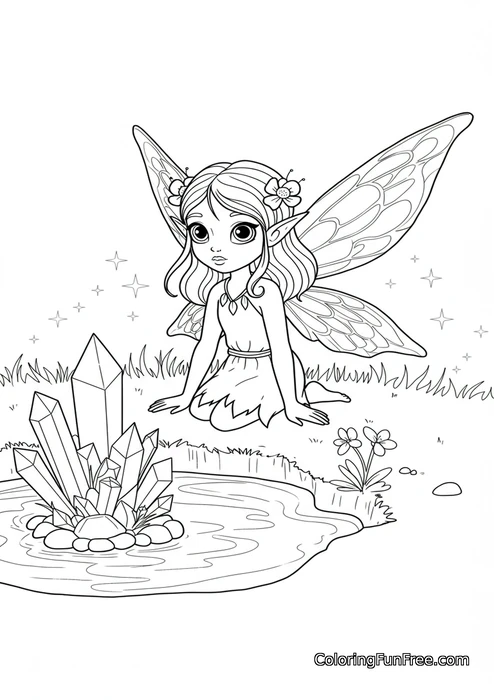
Fairy by crystal pond
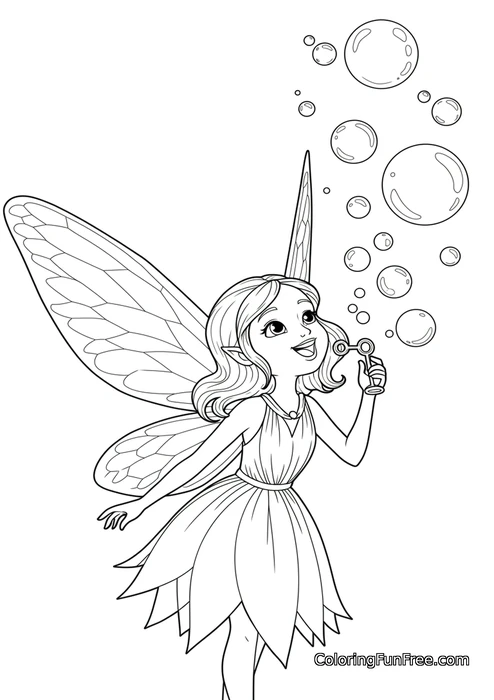
Fairy blowing bubbles
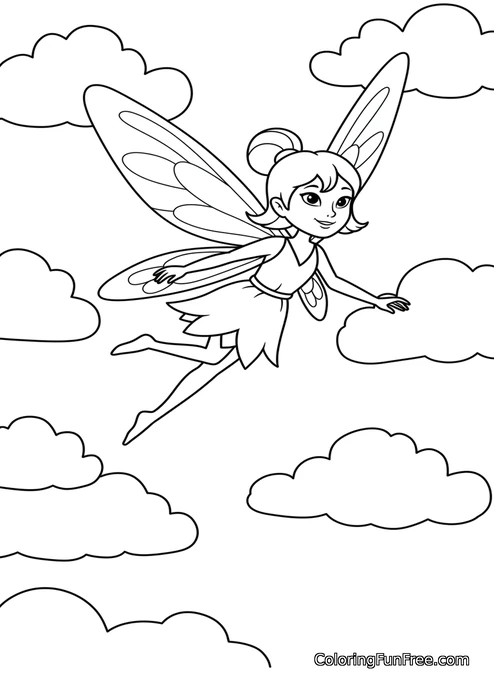
Fairy flying among clouds
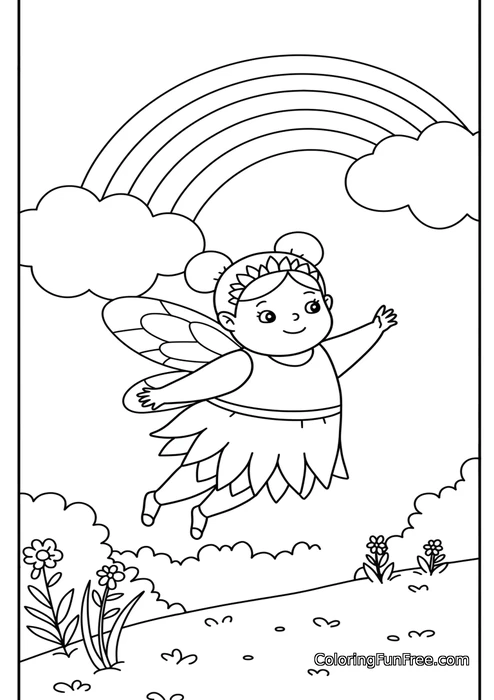
Fairy flying under rainbow
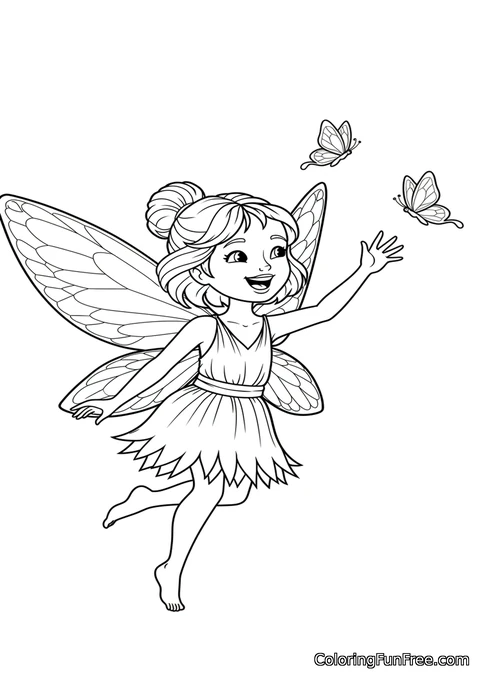
Fairy reaching for butterflies
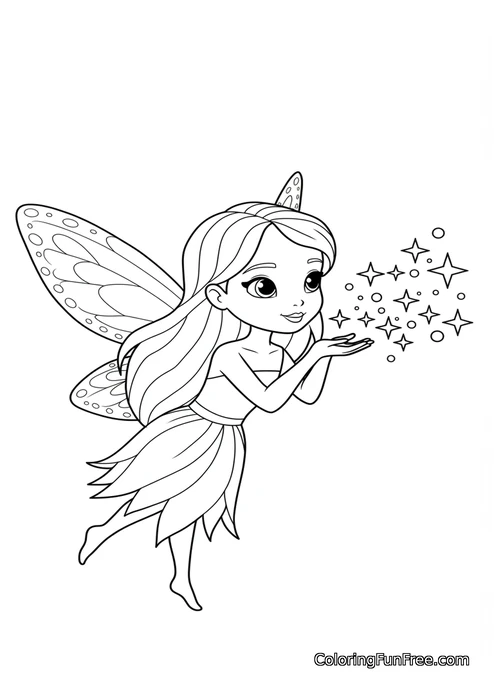
Fairy blowing sparkle dust
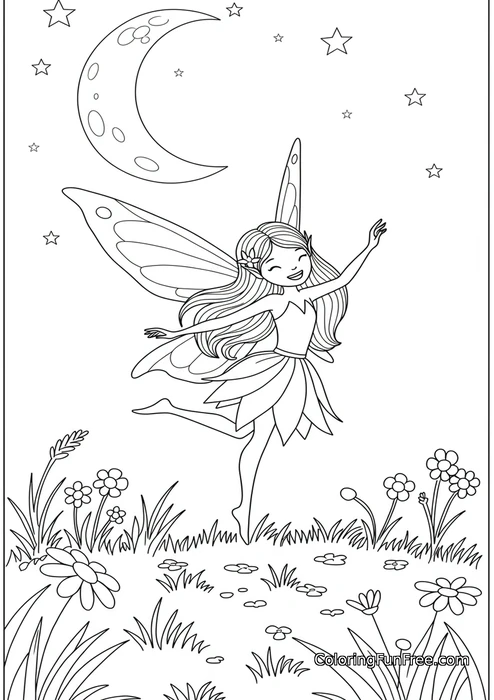
Fairy dancing under moon and stars
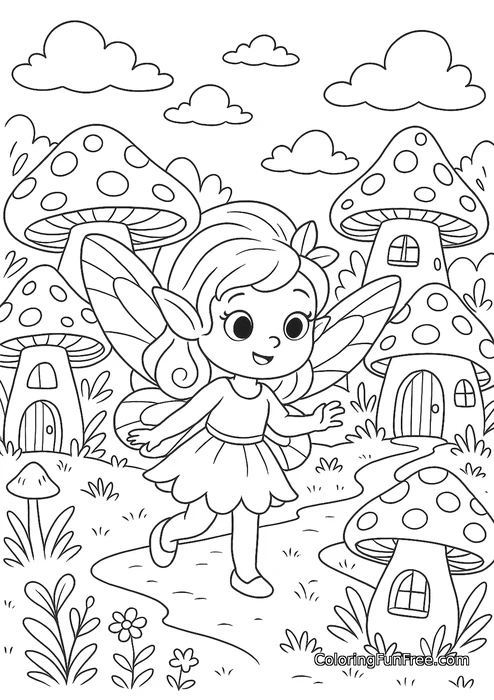
Fairy in mushroom village

Fairy playing harp
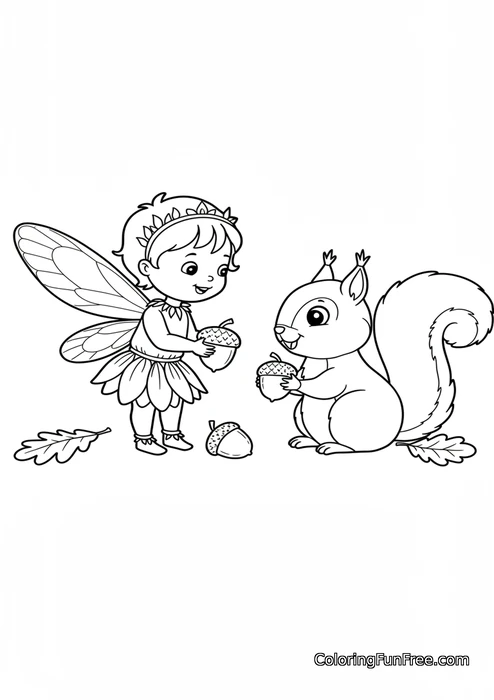
Fairy sharing acorns with squirrel
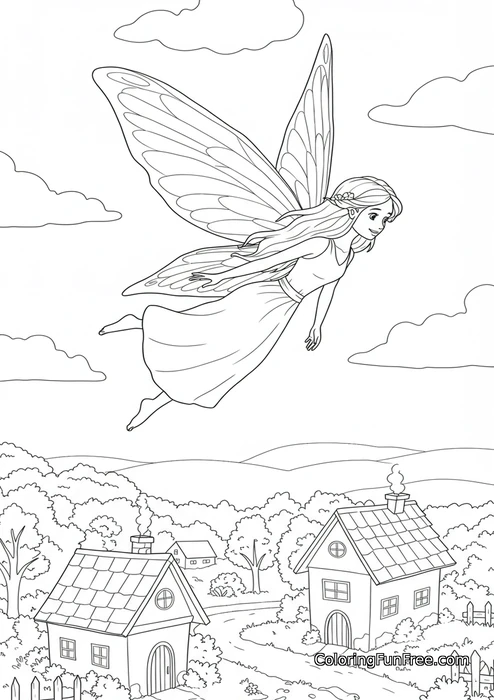
Fairy flying over village
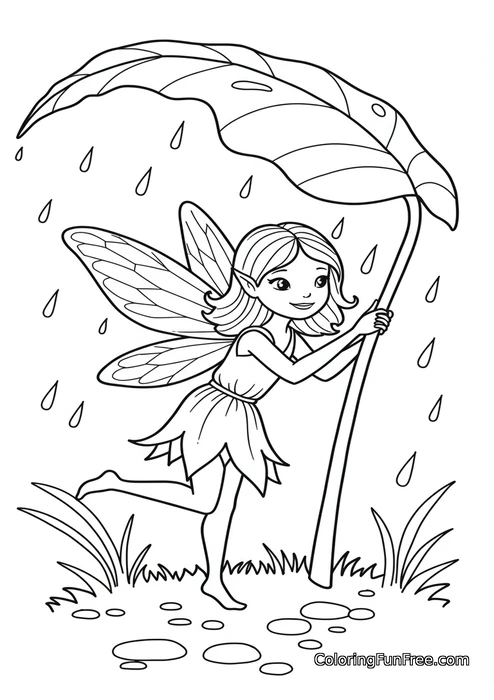
Fairy holding leaf umbrella in rain
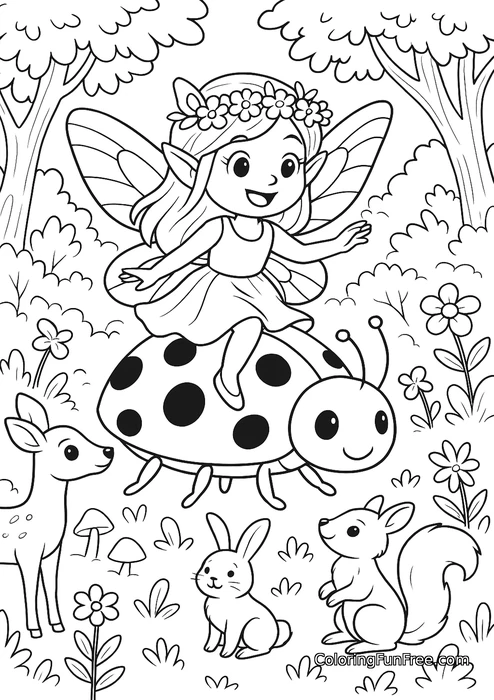
Fairy on ladybug with forest animals
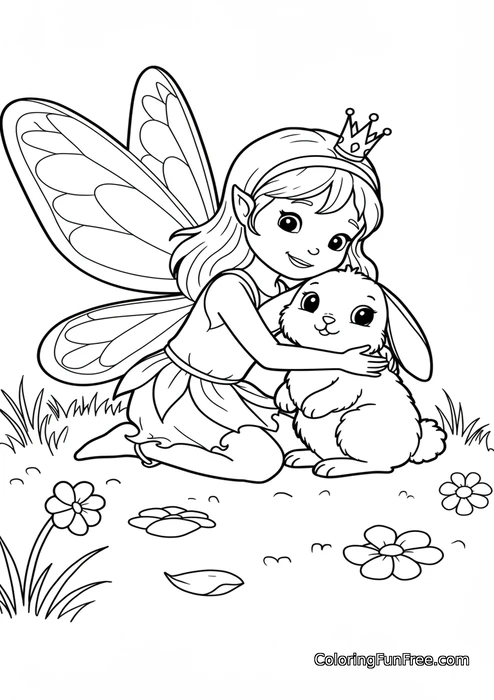
Fairy princess hugging bunny
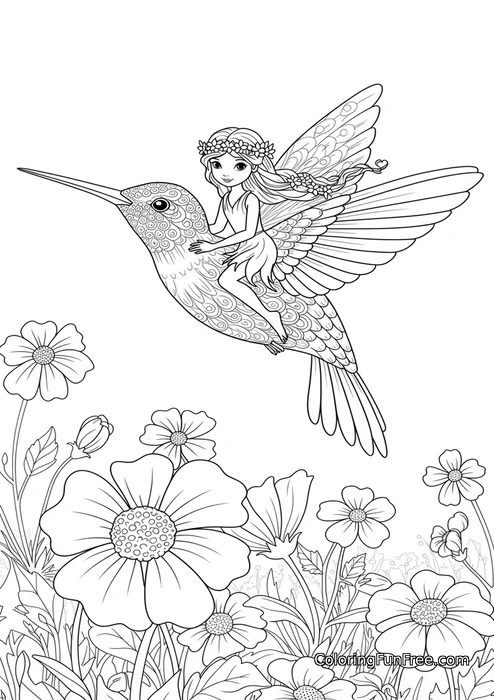
Fairy riding hummingbird over flowers
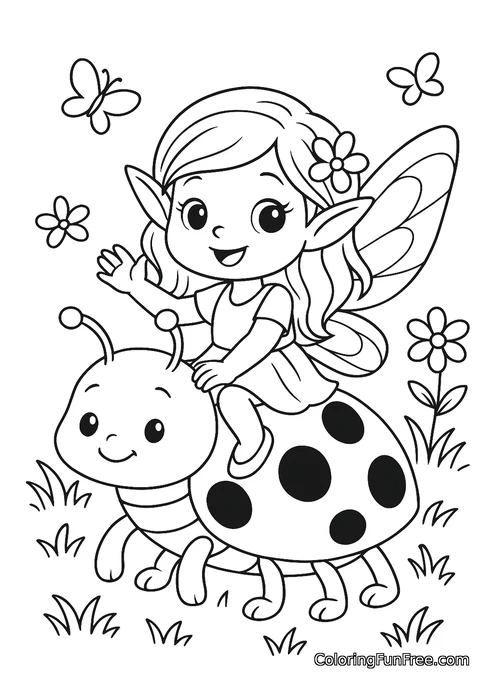
Fairy riding ladybug waving
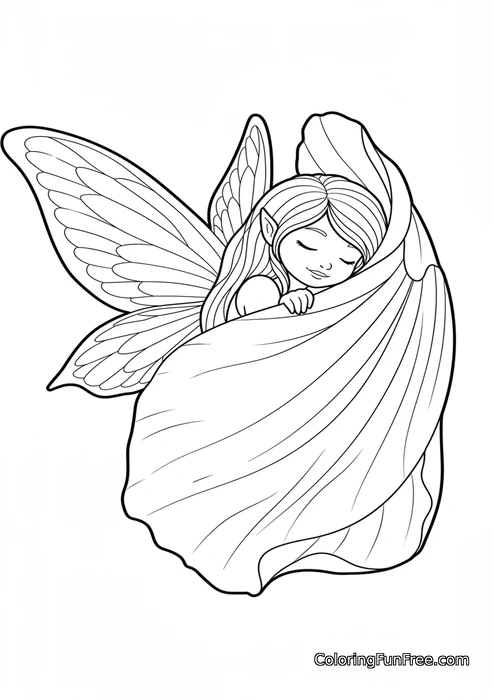
Fairy sleeping in flower petal
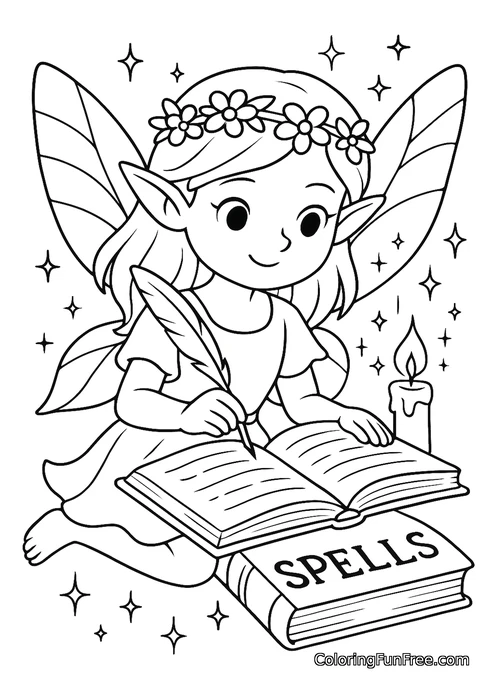
Fairy writing in spellbook with quill
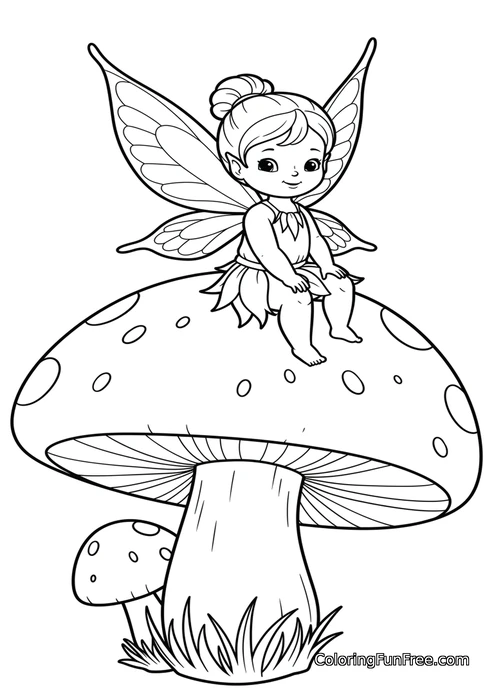
Fairy sitting on large mushroom
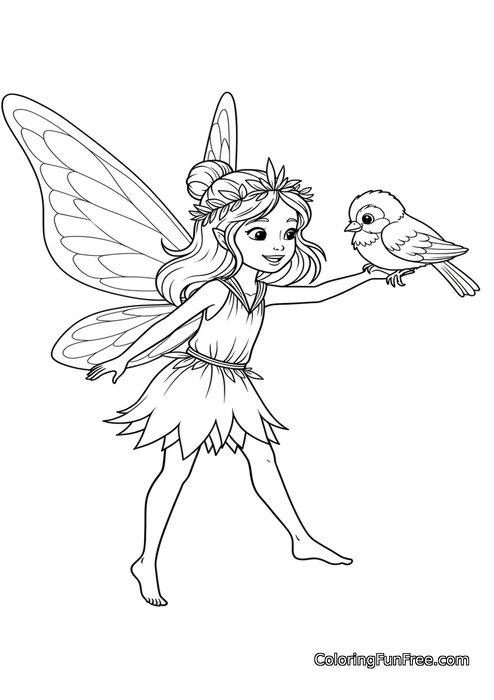
Fairy with bird on hand
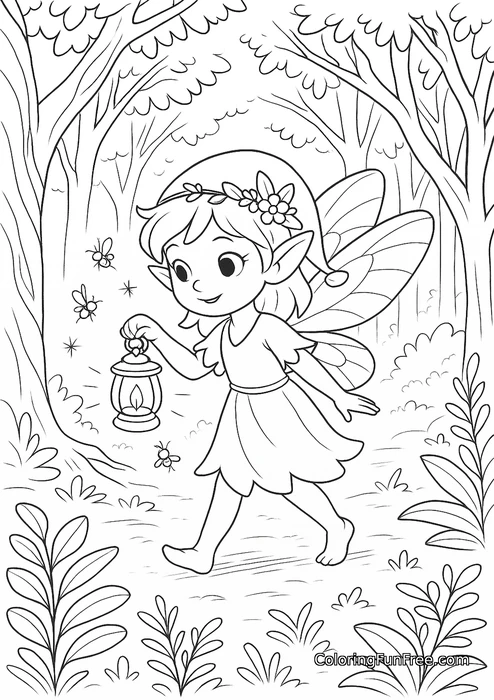
Fairy with lantern in forest
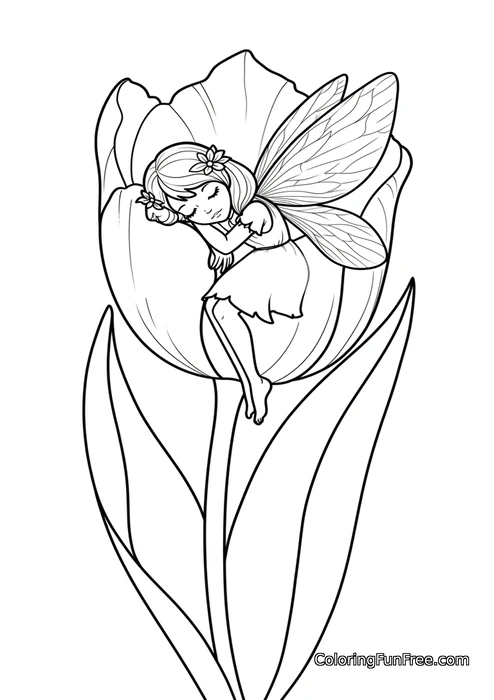
Fairy sleeping in tulip
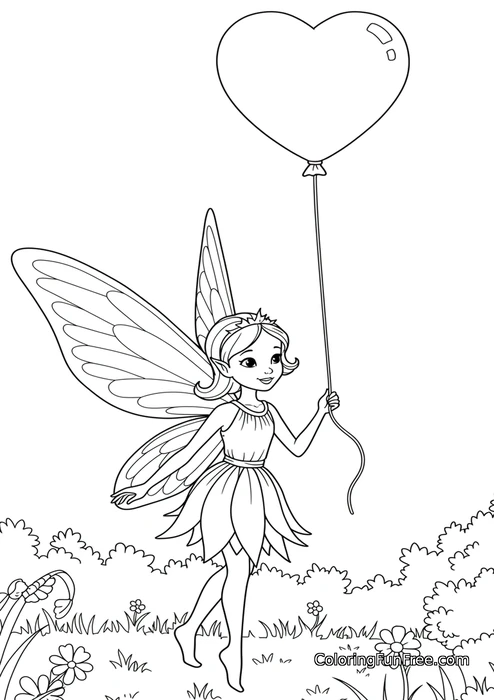
Fairy with heart balloon in meadow
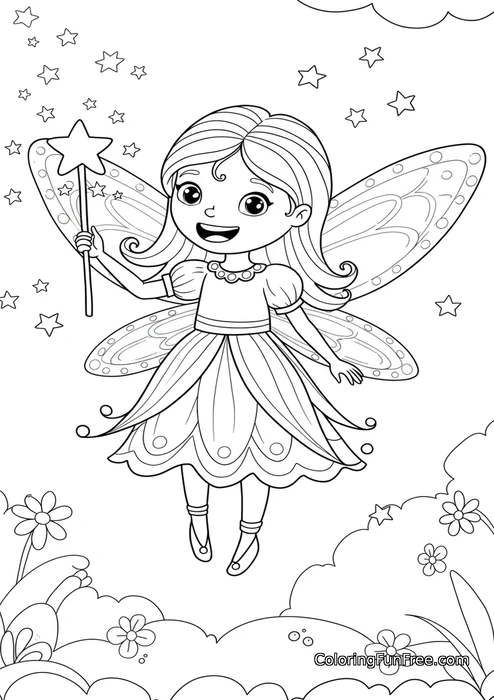
Fairy with star wand and stars
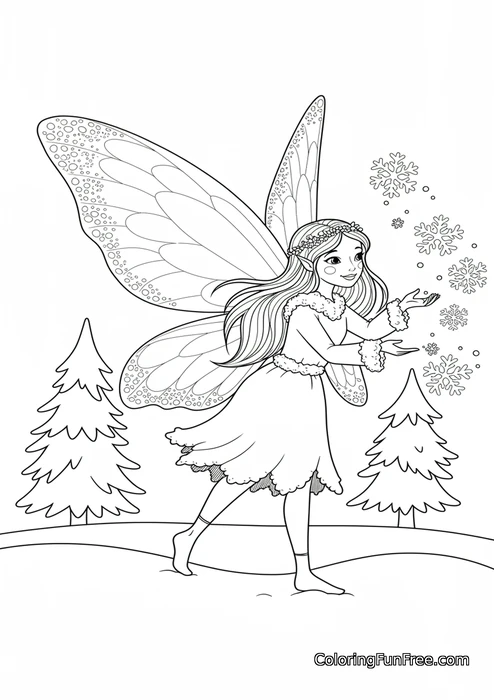
Winter fairy with snowflakes
Fairy tale characters coloring pages occupy a strange and truly rewarding category among kids' coloring pages - and it took us at coloringfunfree.com a while to fully understand why. Most coloring pages have the right answer. A tiger is orange and black. The banana is yellow. The school bus is also yellow. But the fairy? There is no guidebook. There is no documentary footage. There is no authoritative color palette. A child can make his fairy's wings silver, turquoise, orange, or completely invisible, and no one in the world will tell him that he is wrong. This happens less often than you might think.
On this page, you will find our complete collection of free fairy coloring pages - printed, ready to download, and sorted to help you find the right sheet for the right child without endless scrolling.
Why fairies work differently than almost all other coloring books
Most coloring books ask kids to remember. What color is the dinosaur? What color is the apple? The image prompts the memory. This is not a bad thing - color recognition and association are early learning tools - but it creates a silent expectation that there is a correct answer, even if adults don't correct the child out loud.
Fairies eliminate this completely. There are no expectations. A child sitting with one of our coloring books with fairy tale characters is not looking for information - they are making things up. This shift is small at first glance, but very important in practice. It is the difference between filling in and creating.
According to the National Association for the Education of Young Children (NAEYC), art activities such as coloring books promote children's creativity, self-expression, and early literacy. Fairy tale-themed pages contribute to this more naturally than almost any other coloring activity, precisely because they do not carry any visual expectations.
We've also noticed something special about the way children perceive our fairy tale coloring pages compared to, say, animal coloring pages. With animals, many children start with the “right” colors and then expand the coloring. With fairies, they often start with their favorite color and develop it further. It's a different creative stance, and it produces different results - usually more personal, more confident-looking finished pages.
Here's what you'll find in our collection of fairy coloring pages, and what makes each type of sheet useful for different types of kids or activities:
- Simple outline fairies with large wing areas and minimal detail - designed for children under 5, these sheets favor broad areas of color over accuracy. The wings are large enough to be confidently colored in with coarse crayons, and the face is simplified so that there is no frustration with small details. These are also sheets that work well when a child has about ten minutes and you need something they can finish.
- Classic fairy-style fairies with floral accents and flowing dresses are the most printed category in our collection by a wide margin. These sheets are in the golden mean between detail and accessibility. They are not overloaded, but there is enough on them that a 6-7 year old can spend 20 minutes on them and still feel like there is something else to do. The floral elements add variety without requiring fine motor skills.
- Garden and natural fairy tale scenes with background elements - trees, mushrooms, ponds and paths surrounding the central figure of the fairy tale heroine. These are activity sheets, not quick printables. A child who is truly interested will treat the background as a full-fledged project, choosing what the sky looks like, whether the water is blue or green, what time of year it is in the garden. We recommend these coloring pages for children ages 7 and up, or for any child who gets frustrated when a coloring page ends too quickly.
- Coloring pages featuring the tooth fairy are a more specific subgroup that work especially well at significant moments. A child who has just lost a tooth has every reason to be interested in this topic. Coloring pages in this category tend to have simpler compositions because the emotional hook does the work, not the complexity of the illustration.
- Detailed fairy pages for older children - with intricate wing patterns, similar in complexity to our Mandala coloring pages. They are designed for children ages 9 and up, or for any child who has the patience and interest to color in detail from a pattern. The fairy tale format makes them more narrative than a pure mandala - there is a character at the center, but the coloring process is just as meditative.
- Crossovers with fairies and princesses - fairies with crowns, wands and castles on the background. These sheets are well suited for children who are equally interested in royal characters. If your child has been printing out our Wonder Woman printables and is looking for something with a different vibe, these crossovers offer a calmer energy - still magical, but softer in tone.
The assortment matters because children's interests in the fairy tale category are not homogeneous. One child wants a simple winged figure. Another wants a complex garden scene with six different plants to color. Having both options - and knowing which one to print when - makes the difference between a session that ends in pride and one that ends with a half-colored page left on the table.
What we've noticed after publishing coloring books for several years
Launching coloringfunfree.com means that we see patterns that some parents don't notice. Over the years of publishing fairy tale coloring pages, we've learned a few things - and they don't always match what we anticipated when we started.
The most widely printed fairy tale coloring books are not the most detailed. Parents often gravitate towards complex drawings when browsing, assuming that their child wants more. But sheets that are printed repeatedly - again after the first one is printed, printed for a friend, printed a third time three weeks later - are usually sheets of medium complexity. Enough detail to feel satisfied. Simple enough that they can be completed.
We have also noticed that fairy tale pages are more often printed together with other fantasy stories than with realistic ones. A parent who prints a fairy tale coloring page is more likely to also print a dragon or unicorn coloring page than a dog or horse. This tells us something about the creative context that children are in when they sit down to free fairy coloring pages-they are in world-building mode, not recall mode. The fairy is part of something bigger in children's imagination.
One pattern we didn't expect: Older children - 9, 10, 11 years old - return to fairy tales more often than we expected. The theme does not become outdated as quickly as parents think. When the picture is complex enough, the plot almost fades into the background. The child is here to color, and the fairy is just a means of transportation.
Age-appropriate sheet - fairies have a wider range than most parents assume
Put a three-year-old and a ten-year-old in front of the same fairy coloring sheet, and you'll see two very different interactions. A three-year-old is likely to paint the largest open area - perhaps the wings or dress - with one color first, moving in broad strokes. A ten-year-old is more likely to start at the edge of one element and work inward, thinking about contrast and what color to use next before painting over it. Neither approach is wrong. But the sheet itself should be adapted to the child who uses it.
For children under 5, line weight matters more than parents think. Thick outlines can withstand the pressure of the pencil better, and it is easier for them to stay roughly within the shape without getting frustrated with the exercise. The American Academy of Pediatrics (aap.org) notes that coloring helps children develop fine motor skills and hand-eye coordination, and sheets with simpler lines give younger children the opportunity to experience this development without the frustration of overly detailed images that derail the process before it begins.
For children aged 6 to 8, the best option would be a fairy image with 4 to 7 separate areas to color - dress, wings, hair, skin, shoes, background elements, and perhaps a wand or accessory. This range is enough to hold attention for 15 to 25 minutes without overstretching it.
For children aged 9 and older, complexity becomes part of the appeal. Wing patterns with inside lines, detailed backgrounds, and layered fairy tale figures give these kids something really worth their time and attention. These activities can last over 30 minutes, and children usually want to keep the finished pages.
Before printing - three small decisions that change the feel of the page
The choice of paper matters more than most people think. Standard 80 gsm printer paper is fine for crayons and colored pencils, but if a child uses markers - and many children do - the thin paper will bleed through and make the page feel fragile and disposable. Printing on paper with a density of 100 g/m2 or more makes the same sheet something worthwhile and worth spending time on. This is a small change that has a real impact on how seriously a child will work with the page.
You need to pay attention to the print settings. Most home printers default to the “quick” or “rough” print mode, which produces lighter lines and a slightly blurred image. Switching to “normal” or “best” print quality produces sharper outlines that are easier to work with. The difference is especially noticeable on detailed sheets.
The ink mode, such as grayscale or all-black, affects line thickness. Printing in black only usually produces the sharpest, most defined outlines. Printing in color can sometimes add a slight shade of color to what should be white, which can be confusing for children deciding whether an area is already colored in.
None of these decisions take more than thirty seconds, and none of them are critical in a typical session. But if the child is going to spend real time on the page - one of the detailed garden scenes or a complex sheet with a wing pattern - those thirty seconds of setup are worth it.
Where to start if you have a child and five minutes
The collection on this page is quite large, so choosing a starting point may seem unnecessarily difficult. But it is not. There's a simple default option that works for almost every child, regardless of age, and it has nothing to do with the most fancy or visually striking sheet in the collection.
The one sheet you should print first (and why it's not the most complicated sheet)
Start with a simple, one-figure fairy with clear wing sections and an uncluttered background. Not because simpler is always better, but because a finished page is always better than a blank page. A child who colors a coloring page in ten minutes and feels good about it will come back to it tomorrow. A child who spends twenty minutes on a coloring page and leaves it half done may not return to it for weeks.
This is especially true for the first lessons and for children who have not done much coloring recently. The goal of the first page is not the page itself, but the habit. Put one completed page on the table. Then move on to a garden scene, or a detailed drawing of wings, or one of the transition pages that lead to other topics your child likes. If she asks for something more complicated, you can always move on to our joke coloring pages or dinosaur egg printables for a little variety.
But start with something simple. Print it out now. Let your child surprise you with the choice of color - after all, in the case of fairies, this choice is entirely theirs, and that's the whole point.