Hello Kitty coloring pages
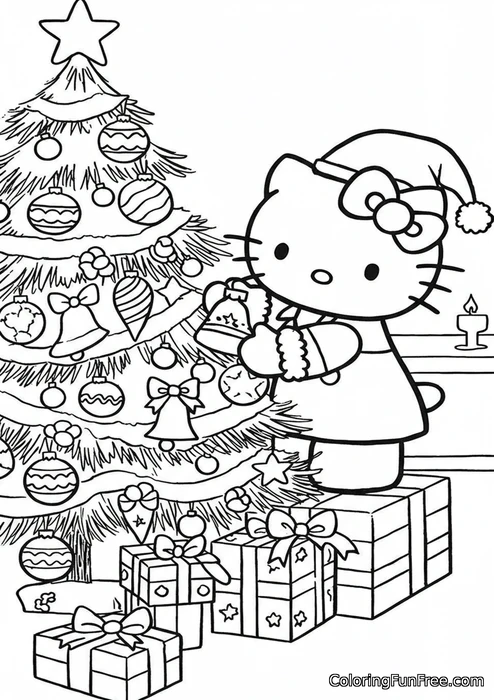
Hello kitty next to christmas tree with gifts
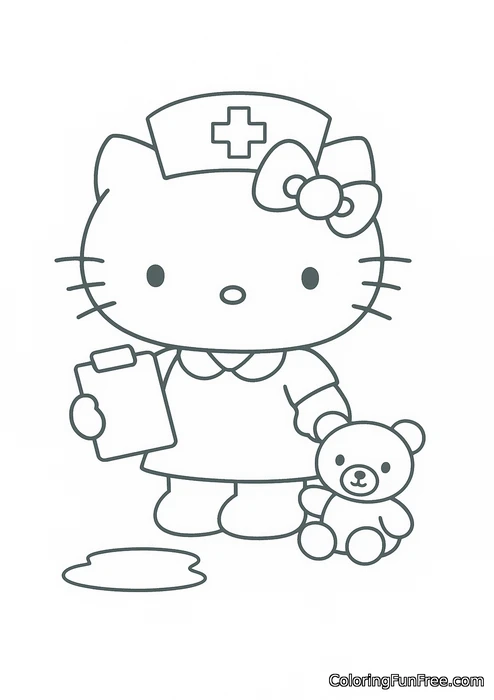
Hello kitty as nurse with teddy
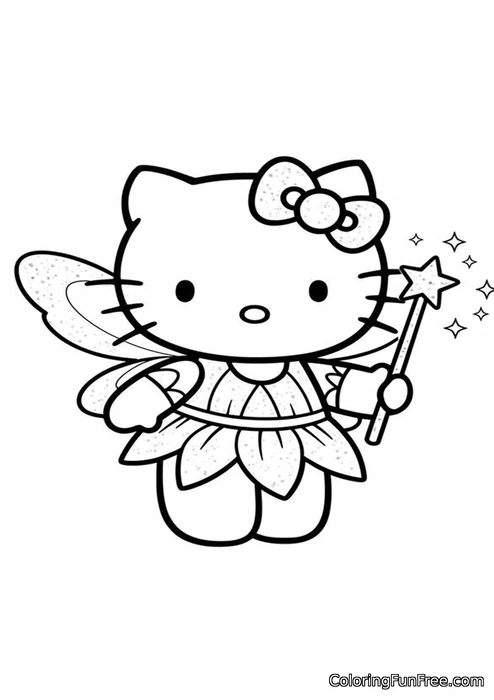
Hello kitty as fairy with wings
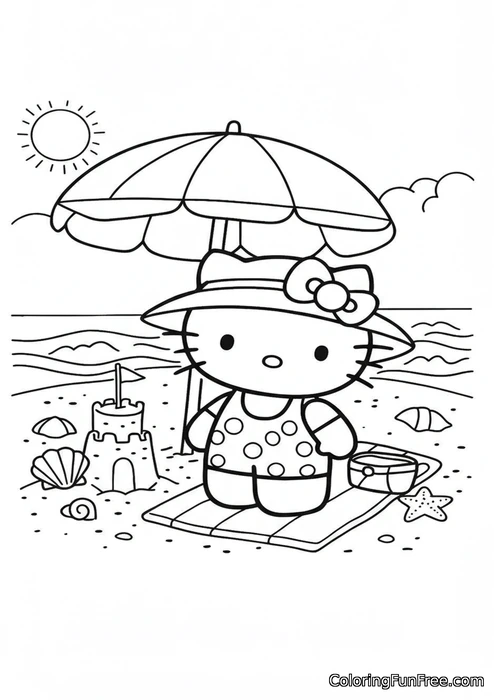
Hello kitty at beach with hat
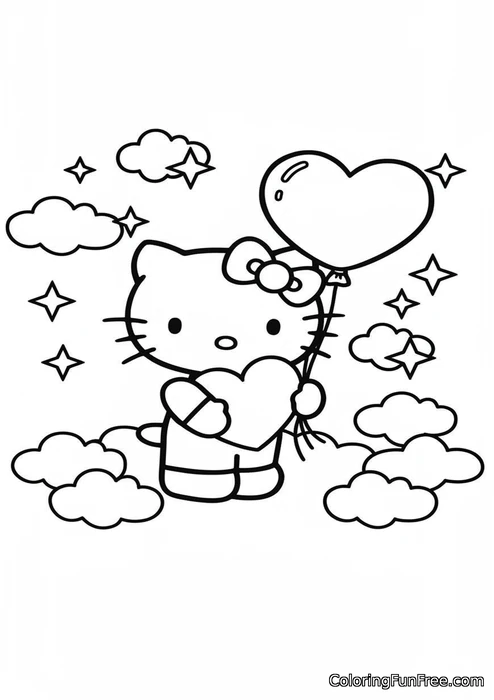
Hello kitty holding heart balloon
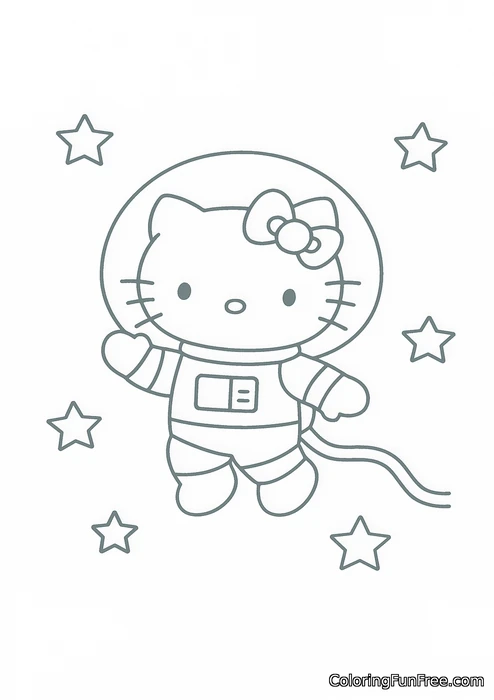
Hello kitty in astronaut suit
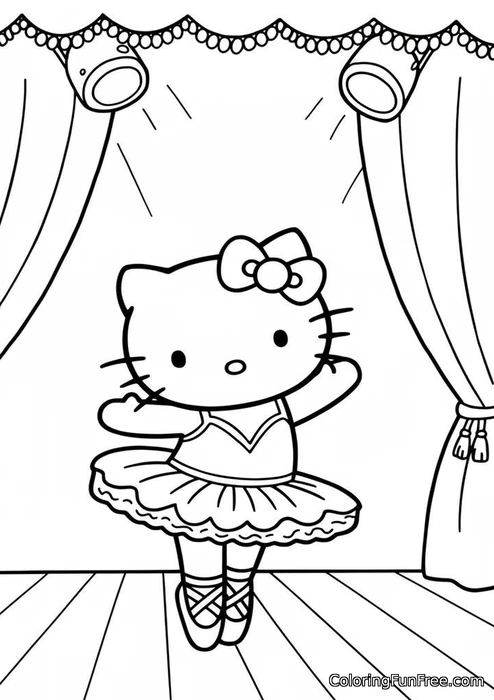
Hello kitty dancing on stage
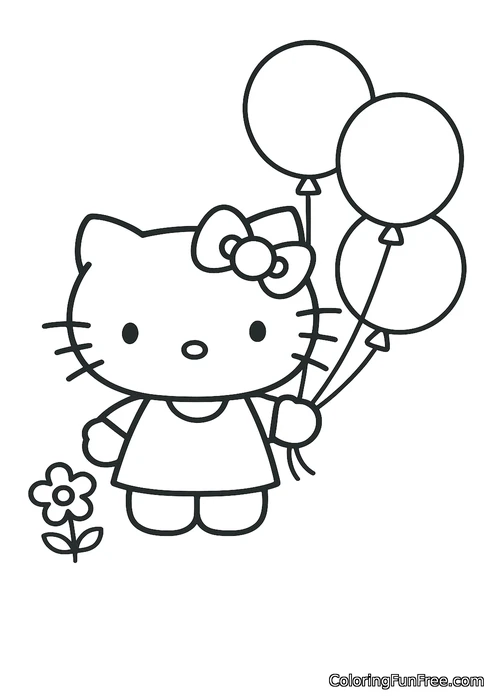
Hello kitty holding balloon
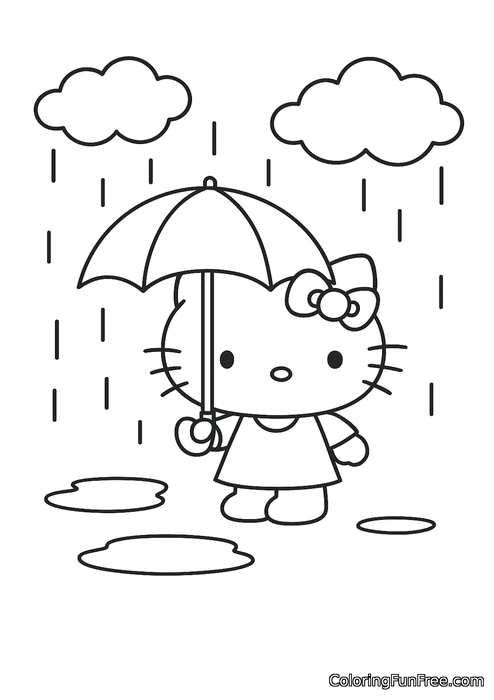
Hello kitty holding umbrella in rain
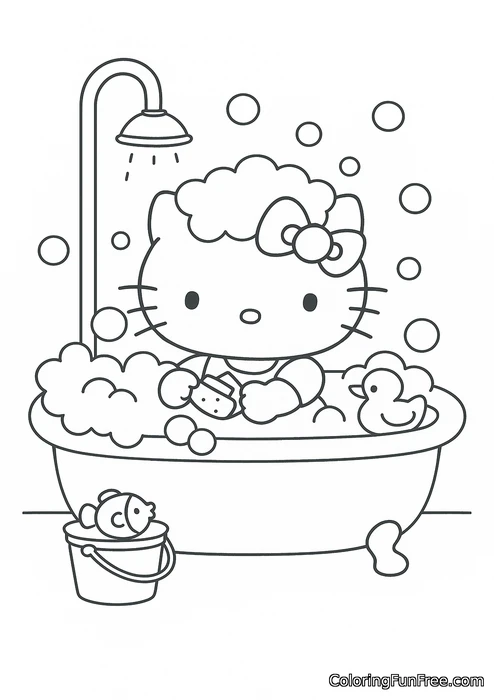
Hello kitty in bathtub
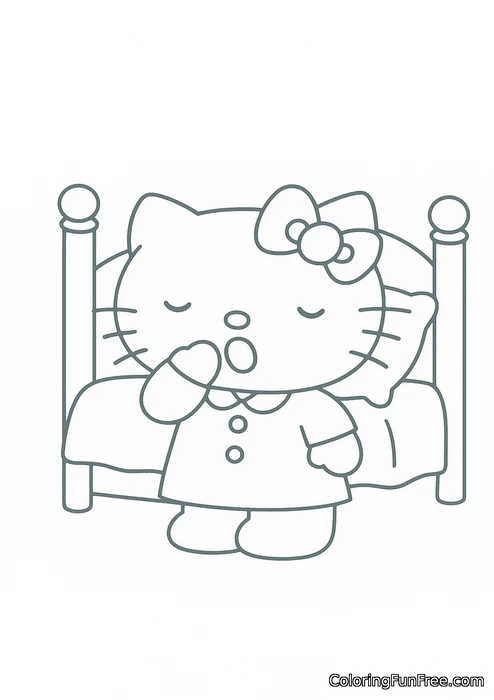
Hello kitty in bedroom
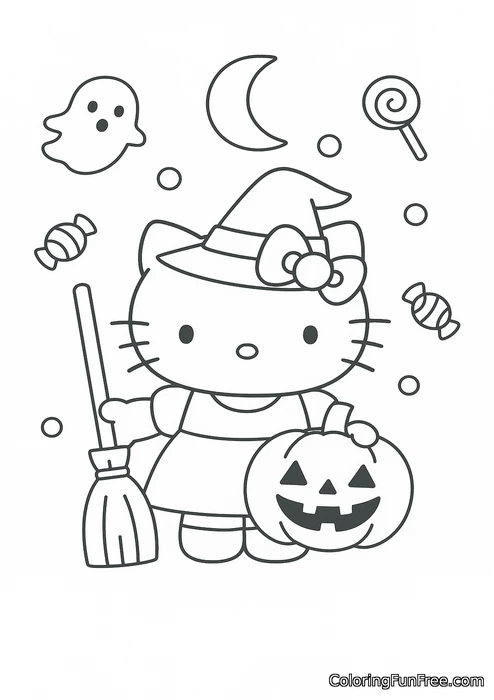
Hello kitty in halloween costume
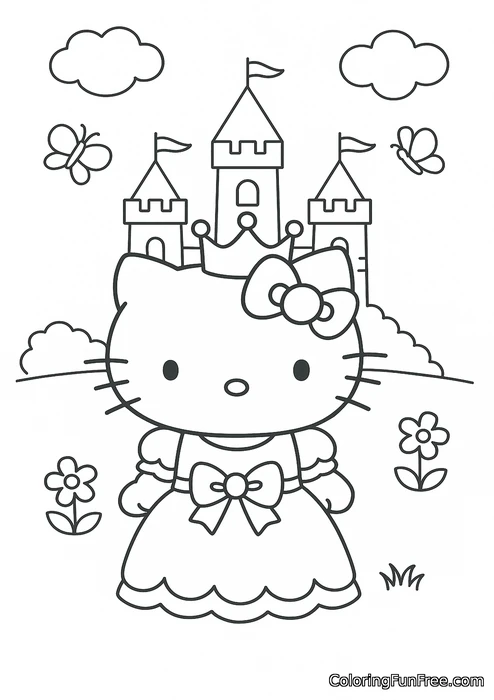
Hello kitty in princess castle
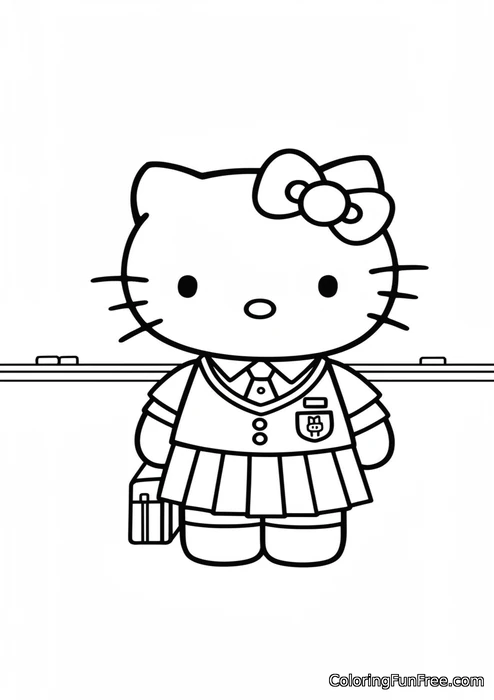
Hello kitty in school uniform
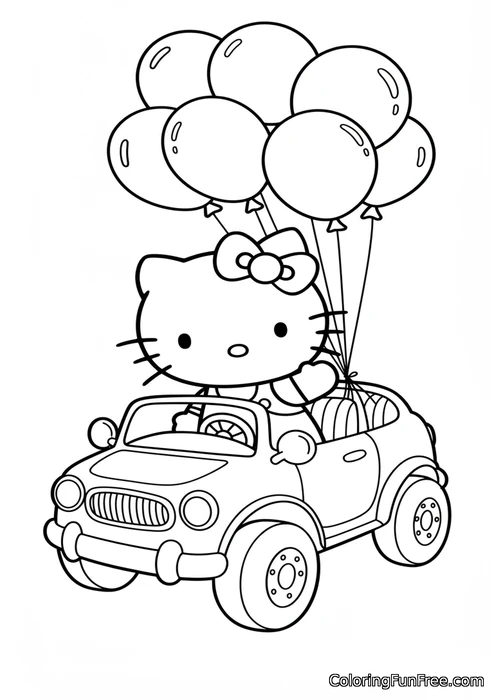
Hello kitty driving car with balloons
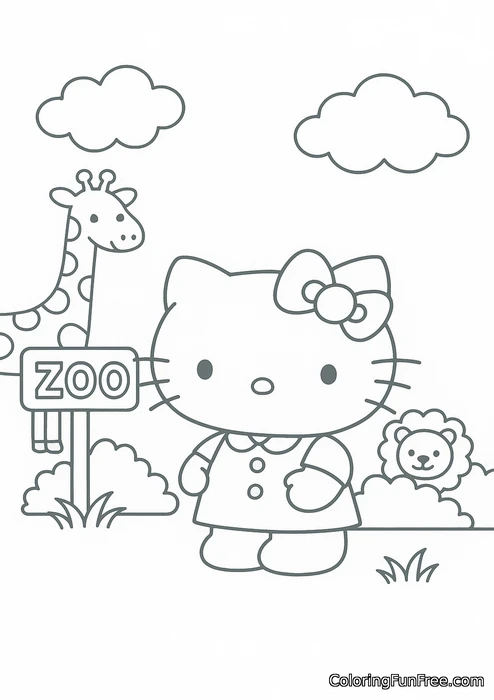
Hello kitty in garden with flowers
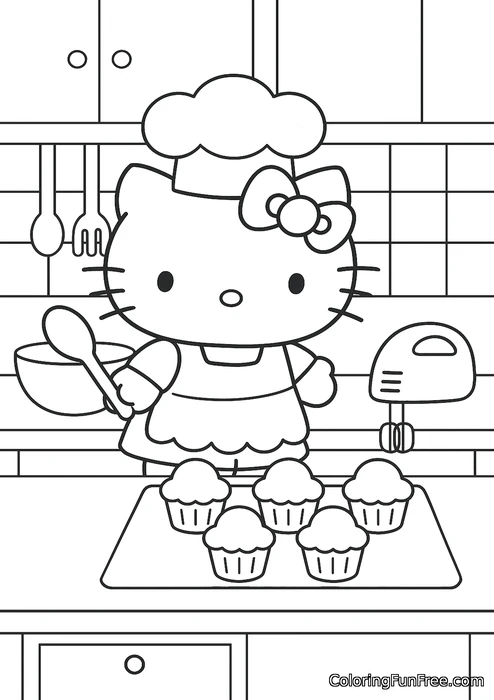
Hello kitty in kitchen baking
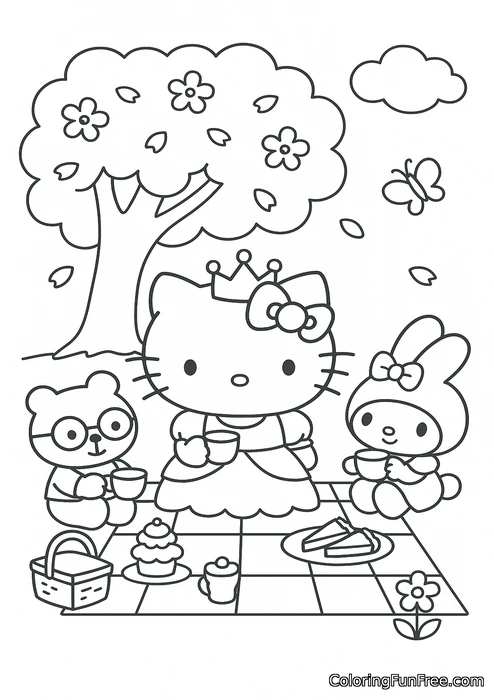
Hello kitty on picnic
Hello Kitty has been around since 1974. That's why these coloring pages work better than you expect
If you came here looking for Hello Kitty coloring pages, you probably already know what your child will do with them. He'll sit down, pick up a crayon, and get to work without asking a single question about who the character is. That's really the point - and it's much rarer than it sounds.
Hello Kitty was created by Sanrio in 1974. That's no small thing. That's fifty years of cultural presence, which means the character has survived disco, the VHS tape, and about forty-seven other cartoon cats that were popular briefly and then disappeared altogether. The children sitting at your kitchen table today were introduced to Hello Kitty from parents who were also introduced to Hello Kitty as children. This generational continuity is really unusual for licensed character merchandise, and it has a direct impact on how coloring sessions go.
When a child recognizes a character before the pencil even hits the paper, it skips a layer of hesitation. There is no orientation period. They know the bow is on the left ear. Of course all the kids know that the eyes are small and round. They have an opinion about what color the bow should be today, which is a very different creative starting point, than looking at an unfamiliar character and guessing what he should look like. Familiarity, in this particular context, is a feature - not an indication that the choice is uninspiring.
The scale of Hello Kitty's global presence makes this recognition almost universal across countries and families. According to a detailed analysis published by The California Aggie, Hello Kitty alone is worth an estimated $7 billion, with more than 50,000 products available in more than 130 countries. Sanrio's revenue peaked at $575.3 million in 2022. These numbers exist because the character is popular across all age groups, languages, and decades - and it's because of this widespread recognition that hello kitty printable coloring pages are a consistent success on our site no matter the season.
We've noticed at coloringfunfree.com that the Hello Kitty sheets are some of the most reprintable pages in our entire collection. Kids don't usually print one out and consider the work finished. They print a version, finish it, and immediately want to try printing the same sheet again in a different color scheme. This repetitive behavior is a signal worth paying attention to. It suggests that the design is quite open to experimentation, which brings us to the question of why the actual visual structure of Hello Kitty is so important as a coloring subject.
What the design itself does for a child with a crayon in hand
Hello Kitty's face is, by any practical measure, one of the most well-designed coloring subjects. Bold outer contours. Minimal internal lines. A clear focal point - the bow - that gives the child an obvious place to make a decision. And no mouth, which sounds like an odd design choice until you watch a four-year-old coloring something and realize how much cognitive real estate a mouth takes up. No mouth means one less boundary, one less color choice, one less area to stay inside.
For kids ages three to five, this simplicity is really helpful. The free hello kitty coloring sheets that work best for this group are those with one character, just an outline - just the face, a bow, and free space around everything. These children are still developing grip and pressure control, and a page that doesn't penalize them for going a little outside the lines is a page that ends in satisfaction rather than frustration. A study of fine motor development published on ResearchGate, covering preschoolers ages 4-6, found that after coloring activities, 75.9% of 22 respondents showed fine motor development as expected, with a statistically significant p-value of 0.000. Hello Kitty's clean outlines make it a particularly practical choice for this kind of educational coloring book.
For children ages six to nine, the design unfolds differently. This group is ready for background details - colors, stars, patterns around the character - and Hello Kitty's bow becomes something to really embellish. Children in this group often add their own details inside the bow or around the edges of the page. The character is simple enough to color quickly, but recognizable enough that the result always seems successful. This combination keeps older children in this group interested, even if the basic design looks simple at first glance.
For children ages ten to twelve, versions with lots of artwork - sheets where Hello Kitty appears against decorative backgrounds, or in the manga style that Sanrio sometimes produces - are a good fit. These versions have enough interior lines to be really intricate, but without turning into the kind of detailed illustration that feels more like a chore than a creative endeavor. At this age, kids often approach the page with a real color plan, which is a level of intentionality that simpler sheets tend to encourage rather than discourage.
In addition, the bow functions almost as an indicator of complexity. If the bow in the picture has internal patterns - dots, stripes, a layered look - it's not a beginner's sheet. If, on the other hand, the bow is a clean, single figure with a clear outline and nothing inside, then you're facing a page designed for younger children or those who are coloring for the first time. That one visual detail will tell you more about the appropriate age level than any lettering on the page. We think it's worth knowing before you hit the print button.
Seasonal versions aren't just the same page with a different background
There is a version of this article that treats hello kitty halloween and printable hello kitty christmas coloring pages as minor variations - as if someone just changed the background color and called them seasonal. This version of the article would be wrong. Seasonal editions do change the feel of the coloring page, and children respond to that difference in a noticeable way.
The Christmas edition presents a completely different coloring challenge. Red, green, gold accents, the occasional white space hinting at snow - the child is suddenly working with a palette that has a particular cultural weight. Most children have an opinion about Christmas colors, which means the page requires decision-making that a regular sheet doesn't. It's a more active coloring experience, and for kids who are ready for it, that's what makes it more interesting rather than challenging.
Hello Kitty is doing something different again on Halloween. This is the version where kids who choose pink and lavender colors every time will suddenly reach for black, orange, and dark purple. The costume element - whether it's Hello Kitty in a witch, pumpkin or ghost costume - gives the child permission to use colors they would normally skip. We see this pattern all the time at coloringfunfree.com, and it's one of the reasons why Halloween-themed pages spike in October and retain traffic throughout the month.
The Hello Kitty unicorn coloring page is a separate category that constantly surprises parents. Many adults don't think twice about looking for them, but children ages six to nine ask specifically and often by name. The unicorn version adds a horn, tail, and pastel gradient options that the standard character doesn't have, making this coloring book truly special and not just a new version of the same page.
Child-friendly sheet - Hello Kitty covers more ages than most characters
One of the most practical things about this character is how far the range of difficulty extends. Most licensed characters are either geared toward younger children - simple, bold, three colors at most - or older children with detailed scenes that are beyond the ability of a five-year-old. Hello Kitty has printable versions that work meaningfully for ages three to twelve, which is a real rarity.
For three- and four-year-olds, the right choice is always the biggest and simplest version - just the face and the bow, nothing else on the page. These kids are working on staying inside the lines altogether, and giving them a page overflowing with background elements is not a challenge, but a source of frustration. The free hello kitty coloring options on our website include several outline-only versions specifically designed for this age group.
Children ages six to eight can work with background details and are often ready for themed versions. They are also more likely to want to print multiple versions of the same picture and try different color combinations - we've repeatedly observed which pages are downloaded most often. Like printable elephant sheets or free dolphin printouts, Hello Kitty pages in this difficulty range generate more repeat visits than simpler alternatives.
For the ten to twelve age range, options with lots of detail and patterned backgrounds are better. The bow should have at least an internal pattern. The background should have enough lines so that a good color combination decision can be made. If a page looks like it can be finished in four minutes, it probably won't hold a ten-year-old's interest for longer than that time.
What we've noticed by publishing Hello Kitty sheets over the years
The work of coloringfunfree.com over several years provides special data that no external study captures - which pages are actually printed repeatedly, by which age groups, and when. Hello Kitty pages differ in traffic patterns from almost every other character on the site.
The simple Hello Kitty face - just the character, no seasonal elements, no background details - is printed every month of the year without significant fluctuation. It doesn't bounce. It doesn't go down. It is the most stable page in our collection, suggesting that it functions not so much as a novelty but as a core character, as a character should behave after fifty years of constant presence.
Seasonal pages behave quite differently. Halloween coloring pages start going up in late September and peak around October 20. Christmas versions start moving in late November and hold until mid-December. Right after the holidays, both categories drop to almost zero, which is to be expected, but the abruptness of these spikes is striking. Parents aren't browsing pages. They are typing with specific intent. Similar behavior is seen on pages in other categories on our site, including printable green lantern sheets and printable Wakanda heroes, but Hello Kitty's seasonal spike is consistently sharper.
The unicorn crossover pages initially surprised us. We expected them to work like novelty items - high interest for a short period and then a downturn. Instead, they have maintained a steady interest in the six to nine age group all year round. This is a sign that the unicorn option has moved from being a trend to a subcategory, which is a meaningful distinction when deciding what to print for a particular child.
Before you print, here are a few decisions that will take less than a minute
Printing a coloring book seems simple until you waste half a cartridge on a page that came out too dark or too small. A few quick decisions before printing can save ink and paper, and make a real difference in how the finished page looks.
- Select plain white paper with a density of 80gsm or higher - thinner paper is translucent when kids use markers, and most kids will reach for markers at some point, even if you started them with crayons
- Print in grayscale unless you need a color reference image next to a blank sheet - printing in grayscale uses much less ink, and outlines tend to be sharper
- Print at 100% scale, not "fit to the page" - zooming out narrows outlines and makes detailed areas harder to color, especially for younger children
- For children three to five years old, print only one page per session - having multiple sheets tends to decrease concentration rather than increase it
- For children six and older, it's a good idea to print two or three options at once - this allows children to plan which option they will do, and creates a small sense of choice and ownership of the activity
- If you're printing Hello Kitty coloring sheets for a group activity or party, use draft mode to save ink - the outlines will still be crisp enough for coloring
None of these solutions takes more than thirty seconds, and they consistently produce better results than using the printer's default settings.
Where to start at coloringfunfree.com if you have a child and about three minutes
If you've made it to this point and are still deciding which Hello Kitty coloring page to print first, we have a clear recommendation. Don't start with the most detailed version. Don't start with the seasonal version. Don't start with the unicorn crossover, even if your child has specifically mentioned unicorns in the last forty-eight hours.
We also have a wide range of other character pages to explore - from printable sheets with elephants to themes with action heroes - but for a first Hello Kitty lesson, the easiest option is a solid choice.
One page worth printing first (not the prettiest)
The simple Hello Kitty face with a bow - one character, clear outlines, no background - is the right starting point for almost every child regardless of age. For younger children, it's the right level of complexity. For older kids, it serves as a warm-up that usually leads to the question, "Can I print something harder?" and that question is exactly where you want to be after the first lesson.
The reason this page works as a starting point is the same reason the character has remained relevant for five decades: it provides a clear, satisfying result with minimal friction. The child knows what it should look like when he's finished. He can evaluate his work against those expectations. This creates a small but genuine sense of satisfaction, and thus a desire to try the next version.
These pages are free. They print in less than a minute. Hello Kitty is one of the few characters that a child sits down to work on already confident, and that confidence is maintained throughout the class. Start with a simple face, see what happens, and let the seasonal and unicorn options follow on their own. That's it.