Coloring Fun Free

Why kids and coloring work so well together (it's not what you think)

Tuesday afternoon. School is out, snacks are gone, and your 6-year-old has been sitting at his tablet for 40 minutes. You feel the energy in the room changing in a direction you don't want. You print out a coloring page - maybe a dinosaur or a unicorn - and slide it across the table with a box of crayons, and something changes. Not dramatically. Just quietly. The fuss stops. The screen is forgotten. For the next 20 minutes, you are focused.

This is not magic. This is what coloring pages for kids actually do when they are the right type - when the image is interesting enough to hold your attention, but simple enough not to disappoint. We've been at coloringfunfree.com long enough to see this pattern repeat itself across thousands of printed pages, and it never gets old.

What really happens when a child sits down to color

Coloring takes up a special and truly rewarding time in a child's life. It requires enough concentration to be calming but not exhausting. The result is something - a finished page - that has more meaning for children than most adults can imagine. A child who finishes a coloring book and holds it in his hands has actually done something. They chose colors, made decisions, and stayed with the task from start to finish. Between the ages of 3 and 7, when the ability to sustain attention on one activity is still being formed, this is not trivial.

On the physical level, something else is also happening that is easy to overlook. By holding a pencil, controlling pressure, staying inside the line - or consciously choosing not to - children are developing the same hand muscles and coordination that they will later use to write. The American Academy of Pediatrics in its child development guidelines, available at aap.org, emphasizes that screen-free creative activities are an important factor in the development of fine motor skills and cognitive development in children under 12. Coloring books are dedicated to these activities.

With coloringfunfree.com, we tried to take this seriously. A lot of what's out there on the Internet is clipart with a thin black border around it - not designed for a specific child, not built on how coloring actually works as an activity. We focused on images that actually encourage coloring: clear outlines, enough white space to feel good about coloring, and subjects that are really interesting to children of a certain age.

A 4-year-old given a page with 47 tiny sections to color will not color it. He will only scribble on it once and walk away. A 9-year-old child who is given something too simple perceives it as an insult. The gap between these two impressions is exactly what a thoughtful design should close, and this is where most free coloring books fail completely.

The children's coloring pages that are actually used are not necessarily the most complex or the most polished. They are the ones that are appropriate for where the child is right now: developmentally, emotionally, and in terms of how much energy they have at that moment. A quiet Sunday morning requires a different page than a hectic Wednesday afternoon. This difference shapes everything about how we build and organize our library.

We also hear from parents who don't come to the site looking for entertainment, but rather for a reboot. A way to change the energy in the room. Something that works without a screen. Coloring books for children do a great job with this. Not because they stimulate in a high-energy way, but because they absorb in a low-key, sustainable way that tablets and videos simply can't replicate.

How to choose the right coloring books for kids by age and attention span

Age ranges on coloring books are often blurred to the point of meaninglessness. “Age 3-10” means almost nothing. A 3-year-old and a 10-year-old are in completely different developmental worlds, and a page designed for one will be almost completely inappropriate for the other. Here's a more honest breakdown based on what we've seen in practice.

The difference between a 4-year-old and a 9-year-old at the same table

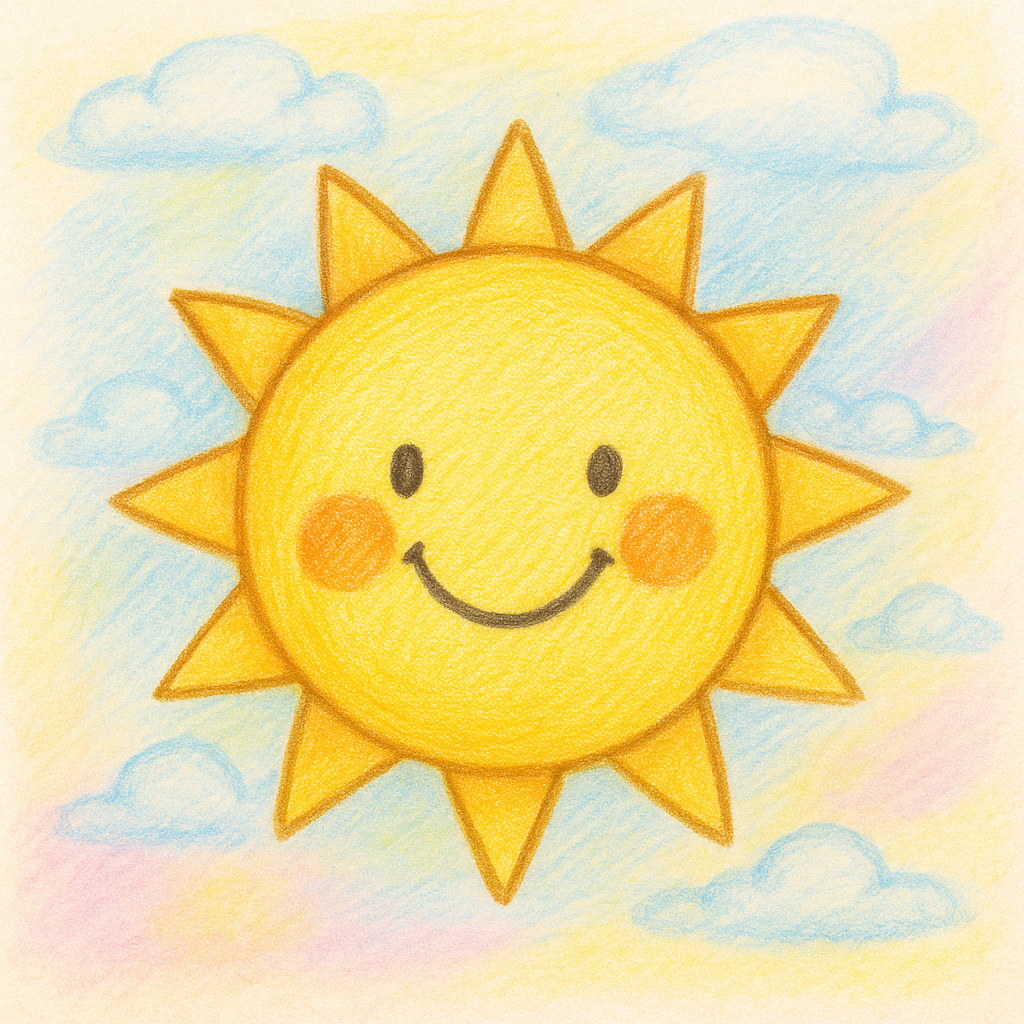
For children aged 3 to 5, large, bold shapes with thick outlines and minimal internal details are a priority. One large animal, a large sun with simple rays, a cartoon face with four or five features. The goal is not accuracy, but the process of coloring. Children at this age often go far beyond the lines, and that's perfectly normal. The page should be designed so that going beyond the lines does not spoil anything. At 3 or 4 years old, a dog they recognize is more exciting than a fancy fantasy scene whose context they don't yet know.

Our coloring pages with animals are especially popular among this age group - large outlines, simple shapes, instantly recognizable scenes. Parents say that these are the first coloring pages they bookmark.

At the age of 5 to 7, children begin to form strong preferences. They reject pages that look “childish” and gravitate towards characters and plots related to their favorite things: specific animals, vehicles, dinosaurs, fairies. At this stage, some interior details are welcome - a butterfly with simple patterns on its wings, a dragon with a few scales, a house with windows and doors. The main thing is that this detail should be achievable with the help of ordinary chalk, not requiring the accuracy of fine motor skills, which the child may not yet have.

The age of 7 to 9 brings a new relationship with complexity. Children of this age often want to spend more time on the same page, choosing colors intentionally, sometimes layering or blending them. They respond well to themed sets - a whole page of space objects, an underwater scene with several elements - and to pages that have a clear visual effect when completed. Complex frames, background textures, several characters interacting with each other - all this becomes more attractive. Coloring books for children in this range should look like a real project, not a quick fill-in-the-blank.

At the age of 9 to 12, you're often dealing with kids who have a real aesthetic outlook and approach coloring almost as an art form. Mandala-style pages, nature scenes with realistic proportions, animal portraits with shading options - they attract attention in a way that simpler pages cannot. At this age, a coloring page is sometimes just a starting point: children add speech bubbles, invent background scenes, and expand the image into something entirely their own.

One of the variables that parents consistently underestimate is age-related fluctuations in attention span. A 6-year-old child on a quiet Sunday morning can sit over a difficult page for 30 minutes. The same child at 5 pm after school needs something that they can finish in 10. We've found that it's really helpful to have two types of pages: quick and easy ones for low-bandwidth moments, and more complex ones for longer sessions. That's one of the reasons why our collection is organized this way."

The American Art Therapy Association at arttherapy.org describes how art activities, particularly coloring, can reduce anxiety and support emotional expression in children. This coincides with what we observe on coloringfunfree.com: the pages that are returned to again and again are not always the most colorful - they are the ones that gave a particular child a sense of calm and completeness at the moment when he or she needed it.

Here, it's worth acknowledging that screen time is important. Coloring books for kids naturally fall into the “screen-free” category - they don't require anything digital, they create something physical, and they give a child's eyes a real break from the close-up screen viewing that fills most of a modern child's day. For parents who are actively trying to reduce screen time without causing confrontation, a well-chosen coloring book is one of the most conflict-free tools. It doesn't feel like a punishment. It feels like an opportunity.

What you will find in our collection of free coloring pages for kids

Our library at coloringfunfree.com is built on diversity - not only in terms of topics, but also in terms of difficulty level, visual style, and what moment each page is suitable for. Here's a fair picture of what's available right now:

Each page is free to print. No need to register, no watermark on the printed version, no subscription level hiding the best content. The entire library is available from the moment you log on to the site.

One thing that most parents don't consider when printing coloring books for kids

Paper density and print settings are a small detail that makes all the difference

Most parents open a coloring book, hit the print button, and grab the paper that's already in the tray. Standard 20-pound copy paper. It works. But it's not perfect, and kids notice the difference, even if they can't explain why.

Thin paper leaks. Markers go right through it. Even strong pressure from a pencil can make the colors on the finished page look washed out. A child who has spent 25 minutes coloring a dragon and then lifts the page to find it lifeless, translucent, and slightly torn will not be satisfied. They may not realize that the paper is the problem, but they will feel disappointed.

The solution is simple and cheap: 24- or 28-pound paper, often labeled as “presentation paper” or “bright white” in office supply stores, retains color much better than standard copy paper. It does not leak. It lies flat on the table under the pressure of pencils. The finished page on it looks more like a real work of art, which affects how children engage in the whole lesson.

Print settings also make a difference. Selecting “high quality” or “best” in the printer dialog box will give you sharper, darker outlines, making it easier to color and more pleasing as a finished product. Print in grayscale to conserve color ink, and make sure you select the Page-Wide option so that the image fills the page properly. These settings take 30 seconds and really improve the result every time. We wish more parents knew about this beforehand, because it makes a big difference in the coloring experience.

Why free coloring books for kids don't necessarily mean low quality

There is a common misconception that free means rushed. That free coloring pages for kids are the remnants of clip art, designs that no one wanted to sell, images so generic that they can't have a price. This assumption is sometimes true - many free coloring pages on the Internet are just that: thin lines, uninteresting compositions, plots that are not related to any specific age group.

We created coloringfunfree.com with a different idea in mind. Free means accessible. It means that parents who need something right now - at 3:00 p.m. on a Wednesday, before a long car ride, during school breaks - can get it without any extra effort. No accounts, no free trial that turns into a paid version, no watermarks in the center of the image that ruin the print.

Quality is a design decision, not a price decision. The coloring pages for kids on our website are drawn taking into account the real behavior of coloring. The lines are thick enough to be visible, but spaced far enough apart to allow you to color, not just fill in the white pieces. The compositions are chosen so that children respond to them sincerely. Difficulty is calibrated by age range and labeled accordingly so that you can filter out what really suits your child on a given day, rather than guessing from a thumbnail.

We deliberately avoid the “quantity over quality” approach of publishing thousands of nearly identical pages, hoping that volume alone will increase traffic. Instead, we add pages when we see real demand from real parents who visit the site. This means that our library is more focused than some of our competitors, but the pages in it are the ones we really recommend printing.

Ready to print? Here's how to get started on coloringfunfree.com

Some pages to print first

If you're new to the site, the easiest approach is to browse the pages by age category or topic using the navigation at the top of the page. Each category shows thumbnails that are large enough to evaluate the image before clicking on it to print. No mysterious downloads, no surprises.

For children ages 3 to 5, start with the Animals section, especially the large-format pages with individual animals. For children aged 6 to 9, the fantasy and holiday categories are always a hit. For kids ages 10 and up, mandala coloring pages and detailed nature coloring pages are worth trying, especially for kids who have grown out of simple drawings but still enjoy the quiet focus that coloring brings. And if you're buying a coloring book for a special occasion, black panther coloring pages have proven surprisingly popular with kids ages 7 to 11 who want something more exciting than the usual options.

That's pretty much it. coloringfunfree.com exists because kids' coloring pages should be easy to find, free to use, and actually good enough to be worth the ink. Come in and find something your child will want to color tonight.