Spider-Man coloring pages

Spiderman chibi caught in web
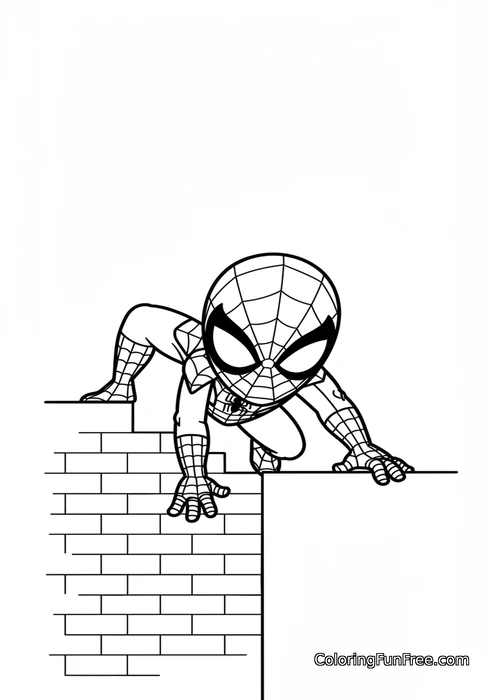
Spiderman chibi crawling on wall
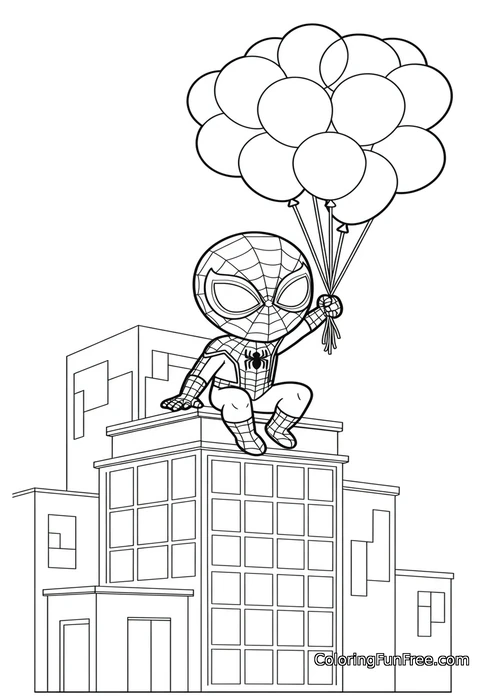
Spiderman chibi on building with balloons
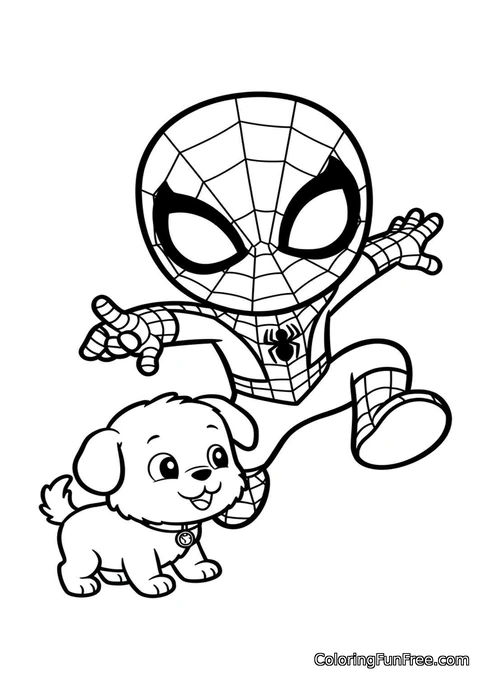
Spiderman chibi jumping with puppy
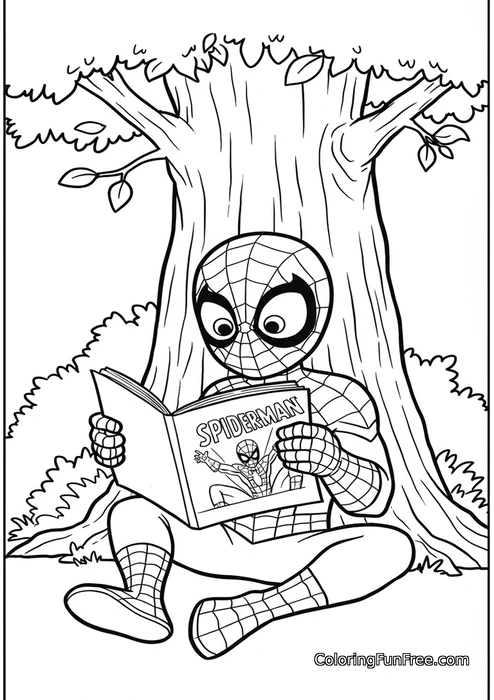
Spiderman chibi reading comic under tree
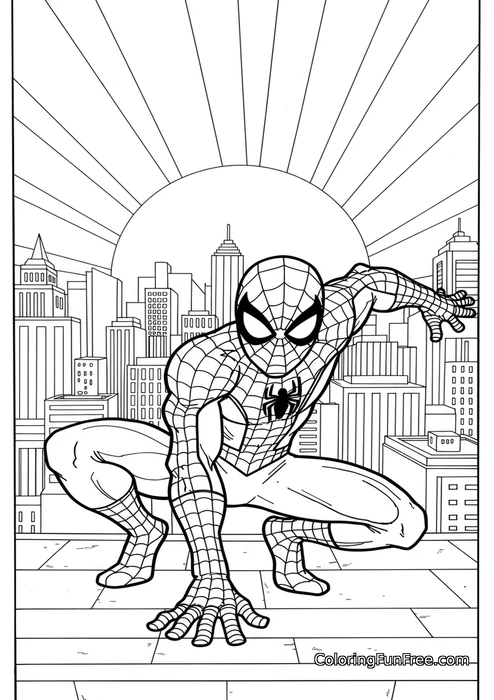
Spiderman crouching rooftop city sunrise
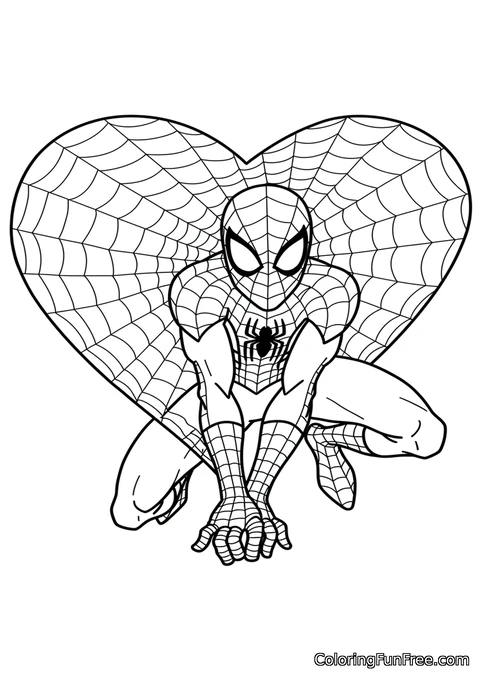
Spiderman crouching heart shaped web
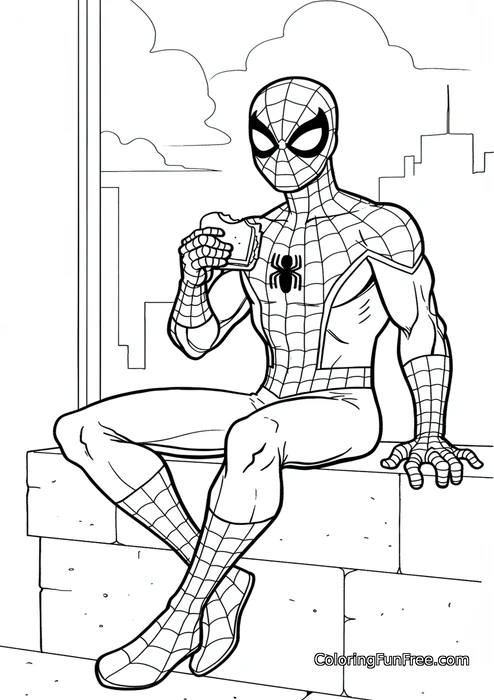
Spiderman eating sandwich on ledge
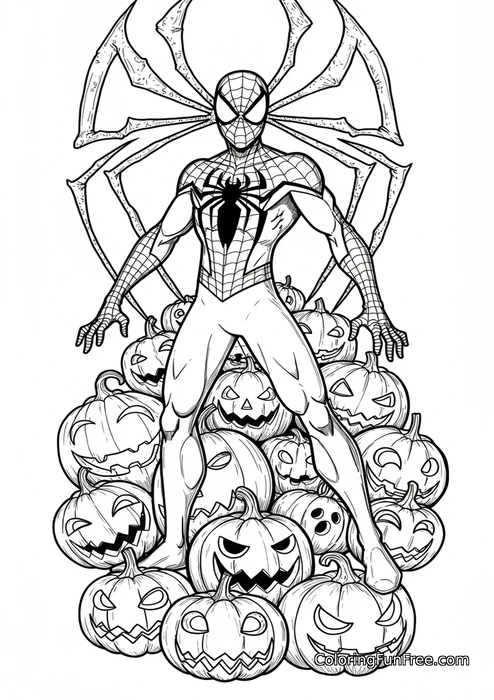
Spiderman halloween pumpkins

Spiderman fighting bubble monster

Spiderman hanging upside down
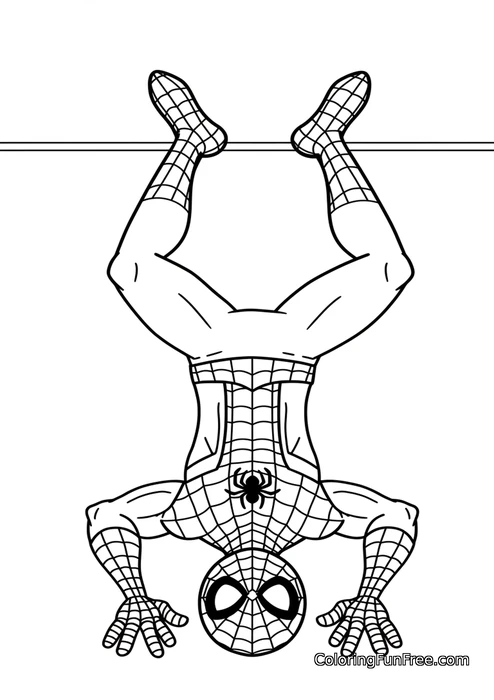
Spiderman hanging upside down on bar
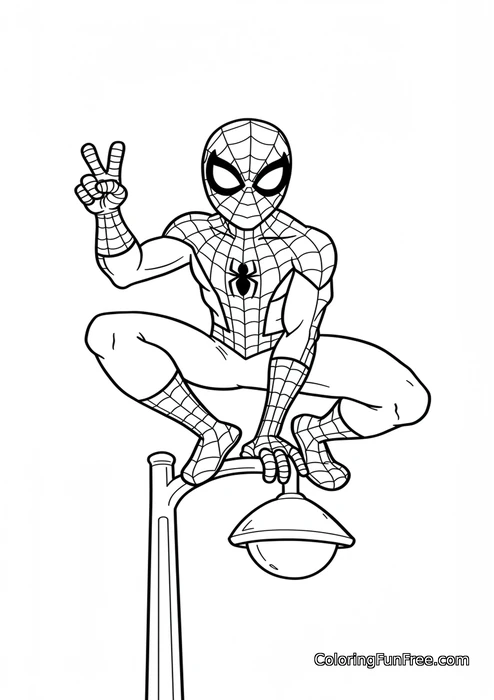
Spiderman peace sign on lamppost
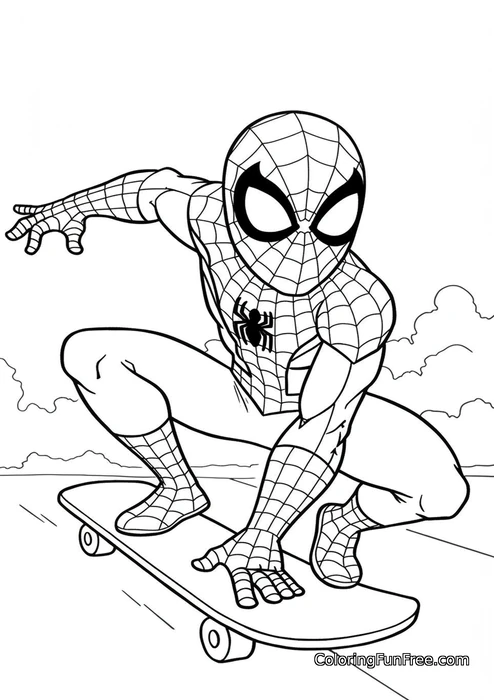
Spiderman skateboarding
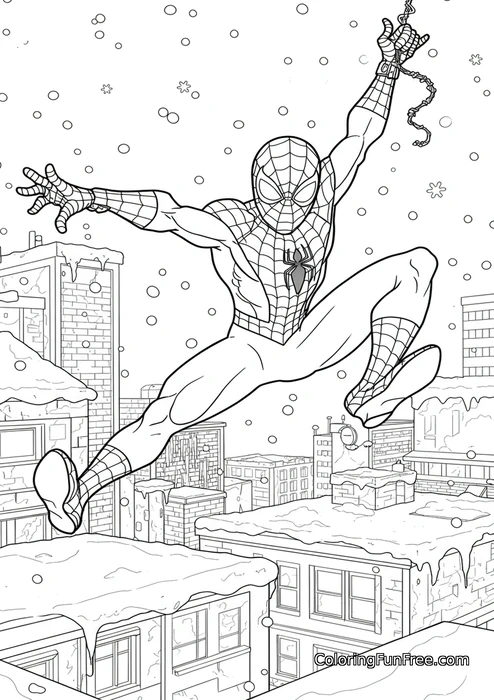
Spiderman web swinging snowy city
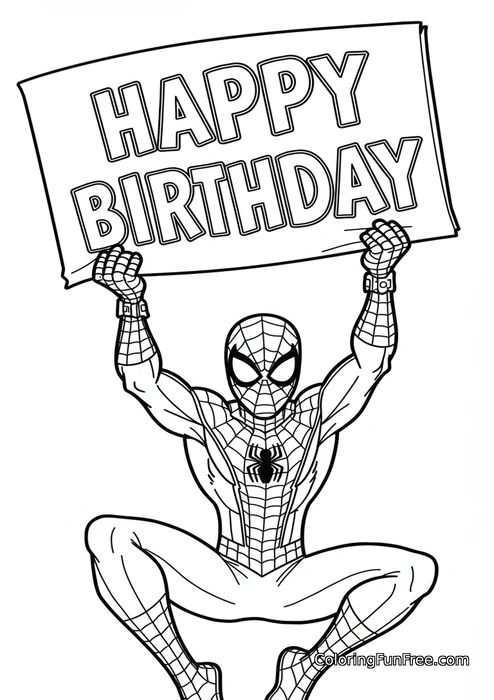
Spiderman holding happy birthday sign
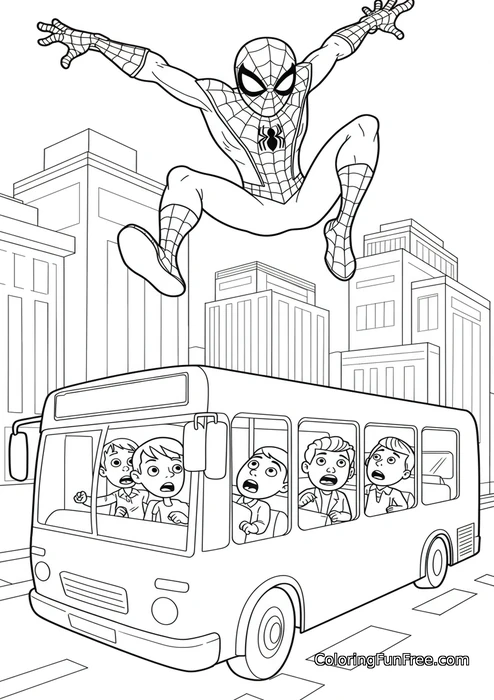
Spiderman jumping over bus
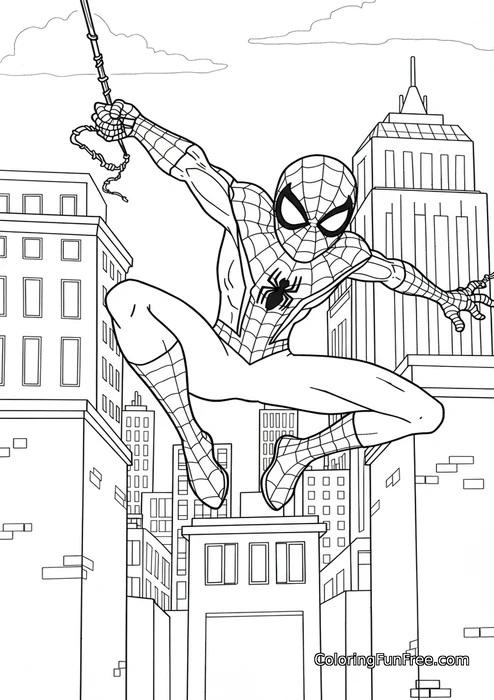
Spiderman web swinging cityscape
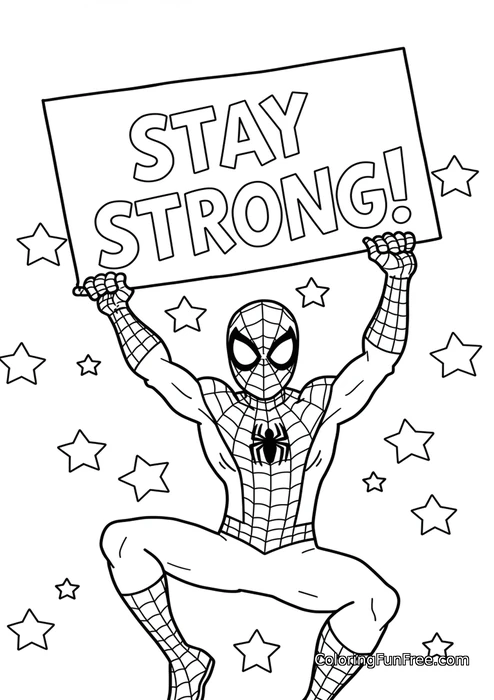
Spiderman holding stay strong sign
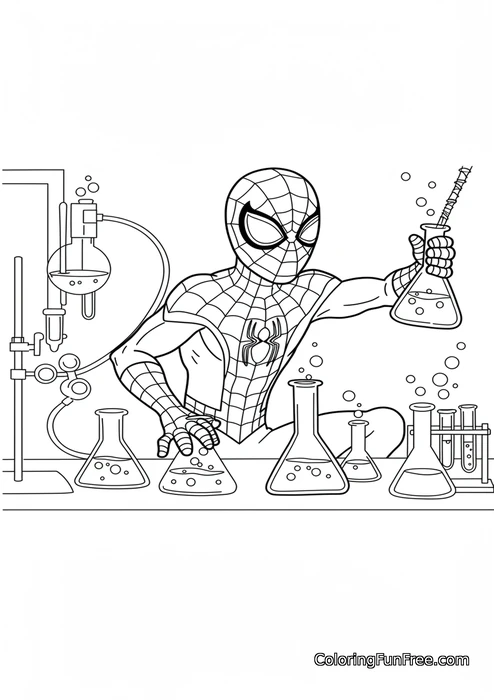
Spiderman science lab beakers
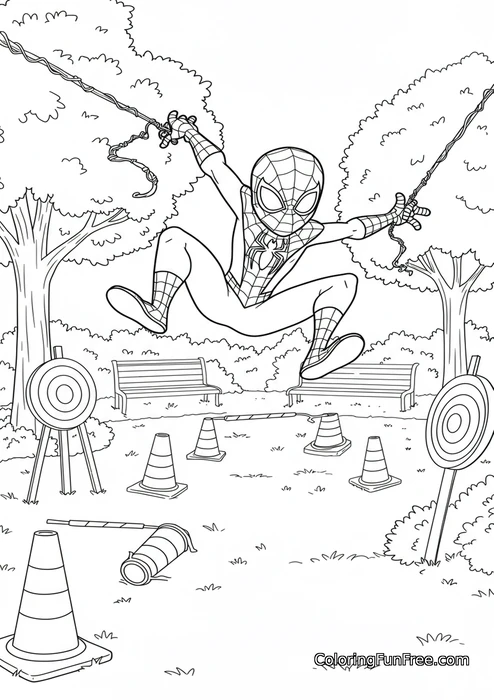
Spiderman web swinging park
Spider-Man has exactly three colors. That's not a coincidence, and that's why these pages work.
Most superheroes are visually complex. Capes, armor, gradients, overlapping logos. Spider-Man is not like that. His costume is red, blue, and black - black only exists as a web, which means it looks more like a line than a fill. That's it. Three colors, one character, and a silhouette so clean that a four-year-old can recognize it from across the room. That's no small feat when it comes to Spider-Man coloring pages. The design invites kids in rather than suppresses them, and that matters more than many people realize.
Spider-Man first appeared in Amazing Fantasy #15 in August 1962, created by Stan Lee and Steve Ditko. You can verify this via the Marvel character entries. Rare notes that the color scheme of the costume was not chosen at random - red and blue were chosen in part because they reproduced well in the 1962 comic book printing technology. Sixty years later, those same colors reproduce well on a home inkjet printer. The design has survived not because it's trendy, but because it was created with the constraints that have proven to be permanent.
Children ages 4 to 10 are drawn to it repeatedly, and coloringfunfree.com has clearly picked up on this pattern over time. It's not just about the movies or the shows. It's about the form itself. A child who hasn't seen a single episode of Spider-Man will still pick up this coloring sheet and immediately understand what to do with it. That kind of visual clarity is rare in character design, and it's the basis of why this collection works so well as it does across such a wide age range.
What's actually included in this collection - every sheet type, every style, no vague promises.
Classic costume vs. Miles Morales vs. cartoon versions - why style differences matter more than parents expect.
It's changed markedly over the past few years: kids no longer have one image of Spider-Man. They have several. The 2018 film Spider-Man: Into the Spider-Verse won the Academy Award for Best Animated Feature - the first animated superhero film to win the award, as recorded by the Academy of Motion Picture Arts and Sciences for the 91st ceremony. This movie introduced a generation of young viewers to Miles Morales, who wears a black and red suit with a completely different visual texture than the classic Peter Parker costume. The web drawing is bolder. The proportions are slightly different. The energy of the character on the page reads differently, even at a glance.
This means that a child who likes Into the Spider-Verse won't be satisfied with the classic red-and-blue sheet - not because the classic is worse, but because it's not the version that lives in their head. The collection at coloringfunfree.com takes this into account. We've included sheets in several visual styles: the original Steve Ditko-era proportions done in simplistic line drawing, a sleek cinematic version in the aesthetic of the 2002 films, the blocky cartoon style of Spidey and His Amazing Friends (which is aimed at the youngest viewers), and a few Miles Morales variations that reference the Into the Spider-Verse visual language without copying it.
Parents sometimes overlook this distinction when looking for free Spider-Man coloring pages, assuming that any Spider-Man sheet will satisfy their request. This is often not the case. A child who asks for “Miles” or “cartoon Spider-Man” knows exactly what they mean, and handing them the wrong version leads to real disappointment. We'd suggest asking them what show or movie they like before typing, and then picking the appropriate version.
And we'd suggest asking them what their favorite show or movie is before typing, and then picking the appropriate one.
The same logic applies when children are working at the creative stage, rather than just wanting to fill in a well-known character. Some of the most used sheets in this collection are those that have Spider-Man in mid-swing - body tilted, web shot out, city implied in the background. These sheets focus less on costume and more on pose, and they appeal to kids who are interested in movement and story, not just pure color-filling. If your child draws stories from their pages, start with action poses.
How the sheets are organized by difficulty - because a four-year-old and a ten-year-old won't color the same spider web.
The web on Spider-Man's costume is the single element that changes most often at different difficulty levels. On simple worksheets, the web is reduced to four or five large lines - enough to draw a pattern without requiring fine motor accuracy. On detailed sheets, the web is a full hexagonal grid on all surfaces of the costume, with seam lines, distinct muscle lines, and background elements that require a steady hand and a tighter marker or colored pencil to navigate.
Here's how the collection is categorized by difficulty level:
- Toddler sheets (ages 2-4): Large head, simplified body, no background, only 3-5 fill zones. Canvas lines are decorative only, not a full-fledged grid. Designed to be drawn in one sitting with small pencils.
- Sheets for elementary school (ages 4-7): Full body pose, basic spider web drawing, simple city or building background. 8-15 fill zones. Works well with standard crayons or wide-tipped markers.
- Medium difficulty sheets (ages 6-9): Action poses with detailed costume, partial background with depth, spider web pattern covers most of the costume. 15-25 fill zones. Use of colored pencils for areas with spider webs is recommended.
- Detailed Sheets (ages 8-12): Complete story compositions, full spider web grid on costume, layered backgrounds with buildings or skyline elements. 25+ Fill Zones. Some children use two shades of red and two shades of blue to create dimensionality. These sheets take 30-60 minutes to complete.
- Scene-based sheets: Spider-Man surrounded by other characters - villains, other heroes, or civilians. These sheets appeal to kids who want to come up with their own color choices for secondary characters, rather than following a known palette.
We have found that parents tend to underestimate complexity for older children and overestimate it for younger children. A six-year-old who is confident with colored pencils will do fine with sheets of medium complexity. A nine-year-old who is just beginning to color purposefully may want to start with sheets of entry-level complexity before moving on to more complex ones. The age ranges above are starting points, not rules. If your child has already worked with the free Paw Patrol prints at coloringfunfree.com and feels comfortable with the detailed fill areas, he or she is probably ready for the medium complexity sheets or the detailed Spider-Man sheets without much modification.
One more note about the spiderweb: it's really hard. Even sheets of medium difficulty require the child to make consistent decisions about whether to color inside the rhombuses of the web or to treat the lines themselves as a border. There's no wrong answer here, but children who haven't thought about it beforehand sometimes stop mid-page. It's worth mentioning this before they start.
The sheets that are printed most often from this collection - and what these drawings tell us about children.
After publishing printable Spider-Man coloring sheets of varying levels of difficulty and visual styles, certain patterns emerged. Not all sheets show the same results, and these differences are very informative. On coloringfunfree.com, the sheets that consistently get the most users are not always the most detailed or the most “impressive.” These are the ones that are immediately usable by a child: clear lines, a pose that conveys something, and enough open space to feel like the work will look good when it's finished.
The wall-crawling pose is the most printable image in this collection. Spider-Man is crouched on a wall or ceiling, viewed from below or the side, with a city visible behind him. This pose conveys the character's specific superpower in a way that standing poses don't - it immediately tells the child how he or she is different from other heroes.
After this, in descending order, come the most printable categories:
- Action poses shooting webs: Spider-Man with his arm outstretched shooting webs outward. Popular with boys ages 5-8 who use the page as a starting point for a story, which they then tell aloud while coloring.
- Miles Morales in black and red suit: In the years following the release of Spider-Verse, its popularity has increased markedly and is still at an all-time high. Parents report that kids specifically ask for this version by name.
- Close-up faces/masks: Head and shoulders only, large enough to fill an A4 page or letter. These sheets are popular with younger children as the simplified composition makes for a quick turnaround.
- Group Scene Sheets with Multiple Characters: Less popular overall, but loaded in large batches - more for classroom or party use than for individual printing at home.
This suggests that kids are using these sheets as props for imaginative play as much as they are performing them as art projects. The action poses and images smeared on the wall are consistently superior to the more technically detailed sheets. That's worth knowing when you're choosing which sheet to print first.
Age-appropriate sheet - Spider-Man pages cover more space than the character's three colors would suggest
When three-year-olds and nine-year-olds disagree about the same character
Three-year-olds and nine-year-olds may love Spider-Man. But they can't productively use the same coloring sheet. A three-year-old needs a page where each area is large enough to fill in with a thick crayon without going out of line, and where a slight out of line won't ruin the image. A nine year old needs something that won't bore them after 4 minutes. These are really different design requirements, and the sheets in this collection are designed with that discrepancy in mind.
For parents who need a quick reference before printing, here's how the age ranges relate to the sheet types:
- Age 2-3 years: contour sheets for toddlers only. No background, no grid, face simplified to two eyes and a smile outline.
- Age 4-5 years: entry level sheets. Present the drawing of the canvas as simple lines rather than a full grid. A study published in the Springer Nature research community found that children ages 4-5 who color regularly show marked improvements in fine motor coordination - structured coloring sheets like these sheets directly support this development.
- Age 6-7 years: sheets of medium complexity or simpler action poses. Begin introducing colored pencils along with crayons to detail the canvas.
- Age 8-10: Full detailed sheets, scene compositions, Miles Morales variations with layered costume elements.
- Age 10-12: Advanced scene compositions and any drawings with significant background detail. Some children at this age use reference images from movies and try to match color palettes precisely - detail sheets support this level of engagement.
If you like the other character coloring books at coloringfunfree.com, the Maleficent coloring pages follow a similar age-specific complexity structure and would work well as the next project after Spider-Man for kids who like strong, graphic characters.
Before printing, a few things to know so that the page doesn't disappoint the child who requested it
One print setting that changes how the spider web lines look on paper
The most common problem with printing Spider-Man sheets is that the web lines come out too faint to color properly. This happens when the printer goes into draft or economy mode, which reduces the ink density across the page. The spider web lines are thin by design - they have to be, or they would visually dominate the costume - and when the ink density is reduced, they can fade and become barely visible on standard 20-pound copy paper. The child sits down at the table with crayons, and the lines don't give them enough structure to work with.
The remedy is simple: print in normal or high quality, not draft. If your printer has a separate setting for line drawings or graphics versus photos, use the graphics setting. This will keep the fine lines without blurring the wider fill areas. It uses a little more ink, but the difference in print result is significant enough to make a difference.
The weight of the paper also affects print quality more than many people expect. Standard 20-pound copy paper is fine, but it wrinkles when kids use markers - and many kids prefer markers over Spider-Man crayons because the red and blue colors are more saturated. Printing on 24 lb. heavyweight paper or standard cardstock completely eliminates the wrinkling problem. It costs a little more, but the sheet is denser to the touch and holds up better while coloring, especially for younger kids who press hard.
One more detail: if you print in grayscale to save color ink, the canvas on most sheets actually reads better in grayscale than you'd expect - the contrast between the red fill zones and the black lines of the canvas translates well because the tonal values are quite different. Some parents purposely print in grayscale to allow children to choose their own colors, rather than using the canonical red and blue. This works especially well for older children who are experimenting with color choices rather than reproducing a known design.
On coloringfunfree.com, all Spider-Man coloring pages are available for download in pdf format - standard letter sizes and A4 formatted for printing without margins cutting into the drawing. If your child has already worked with the Spider-Man collection and is looking for something similar to the bold graphics, free dragons and printable foxes offer strong outlines that hold up well with the same print settings. Start with a sheet that matches your child's current version of Spider-Man - that's the one they'll finish drawing.