
Dragons coloring pages
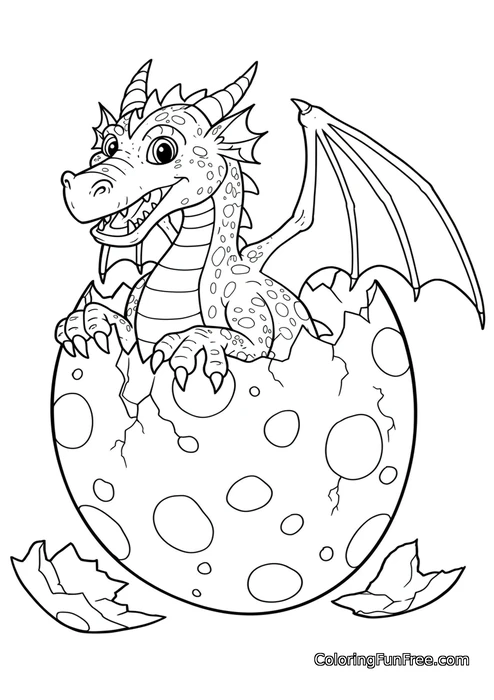
Baby dragon hatching from egg
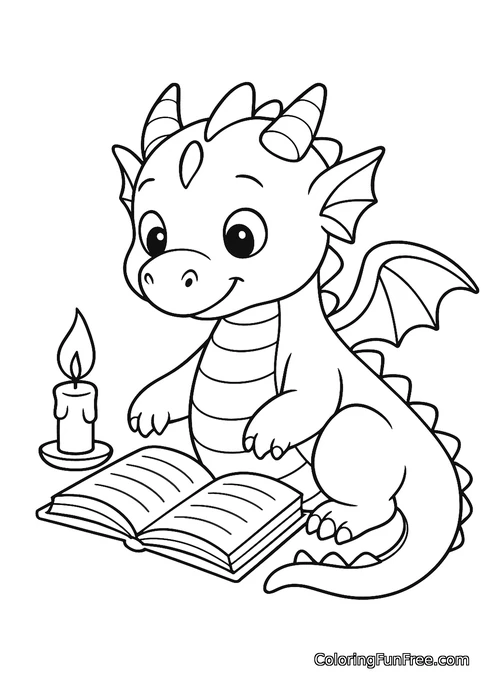
Baby dragon reading a book
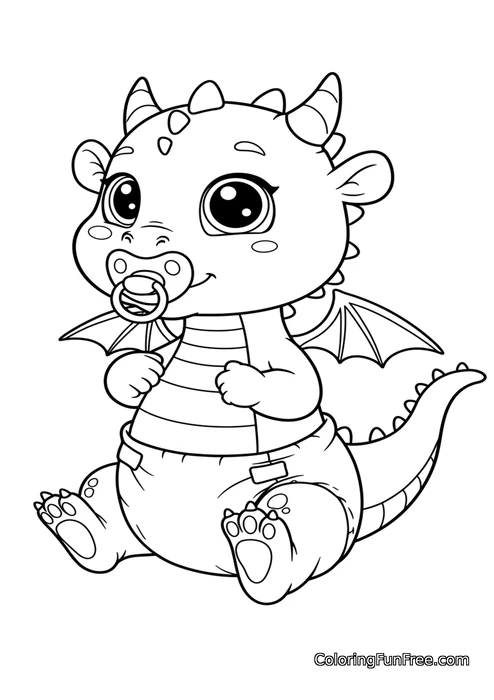
Baby dragon with pacifier and diaper
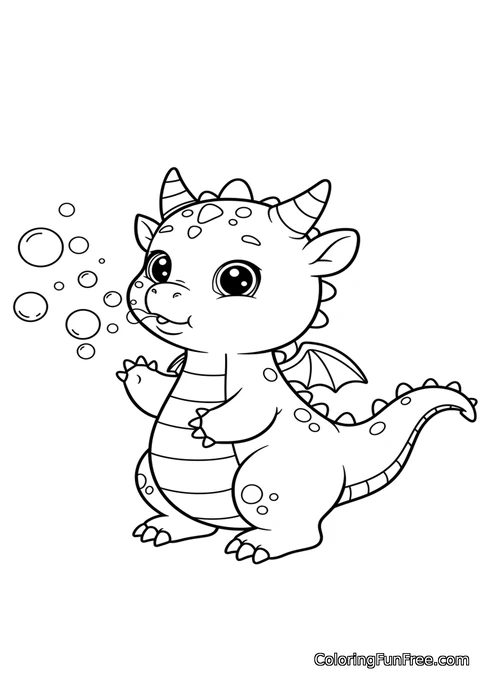
Cute dragon blowing bubbles
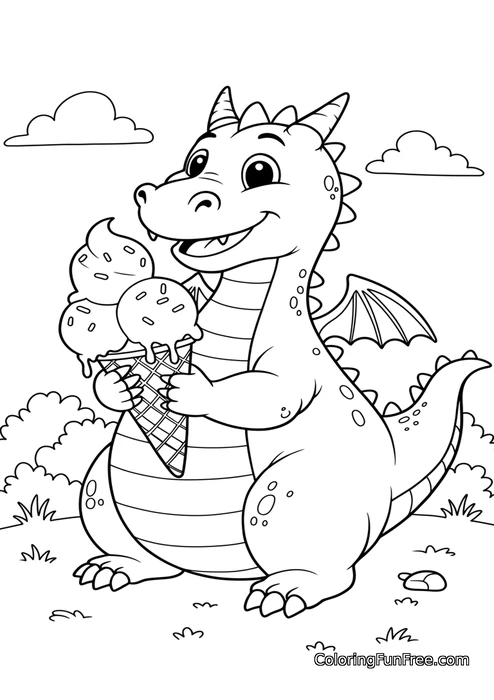
Dragon enjoying ice cream
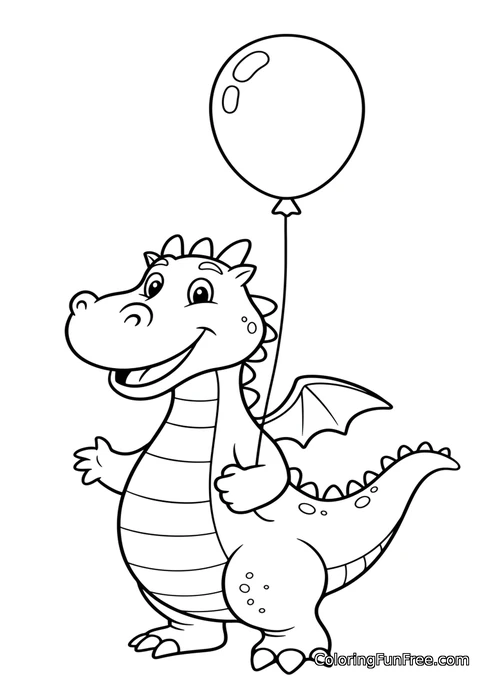
Dragon holding a balloon
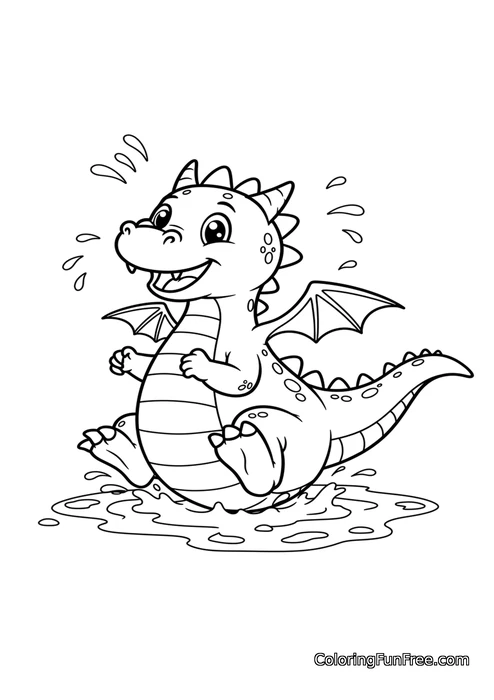
Dragon splashing in a puddle
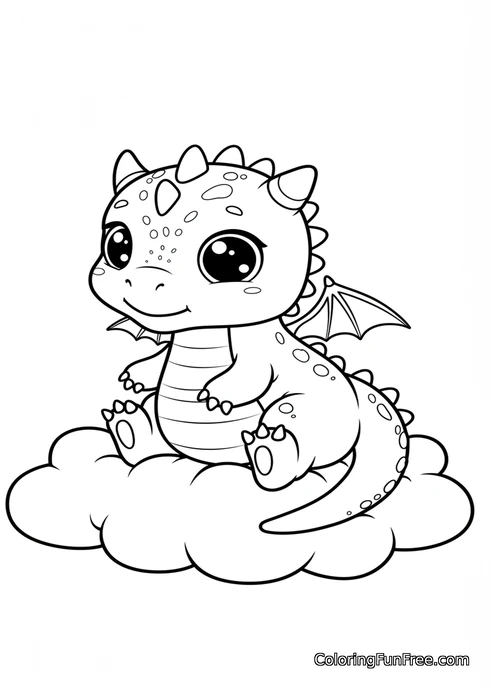
Baby dragon sitting on a cloud
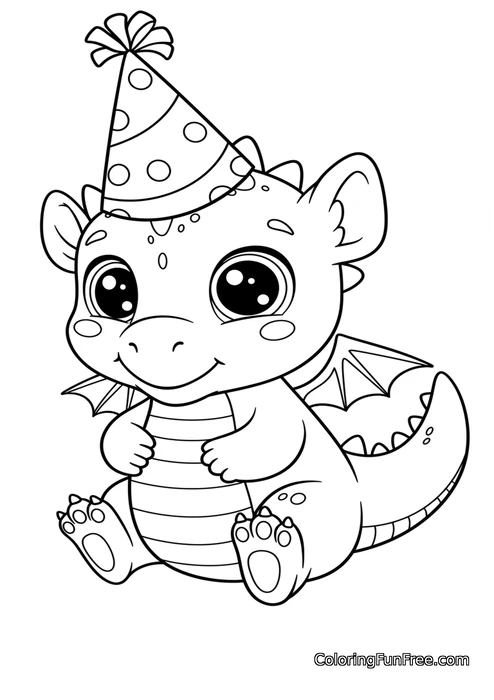
Baby dragon with party hat
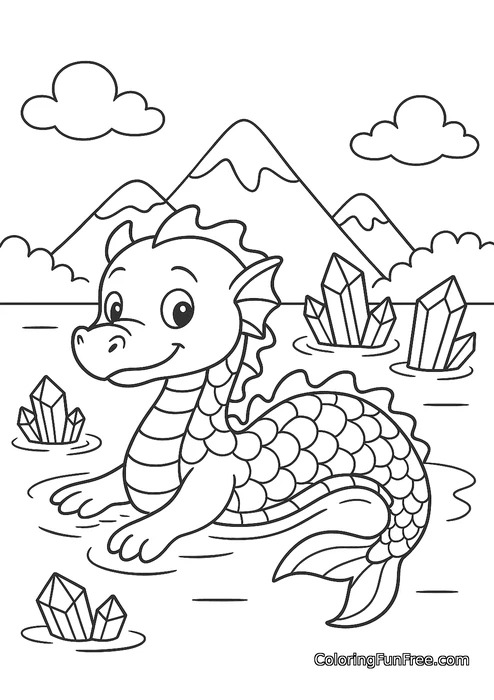
Crystal water dragon
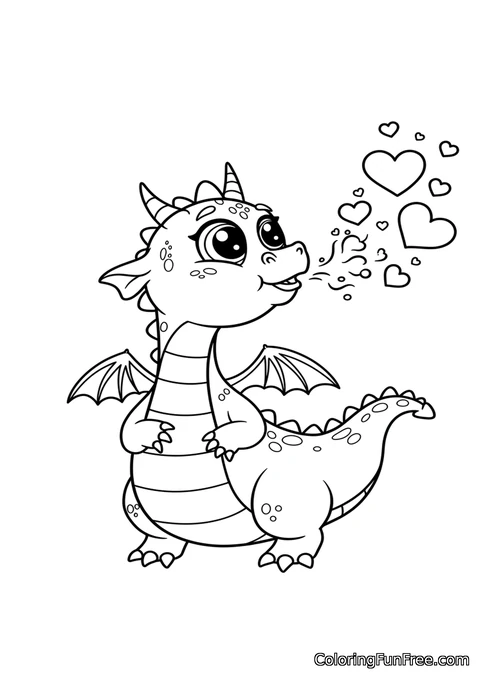
Dragon blowing hearts
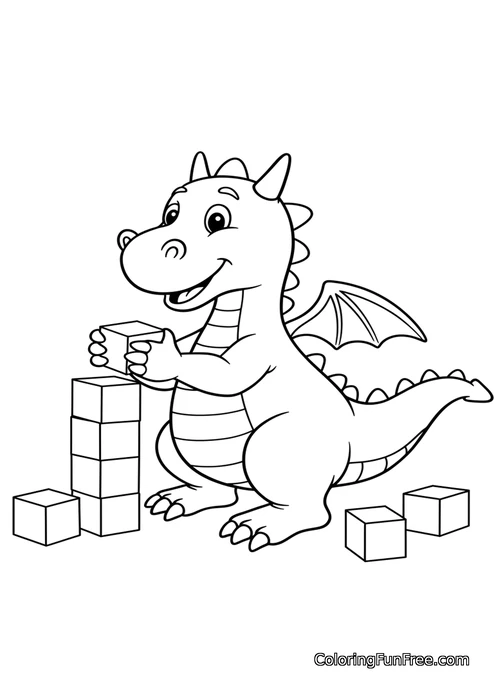
Dragon building with blocks
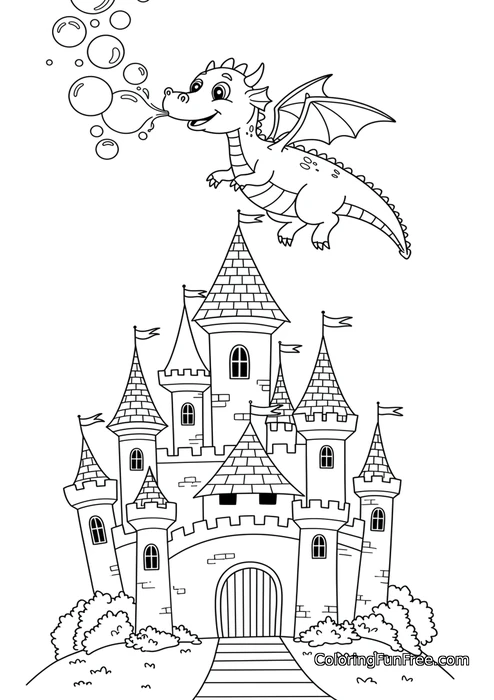
Dragon flying over a castle blowing bubbles
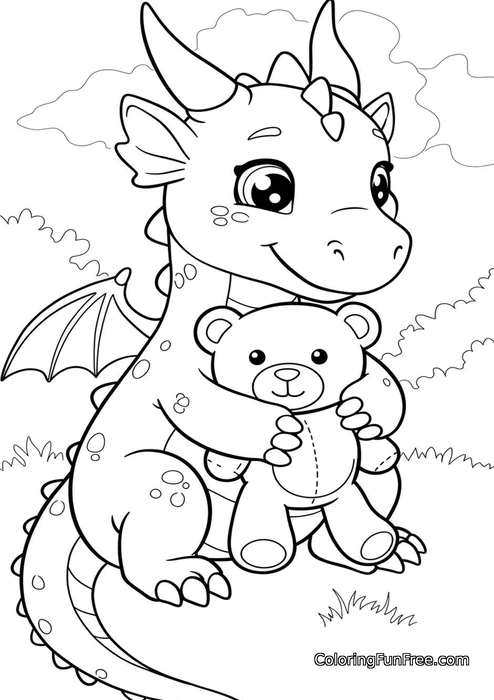
Dragon hugging a teddy bear
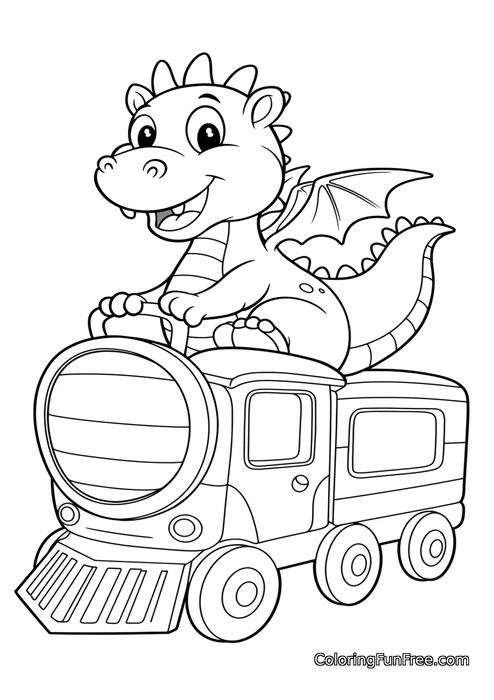
Dragon riding a toy train
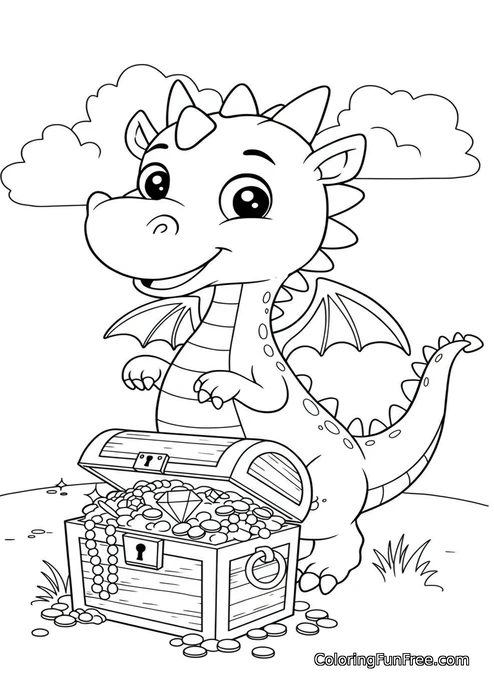
Dragon with treasure chest
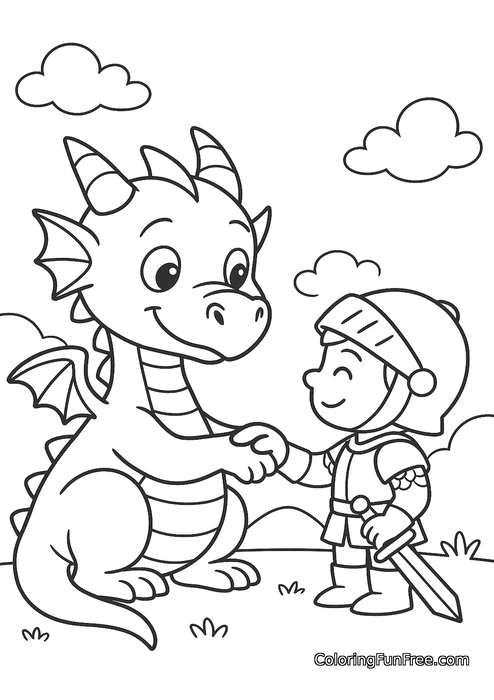
Friendly dragon and knight

Sleeping baby dragon
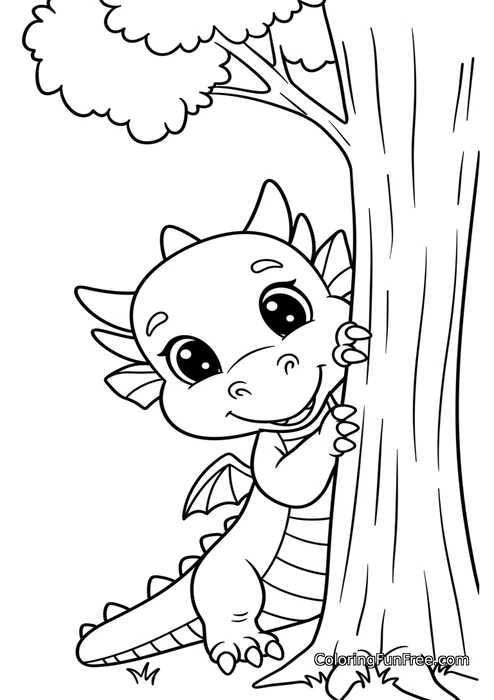
Dragon peeking from behind a tree
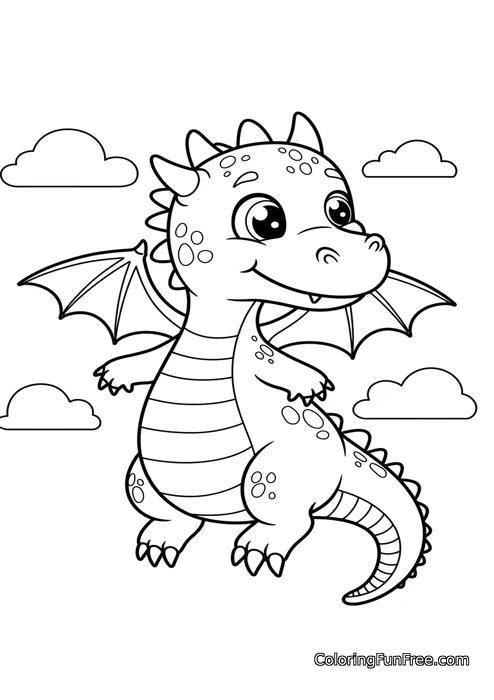
Flying dragon among clouds
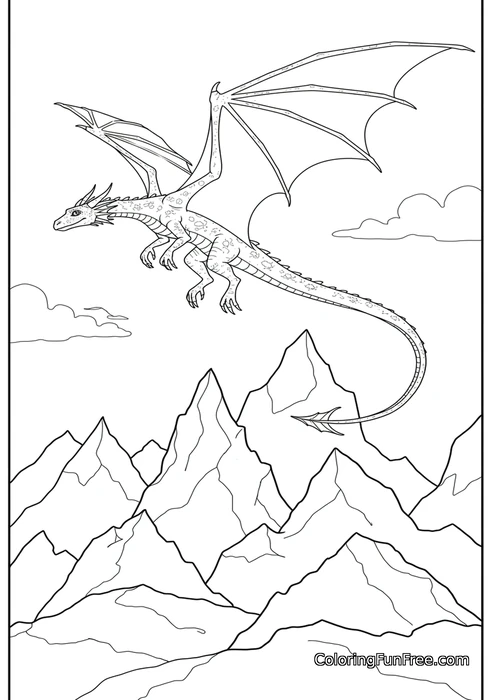
Majestic dragon flying over mountains
A special moment happens with dragon coloring books that almost never happens with any other subject. A child colors a dragon green, looks at it for a moment, then picks up a red pencil for the next one - without explanation, without hesitation, completely satisfied with both. No one comes up and says anything. Because what would they say? No one has ever seen a real dragon. This moment, small and quiet, is the reason why dragon coloring pages work differently than almost anything else in the world of printable coloring pages. This page contains a wide selection of dragon coloring pages - baby dragons, fierce dragons, Chinese-style dragons, cute cartoon dragons, hatching eggs, detailed fantasy scenes - all available to print at home for free at coloringfunfree.com.
Why dragons are better for coloring than almost any other theme
Most coloring pages contain an implicit right answer. Dogs are expected to be brown or golden. Frogs are supposed to be green. Even unicorns, which are completely fictional, have established visual expectations - white body, pastel mane, a little shine. Children learn these expectations early on, and some of them start self-correcting before they've read a single page. This self-awareness is one of the surest ways to finish a coloring book in less than three minutes.
Dragons have nothing like that. There is no authoritative color. There is no correct number of legs, no standard wing shape, no agreed upon size. A child who colors a dragon pink with yellow spots is not wrong. A child who gives his dragon six wings is not wrong. This quality of a “blank slate” is rare indeed, and it yields something measurable: children stay with the page longer, make more informed choices, and are more likely to try a second page after they finish the first.
This is partly due to the cultural diversity of dragons as a theme. The Chinese long - a long snake-like creature associated with water and good luck - visually has almost nothing in common with the fire-breathing, winged European dragon of medieval illustration. The Welsh Y Ddraig Goch, the red dragon that appeared on the national flag of Wales, is one of the oldest continuously used national symbols in the world, documented in the records of Welsh heraldry held by the National Library of Wales. Three traditions, three completely different animals. None of the images have the same concept.
This latitude is useful for coloring, in particular because any interpretation a child creates can be traced back to some real cultural tradition. A long, scaleless, green dragon? Most likely East Asian. A red, winged, four-legged dragon? Welsh or English medieval. A small, round, friendly-looking dragon with huge eyes? According to dozens of illustrated traditions that go back centuries. The child does not know this, and he does not need to. The important thing is that no one can tell them that they are wrong.
Coloring activities in general promote fine motor skills and hand-eye coordination, as documented in child development resources from the American Academy of Pediatrics. But dragon coloring adds something that most fine motor activities don't: true creative freedom. The National Association for the Education of Young Children (NAEYC) notes that creative art activities without restrictions promote self-expression and early literacy development, helping children practice pencil holding and sustained concentration. The key word is “open”. A coloring book where the child already knows what the end result should look like is a different cognitive experience than one where he or she is genuinely deciding.
Dragon coloring books, almost unique among printable coloring books, belong to this second category. The page has a structure - outlines, shapes, composition - but the coloring decisions are entirely up to the child. This combination of structure and freedom is harder to find than it sounds.
What's really in the collection of dragon coloring pages on this site - every type, honestly described
Before you print something out, it's helpful to know what's actually available. The dragon coloring pages on coloringfunfree.com are not identical sheets with different line thicknesses. They vary greatly in style, difficulty, and what kind of coloring session they tend to be. Here's an honest breakdown of what's in the collection and what to expect from each type.
- Dragon coloring pages for kids are small, round dragons with simplified features and large outlines. They are really suitable for children aged 3 to 5 years. The shapes are small enough that a kid can color one of them in about ten minutes without losing interest. There is usually one basic body shape, two wing shapes, and a face. And that's it. Good for a quick activity before dinner.
- Cute coloring pages about dragons - they are a little higher in difficulty than dragon drawings. Still in a cartoon style, still friendly looking, but with a little more detail - a visible tail, small claws, maybe a simple background element like a cloud or hill. Best suited for children aged 4 to 7 years. Sessions usually last 15 to 25 minutes, depending on the age of the child.
- Fierce and detailed dragon sheets - fully recreated fantasy dragons with defined scale patterns, outstretched wings with individual feather or membrane details, claws, teeth, and often a background scene. They are intended for older children - from 8 years old and up - or for younger children who already have considerable experience in coloring and ask for something more challenging. A focused session with such a coloring book can last from 45 minutes to an hour.
- Chinese-style dragon coloring pages - long, serpentine bodies, without wings, a decorative background in the form of clouds or waves. They print perfectly on standard copy paper and are well suited as a starting point for a short conversation about Chinese New Year or East Asian mythology. Ages 5 and up, depending on the level of background detail.
- Western fantasy scenes with dragons - compositions “Dragon vs. Knight”, dragons on castle walls, dragons coming out of caves. These are coloring pages with a story - a child colors not just a dragon, but a scene with a certain story. This is important for children who need a reason to practice, not just a form to fill out. Age from 6 to 10 years old.
- Dragon egg and hatching scenes are a popular category that is underrated. A cracking egg from which a little dragon hatches is a page of low complexity, but with great story appeal. It is well suited for younger children who find full pages with dragons too difficult. Also suitable as a first page for a child who has never colored dragons before.
- Seasonal and themed dragon sheets - dragons in Santa hats, dragons with Halloween pumpkins, dragons surrounded by flowers. They are naturally combined with the holiday coloring pages for printing section of the site and will come in handy when you need a themed coloring page that is not like the ones printed by every other parent.
The reason why this range is important is simple: children aged 3 to 12 know almost everything about dragons. DreamWorks' How to Train Your Dragon, released in 2010, has grossed more than $494 million worldwide, according to Box Office Mojo - and that's before sequels, TV series, and a decade of reruns. Most kids who sit down to a dragon coloring book already have a visual vocabulary of what dragons look like and what they're like. It's not like giving a child a sheet with a picture of, say, a basilisk or a wyvern, creatures they may not have any idea about. Coloring pages with dragons have a built-in context.
For parents who want to extend the activity beyond the actual coloring, the dragon sheet can be a starting point for a short story - what is the dragon's name, where does it live, what does it eat. This extension naturally fits in with the free coloring pages for kids section of the site, which includes a range of topics that work well alongside dragons for a longer offline evening.
Age-appropriate coloring pages - dragons cover a wider range than most parents expect
The same theme works for both 3 and 11 years old. This is less common than it sounds - most printable coloring books have a narrower effective range. Dragons are different because the complexity of the sheet can change so dramatically, while the plot remains the same. Both a three-year-old and a ten-year-old child can be really enthusiastic about a dragon coloring page, as long as they don't use the same coloring page.
The specific difference between a dragon sheet for a 4-year-old and a 9-year-old
A worksheet designed for a 4-year-old has bold outlines - thick enough to be visible at a small table in medium light and forgiving enough that a pencil that goes slightly out of line won't ruin the composition. The figures are large and clearly separated. The wings read like two simple triangles. The body is one rounded mass. There are perhaps five separate areas for coloring. The whole page says: you can do it.
On the page intended for a 9-year-old child, it's the other way around. Thin lines. Separate scales, each of which is a small separate shape. Wings with visible membranes between the outstretched fingers. Face with clear lines of eyebrows, nostrils and jaws. Forty or more separate areas. This level of detail is what an older child is looking for-it respects the time they are willing to spend and gives them something they can really work on.
Give the wrong worksheet to the wrong child, and the results will be predictable in both directions. A 9-year-old child who is given a worksheet with a picture of a dragon loses interest after about four minutes - there is nothing to do. A 4-year-old given a detailed dragon to scale falls over in 90 seconds, overwhelmed by the lines that are impossible to hold on to. Both failures have nothing to do with the child's abilities. It's just a mismatch. The fix is simple: check the difficulty before printing, not after. If you want to check out other simple large format printables for young children, the free goat printables and jellyfish printables on this site follow the same design logic - bold outlines, manageable shapes, suitable for small hands.
Before printing - a few small decisions that really affect the finished page
Print settings matter more than most people realize. A dragon coloring page printed on the default settings with whatever paper is already in the tray will technically work, but a few quick tweaks before printing will produce a noticeably better result, especially for detailed sheets.
- Paper weight: Standard copy paper with a density of 75-80 g/m2 is suitable for colored pencils. For markers or watercolor pencils, use 90gsm paper or cardstock - lighter paper spreads and wrinkles under wet media, which can be frustrating for older children in the middle of a lesson.
- Print mode: Set your printer to grayscale only or black and white only. The color ink mode sometimes introduces a slight warm tint to what should be a pure white space, making light pencil colors harder to see.
- Scale: Print at 100%, not “page-wide.” Scaling down compresses line detail on complex sheets and makes small-scale areas nearly impossible to color cleanly.
- Without and with margins: Print with small margins (not no margins) for detailed sheets. Printing without margins sometimes cuts off the edge lines, cutting off the tip of the wing or tail, and the child has no outline to follow.
- Ink saving tip: If your sheet has a large solid black background area, check to see if the site offers a “light outline” version. Printing large black fills uses a significant amount of ink and is not necessary for coloring, where the child will fill it in anyway.
.None of these settings will take more than 30 seconds to set up. They're well worth it, especially for detailed dragon sheets where line quality is part of what makes the end result satisfactory.
Where to start if you have two minutes and a child who needs something to do right now
Not everyone comes to a coloring book collection because they do thorough research. Sometimes it's a Tuesday afternoon, it's raining, and you need something to print on the printer in the next five minutes. Here's a short list of starting points for each situation, with no safety net.
- First dragon coloring, ages 3-5: Go straight to the dragon drawing or sheets with hatched eggs. Large shapes, quick completion, high satisfaction. They will ask for another one.
- Older child who wants to really work on something, 8-11 years old: print out one of the detailed dragon sheets to scale. Not of medium complexity - the most detailed one available. They will take it seriously if you take it seriously.
- A quick activity before dinner, any age: A category of coloring pages with cute dragons. Fifteen minutes, clear outlines, done before the food is ready.
- Rainy Saturday without plans: Print out three different types - a dragon, a Chinese dragon and a scene with a knight and a dragon. Let your child choose the order. The variety will keep the session going longer than any one sheet.
- The child who “does not like coloring”: Start with the dragon egg. It's the least intimidating entry point to the collection, and the storyline - something is about to hatch - gives reluctant colorers a reason to care about the page before they even make a single mark on it.
This is an honest version of where to start. The collection is here, the sheets are free, and the printer is ready when you are.