
Easter coloring pages
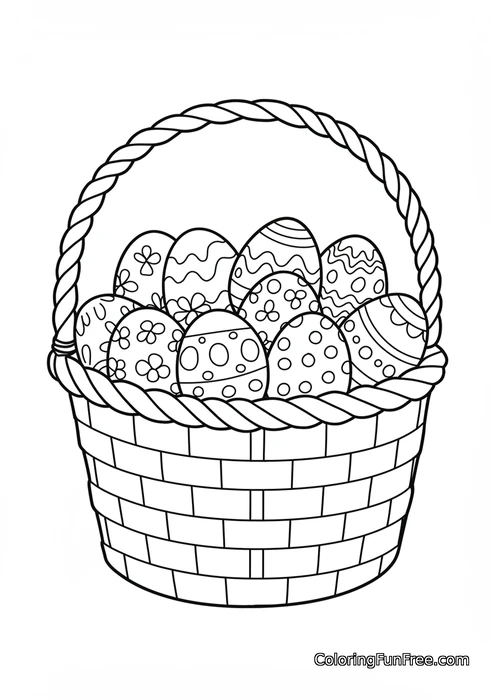
Basket full of decorated Easter eggs
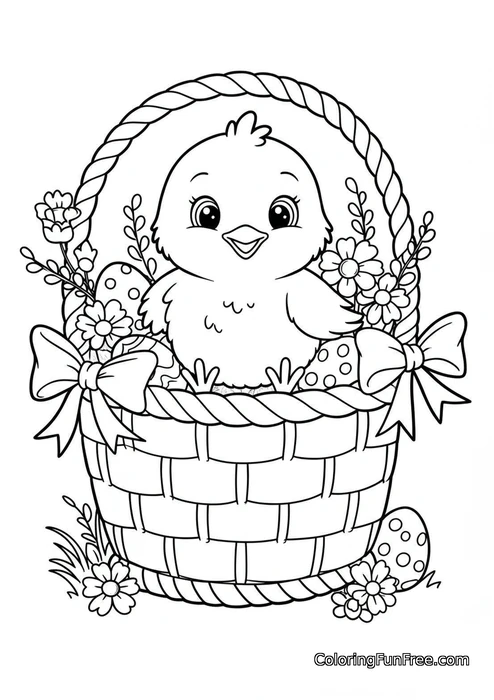
Chick in Easter basket
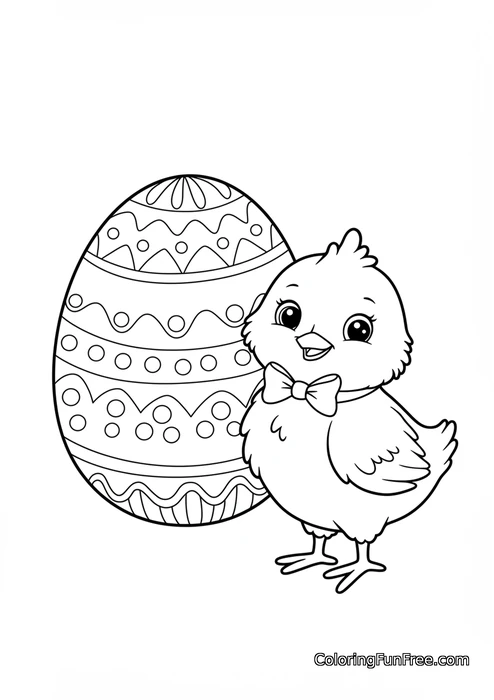
Chick with bowtie
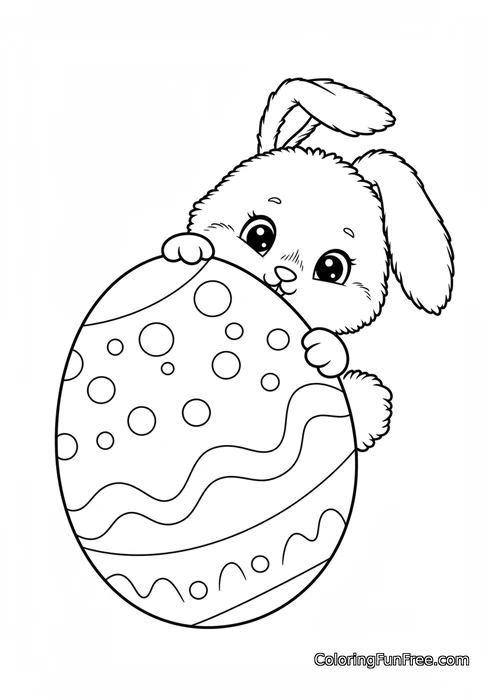
Bunny Peeking
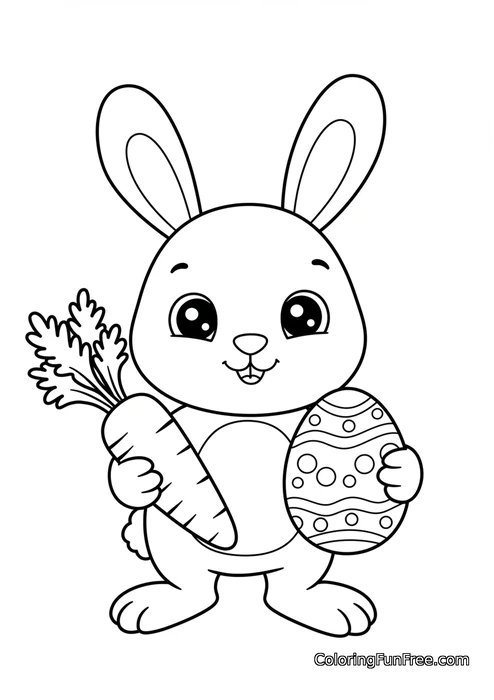
Cute bunny standing with carrot
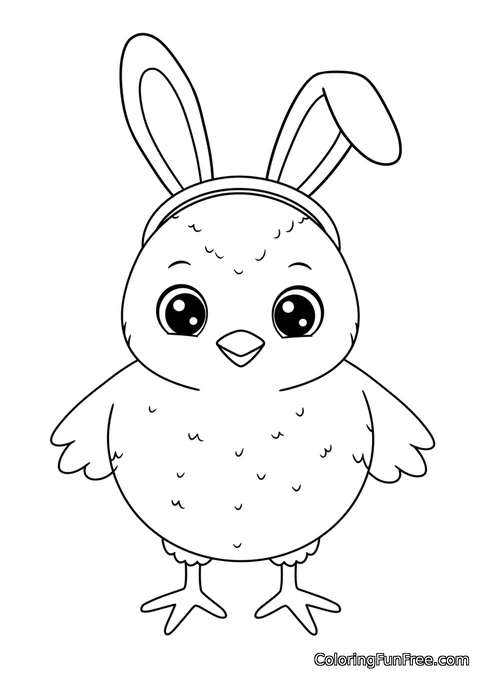
Chick wearing bunny ears
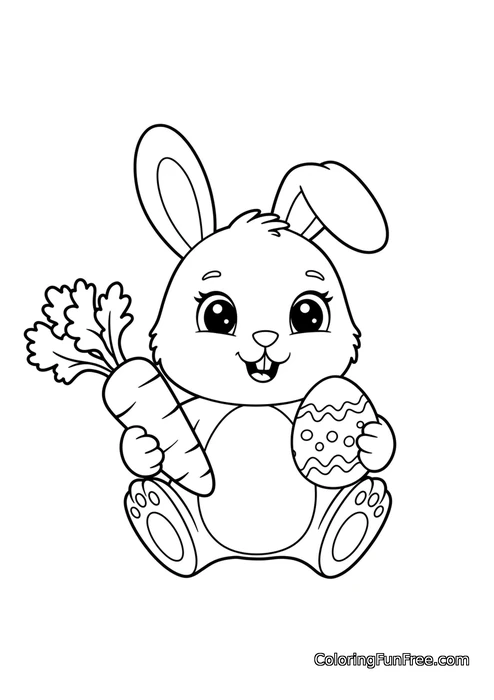
Cute bunny sitting with carrot
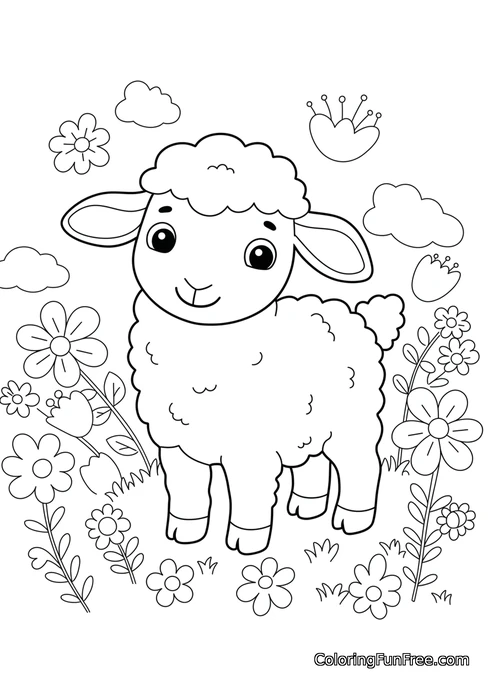
Cute lamb in field of flowers
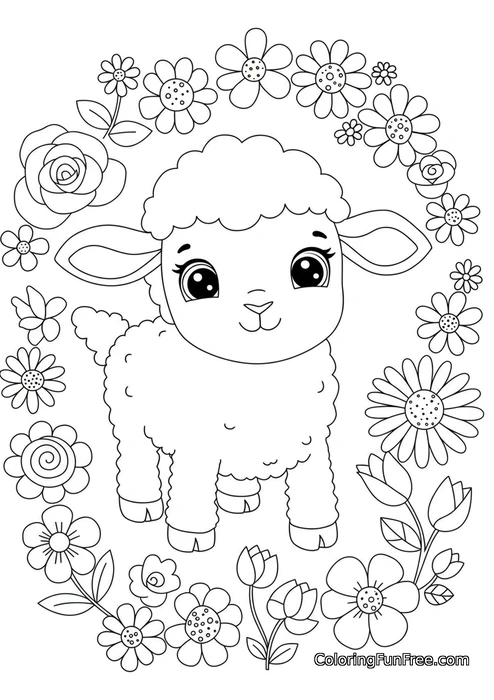
Cute lamb with floral wreath
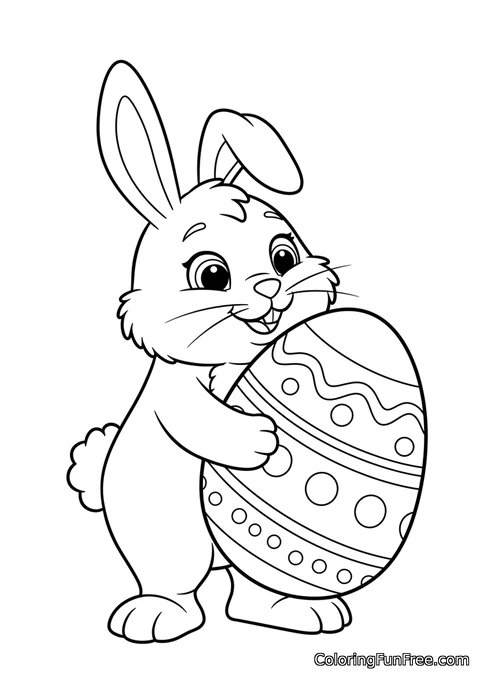
Easter bunny hugging large decorated egg

Easter bunny painting eggs
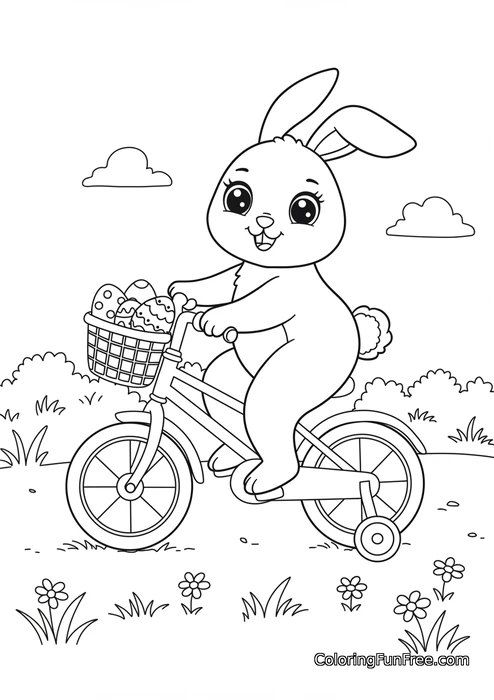
Easter bunny riding bicycle
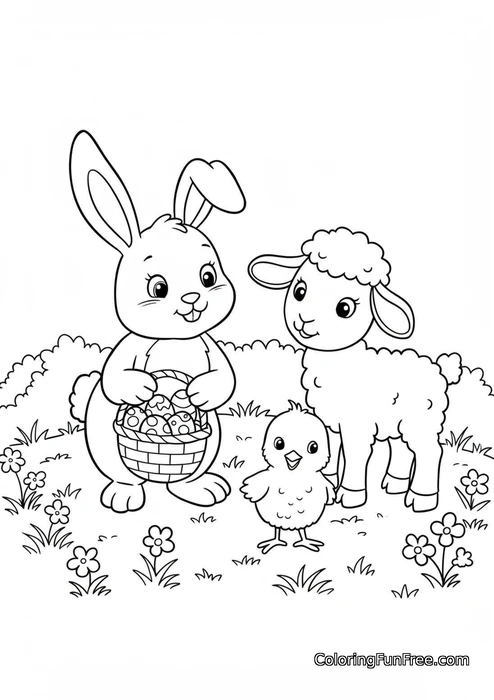
Easter bunny with basket chick and lamb
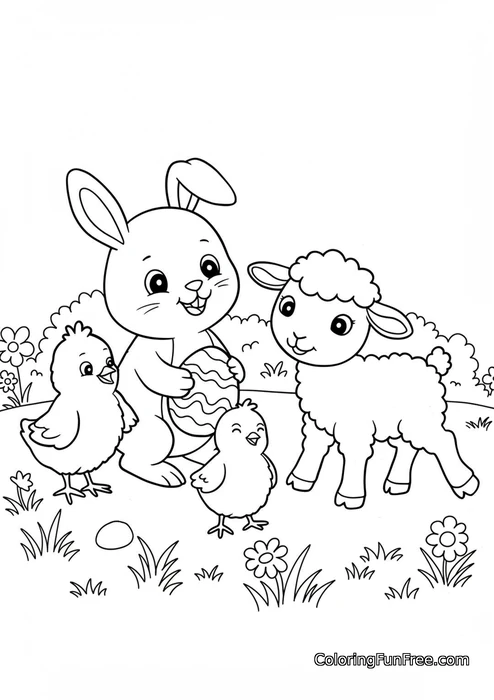
Easter bunny with chicks and lamb
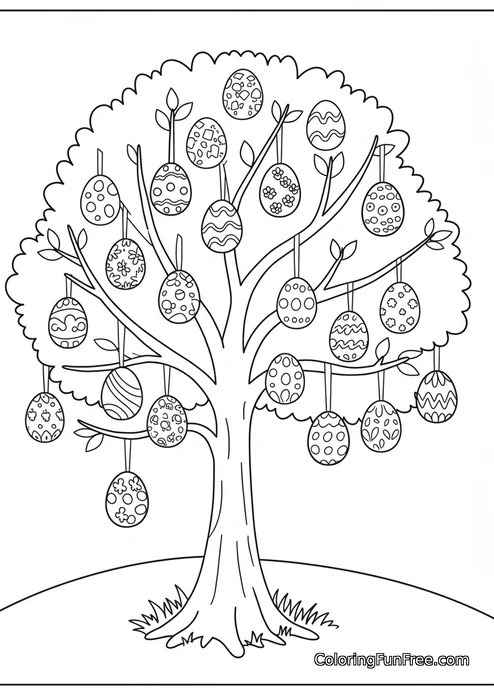
Easter egg tree
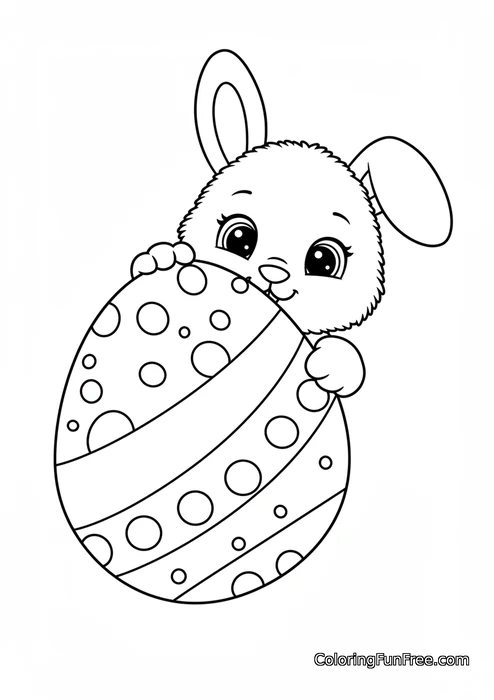
Fluffy bunny peeking
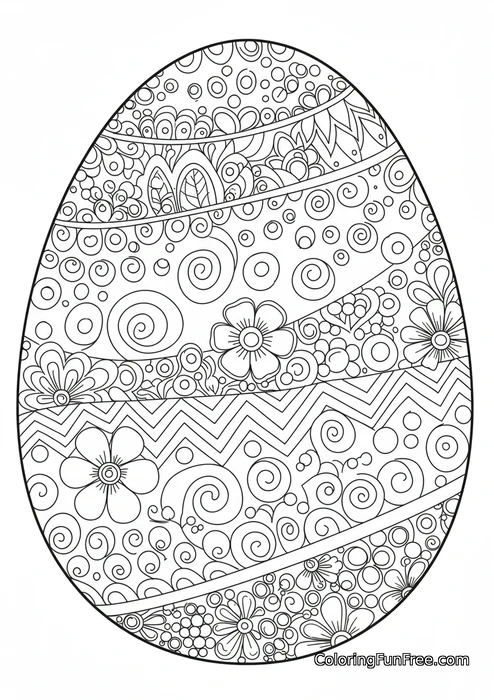
Patterned Easter egg
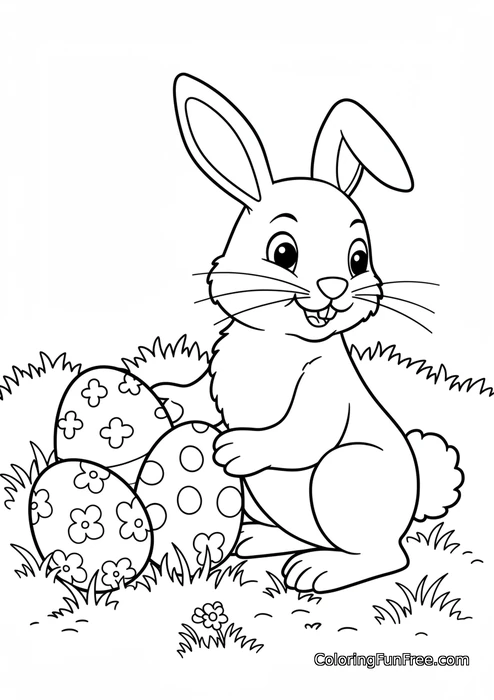
Easter bunny with decorated eggs
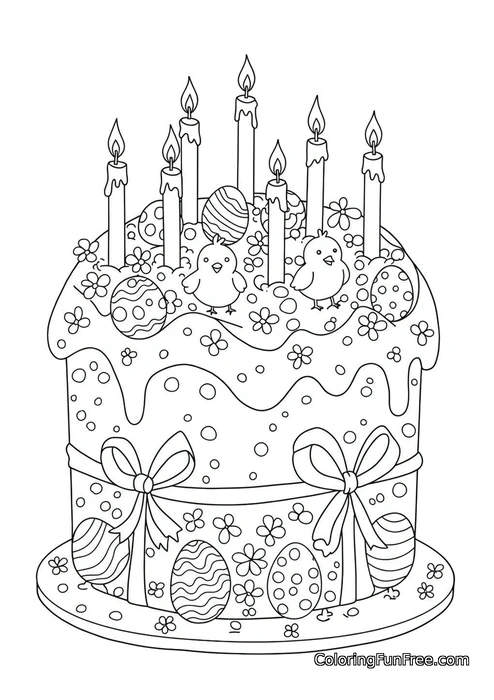
Easter cake
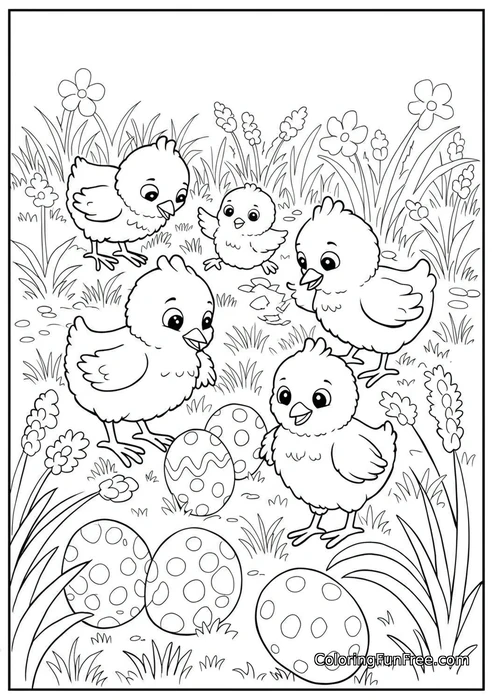
Five chicks with easter eggs
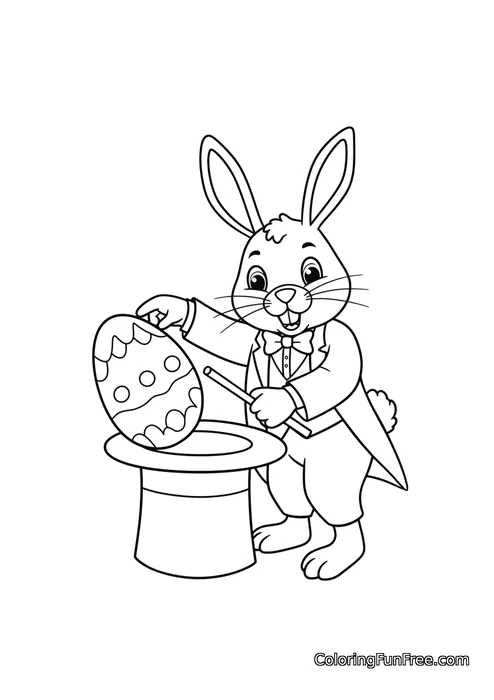
Magician Easter bunny with egg
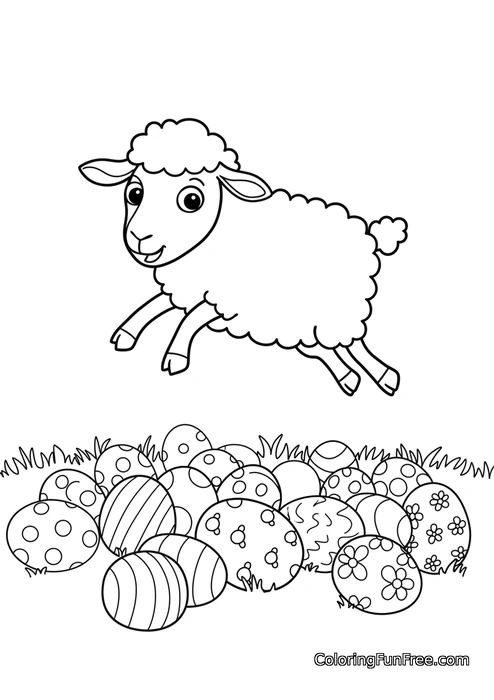
Sheep jumping over Easter eggs
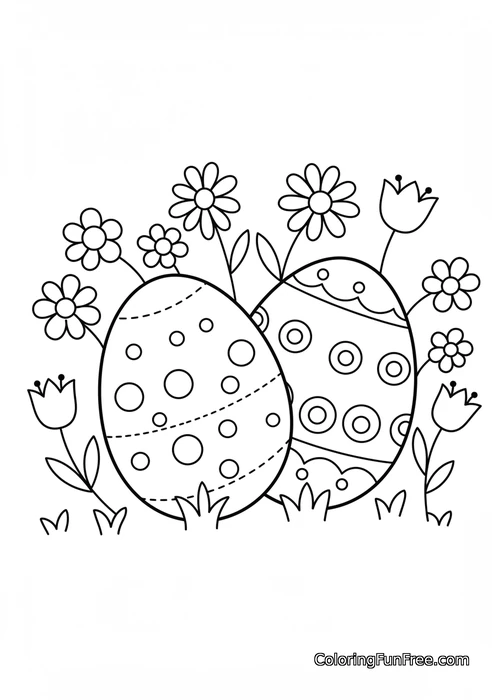
Two decorated Easter eggs
What Easter really looks like for a child - and why coloring helps
Easter coloring pages are one of those things that look simple at first glance - a bunny, an egg, a basket - but there's actually a lot going on when a child sits down to do them. If you've ever watched a young child color an Easter coloring page, you might have noticed something: they slow down. They pause over the egg before choosing a color. They look at the bunny's ears and seem to think about it. This pause is not accidental. Easter is one of the most symbolically loaded holidays a child encounters at an early age, and by coloring it, they are doing real cognitive work.
Think about what Easter asks a child to accept at face value: eggs that can't be eaten, a rabbit that brings candy instead of being a pet, little yellow chicks emerging from their shells, pastel colors that appear in stores and then disappear for another twelve months. None of this fits into everyday life. A child who is processing Easter images for the first time-or even the third or fourth time-is dealing with a group of symbols that are not connected to anything else they know. Coloring is one way to help them cope with this.
When a child decides that the inside of an Easter egg should be orange and turquoise, or that the fur of a bunny should be purple, they are not just filling in space. They make the image their own. They slow down what otherwise moves fast-the appearance of the decorations, the materialization of the candy, the arrival of the family-and look at one part after another. It's closer to studying than to playing.
The American Academy of Pediatrics emphasizes that coloring books promote fine motor skills and hand-eye coordination in young children - you can find this context at aap.org. But the developmental value of coloring is not only physical. When a child colors an Easter coloring page, he or she is also forming a visual familiarity with symbols that he or she will see every year for the rest of his or her childhood. The egg begins to seem familiar. The rabbit becomes recognizable by its own characteristics, not just as something pointed out by an adult.
Pysankas in particular have more history than most children's holiday symbols. Decorated eggs have been a part of springtime celebrations for centuries in many cultures-the practice of marking eggs with color and pattern predates the commercial Easter we know today by a long shot. When a child paints an Easter egg with neat lines and deliberate strokes, they are doing something that, however vaguely, is connected to a very old human tradition of turning ordinary shells into something visually significant. It's not a reason to lecture a six-year-old, but it is a reason why the activity feels meaningful even when it looks simple."
Different Easter images present different challenges for coloring at different ages. The Easter egg is the most forgiving - it's a closed shape with plenty of room, and even a toddler can color it satisfactorily. The Easter bunny is more difficult. Fur is difficult to depict at any age, and young children are often disappointed when their coloring doesn't match the fluffy texture they envision. The chicks are small and detailed. Crosses require a steadier hand. Easter baskets are interesting because they have both large open areas and dense woven patterns that older children find really exciting.
There's also the matter of spring flowers, which appear on many Easter coloring pages but are often underrated. Flowers require a child to think about petals as separate shapes, centers, stems and leaves - they are more compositional than they seem at first glance. A child who is good at coloring a detailed flower arrangement is doing something that requires real spatial attention.
Over the years of observing which coloring pages are used and which are skipped at coloringfunfree.com, we have found that children do not always gravitate toward the most complex drawings. Sometimes a simple outline of an egg, with a clean frame and room for imagination, attracts the most attention. Because a child does not follow instructions - he or she creates something. This is the difference between a coloring book that was printed once and forgotten, and a coloring book that is printed three times in a week.
It's also worth mentioning that Easter coloring books are popular not only during the Easter week. We see downloads continue through the end of March and into April, but we also see families printing coloring books in February as a general spring activity, or pulling them out in mid-April when the holiday is over and the child wants to revisit something they liked. The images have a longer shelf life than the holiday itself because the symbols are attractive - eggs, animals, flowers - regardless of the specific occasion.
None of this means that coloring should be overrated. It is a piece of paper with lines on it. But what happens when a child sits with it, calm and focused, for ten or fifteen minutes, should be understood a little more clearly than “fun entertainment for children.” It's closer to what children do when they draw the same house or the same animal over and over again - repeating what feels right to them, making the visual world understandable to them. Easter gives them many new images to work with. Coloring books allow them to do this at their own pace.
What's in our Easter collection - coloring books
Note about difficulty levels (because a 3-year-old and a 10-year-old are not the same tasks)
A toddler needs a large egg with thick outlines and no details inside. A nine-year-old needs something challenging enough to hold their attention for more than two minutes. Most coloring sites don't differentiate between the two, which means parents end up printing out pages that are either too complicated for a young child or too simple for an older one. We tried to take this into account when creating our collection.
Here's what we have in the Easter coloring pages section of coloringfunfree.com:
- Easter egg coloring pages - from simple outlines with one egg for toddlers to compositions with several eggs with geometric patterns inside for kids aged 7 and up
- Easter bunny coloring pages - full-body bunnies in simple outlines for younger children, more detailed drawings with faces and fur for older children
- Easter baskets - open shaped baskets with a large filling area (for children 3-5 years old) and baskets with woven patterns for children from 6 years old.
- Chicks and incubation eggs - small, charming, best suited for children aged 4-7 years.
- Pages with spring flowers - separate and combined with Easter images, moderate level of detail
- Pages with simple scenes - a bunny in a field, eggs hidden in the grass, suitable for children aged 5-8 as a slightly longer activity
If you're printing for a multi-age group, egg pages are the most flexible - simpler ones are good for very young children, while older children will naturally add more detail to the same basic shape.
The most frequently printed Easter cards - and what it tells us
We see patterns in what's downloaded from coloringfunfree.com, and Easter has a few constants that are worth knowing about. Traffic to our Easter coloring section doesn't peak on Easter Sunday, but rather the week before, with a noticeable spike on Thursday and Friday. Parents print coloring pages on the Thursday before Easter and give them to their children on Friday or over the weekend. If you plan ahead, most families seem to follow this rhythm.
According to the U.S. Census Bureau, approximately 80% of Americans celebrate Easter, making it one of the most widely observed holidays in the country - full data is available at census.gov. This scale is reflected in the number of our downloads. Easter is on par with Christmas in terms of demand for coloring pages, which surprised us a bit when we first noticed it. The difference is that Easter traffic is more compressed - it happens in a shorter period of time, which makes the peak on Thursday more dramatic.
What parents are looking for and what children ultimately want are often at odds. Parents tend to look for coloring books with Easter eggs or Easter bunnies. Once the coloring pages are printed, children often redirect them to the story pages-a bunny hiding eggs, a basket in the grass-because these pages tell a little story. Children want something to look at, not just something to fill in.
The one page in our Easter collection that has been the most downloaded for three years in a row is not the most detailed or complex. It's a medium-complexity egg with a simple geometric pattern inside - diamonds and stripes - and enough white space for a child to make the right color choice. It's suitable for a wide age range, prints cleanly, and takes about fifteen minutes to color thoughtfully. This combination of factors is obviously an ideal solution that no fancy design has been able to surpass.
We've also noticed that parents who find us through searching for free Easter coloring pages tend to stay and print out several sheets, not just one. They create a small set for activities rather than just taking one page. We also have free Christmas printables available year-round for families who like to plan ahead.
How to print these pages so they come out right
Printing coloring pages sounds simple, but there are a few things that usually go wrong. The page comes out gray instead of pure white. The lines are thin and diverge. The paper curls when the child presses hard with the marker. These are not problems with the printer - they are problems with the printer, and they are easy to fix.
- Set the printer to black and white or grayscale mode rather than color - this uses a black cartridge directly and produces sharper, darker lines.
- In the print settings, select “page-wide” or make sure that the margins are set to the minimum level that your printer allows - otherwise parts of the design may be cut off.
- Use standard 80 gsm paper for crayons and colored pencils; if your child uses markers, switch to 90-100 gsm paper or cardstock to prevent bleed-through.
- Print on “high quality” or ‘best’ rather than “draft” - draft mode prints faster but produces noticeably lighter and coarser lines.
- If a page looks pale on the screen, don't adjust the image - print a proof first, as a monitor often displays differently than a printer.
- For very young children who press hard, printing on cardboard (160 g/m2 or heavier) is essential - the page does not bend or tear.
Additionally, if you are printing multiple pages in one session, let each sheet sit for thirty seconds before stacking them - this prevents ink from transferring to the back of the next page.
If your child enjoys other types of coloring pages besides seasonal ones, it's worth checking out some of our year-round options - we have Owls Coloring Pages with simple and detailed designs, foxes coloring pages that are great for animal lovers, and if you have older kids in your family with other interests, our free Dr. Strange coloring pages tend to be popular.
Where to start if you're printing for Easter this week
If you're here a few days before Easter and need something to print tonight, here's an easy place to start. For kids under 4, go straight to the large outlines - single eggs with thick edges and no inside parts. They are quick to print, easy to color, and fun to finish. For children aged 4 to 7, coloring pages featuring Easter bunnies and egg patterns of medium complexity are suitable. For older children, patterned eggs and storyline coloring pages will attract attention for a longer time.
If you have children of different ages and want everyone to color at the same time, print a simple egg for the youngest child and a patterned egg for the older child. They can color the same egg at the same table without one of them finishing in forty-five seconds and the other feeling overwhelmed.
You don't need a printer that produces gallery-quality prints. You don't need special consumables. A standard home printer, copy paper, and colored pencils that are already in the house will do the job. The value is not in the perfect printout. It's in the ten or fifteen minutes your child spends doing something slow, something quiet, something that requires a decision about which color goes where. It's a small thing, but it's real - and Easter, with all its specific, unfamiliar images, turns out to be a surprisingly good opportunity for that.